You’ve probably seen it in a dozen K-dramas without realizing it. That misty riverbank where the hero stares longingly into the distance? Or that massive ginkgo tree that looks like it belongs in a fantasy novel? Honestly, most people just call it "that place outside Seoul," but the actual name is Yangpyeong-gun Gyeonggi-do South Korea. It's a county that feels like the city's backyard, yet it holds a strange, almost frozen-in-time quality that's hard to find in the neon-soaked streets of Gangnam.
Yangpyeong is huge.
Seriously, it’s the largest municipality in Gyeonggi-do by land area, but here’s the kicker: about 75% of it is just rugged forest and mountains. While Seoul is a vertical jungle of concrete, Yangpyeong is a horizontal expanse of green and blue. It’s where the Bukhangang and Namhangang rivers finally decide to shake hands and merge. That spot is called Dumulmeori, and if you haven't been there, you're missing out on the literal and metaphorical heart of the region.
The Reality of Dumulmeori and the Lotus Obsession
Most travel blogs will tell you to go to Dumulmeori for the "peace and quiet." They’re kinda lying. If you go on a Saturday afternoon, you’ll be fighting for a photo op with three different wedding parties and a busload of hikers in neon windbreakers. But go at 6:00 AM on a Tuesday? That’s when the magic happens. The fog rolls off the water so thick you can’t see the other side, and the 400-year-old zelkova trees look like ancient sentinels.
There’s this weird local obsession with lotus leaves here.
Right next to the river is Semiwon Garden, a massive "water garden" that basically turns into a lotus field in the summer. It’s beautiful, sure, but the real cult following is for the Lotus Hot Dogs (Yeon-hotdog). People wait in line for thirty minutes just to eat a corn dog where the batter is mixed with lotus leaf powder. Is it life-changing? Maybe not. Is it a mandatory rite of passage in Yangpyeong-gun Gyeonggi-do South Korea? Absolutely. The batter is darker, slightly earthier, and somehow makes you feel 5% healthier while eating deep-fried meat on a stick.
Why the 1,100-Year-Old Tree is a Big Deal
If you head over to Yongmunsa Temple, you’ll find the real celebrity of the county. We’re talking about a ginkgo tree that has survived the Mongol invasions, the Japanese occupation, and the Korean War. It’s over 40 meters tall. To put that in perspective, that’s about a 12-story building made entirely of ancient wood and yellow leaves.
Legend says when the kingdom of Silla fell, a prince planted his staff here in grief, and it grew into this tree. Whether you believe the myth or not, standing under it in late October when the leaves turn gold is a humbling experience. You realize that while we’re all stressing about Wi-Fi speeds and traffic, this tree has just been... vibing... for eleven centuries.
Surviving the Extreme Weather
One thing nobody tells you about Yangpyeong is that it’s a land of extremes. Because of its geography, it gets colder here than almost anywhere else in the surrounding area. On January 5, 1981, it hit $-32.6^{\circ} \text{C}$. That is basically Siberian levels of cold.
- Winter: It's bone-chillingly dry. The rivers freeze solid enough for ice fishing.
- Summer: It’s a humid furnace, often hitting $40^{\circ} \text{C}$.
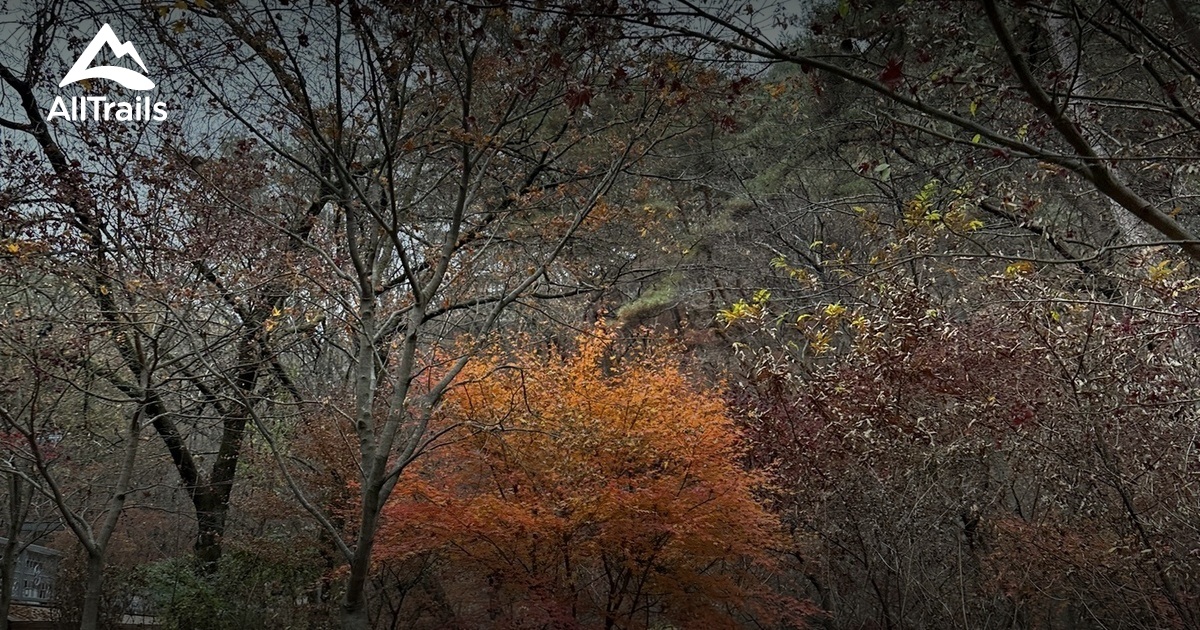
- Autumn: This is the "sweet spot" where the county actually looks like the brochures.
The temperature swings are wild. You can be sweating in a t-shirt at noon and shivering in a parka by 7:00 PM. If you’re planning a visit, layers aren’t just a suggestion; they are a survival strategy.
The Local Soul Food: Haejangguk
You can’t talk about Yangpyeong-gun Gyeonggi-do South Korea without mentioning the food that put it on the map: Yangpyeong Haejangguk. This isn’t your average "hangover soup." It’s a gritty, nutrient-dense bowl of spicy broth packed with congealed oxblood (seonji), tripe, and bean sprouts.
It’s an acquired taste.
If you grew up on chicken noodle soup, the texture of the oxblood—which is sort of like a firm tofu—might throw you off. But for Koreans, this is the ultimate comfort food. It’s salty, spicy, and savory in a way that wakes up your entire nervous system. The "original" shops are clustered around the town center, and honestly, they all claim to be the first one. Just pick the one with the most old men sitting inside; they know where the good stuff is.
Hidden Gems: More Than Just Trees and Soup
While everyone is at the river, you should sneak off to the Koo House Museum. It’s a "house-concept" art gallery that feels like walking into the home of a very wealthy, very eccentric friend. They’ve got works by David Hockney and Jeff Koons just casually sitting in rooms designed to look like a living room or a library. It’s a weirdly intimate way to experience high-end art.
Then there’s the Jipyeong Brewery. Established in 1925, it’s one of the oldest breweries in Korea. Their makgeolli (rice wine) is famous nationwide for being slightly sweeter and smoother than the mass-produced stuff. The original building is a Registered Cultural Property, and walking past it feels like stepping into a 1920s period drama.
- Take the Gyeongui-Jungang Line. It’s the "slow" train from Seoul, but the views of the Han River are worth it.
- Rent a bike at Yangsu Station. The bike paths here are world-class, built on old abandoned railway tracks.
- Skip the fancy "river view" cafes for at least one meal and find a place that serves Boribap (barley rice with wild greens).
Actionable Next Steps for Your Trip
If you're planning to head out to Yangpyeong this weekend, don't just wing it. Start by taking the KTX-Eum from Seoul Station to Yangpyeong Station if you want to save time—it only takes about 48 minutes. Once you arrive, use the local bus or a taxi to get to the Yongmunsa Temple trail early in the morning to beat the crowds. After your hike, grab a bowl of authentic Haejangguk near the station before taking the local subway back toward Yangsu Station to catch the sunset at Dumulmeori. This circular route ensures you see the mountains and the water without back-tracking through the notorious weekend traffic on Route 6.