The fluorescent hum of a modern cleanroom does not sound like the front line of a global conflict. It sounds like air conditioning. It smells faintly of ozone and sterilized floor wax, and the people who work inside it usually care far more about thermal dissipation and supply chain lead times than they do about geopolitics.
Yet, when Alice Huang packed her bags, left the orbit of the most valuable chipmaker on earth, and surfaced in Beijing, the reverberations hit Washington and Taipei like a dropped wrench on a concrete floor.
Silence.
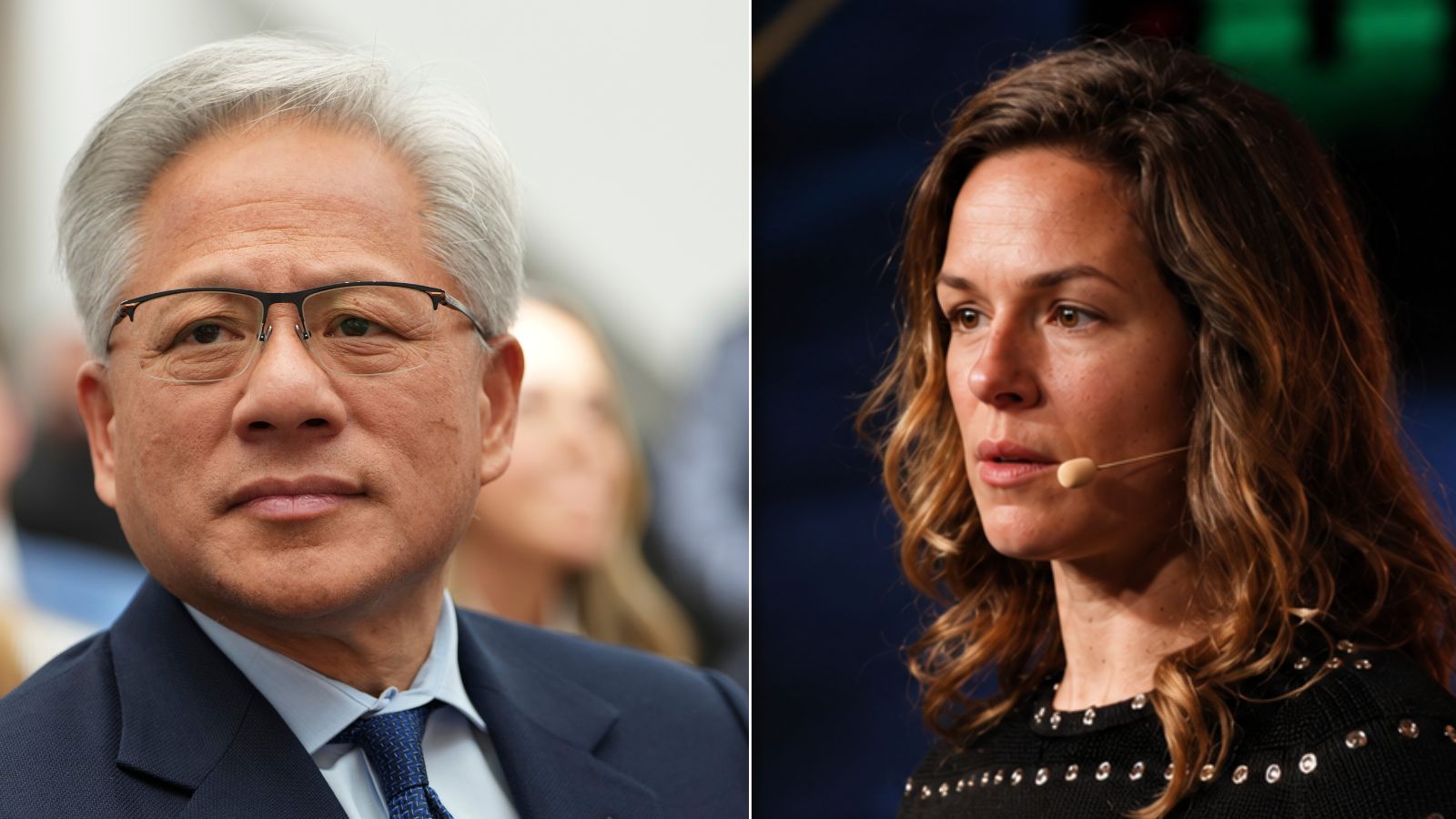
That was the first reaction from the people who follow the semiconductor supply chain for a living. Then came the headlines—clipped, breathless, and immediately reduced to espionage tropes. News reports painted the move in stark, binary terms: a figure at the center of a storm involving Nvidia, its leather-jacketed co-founder Jensen Huang, and allegations of intelligence gathering had relocated to the capital of the United States’ chief technological rival.
If you read the standard wire summaries, the story looks like a neat little thriller. Boy builds empire, shadow falls over employee, employee flies east. End of transmission.
But anyone who has ever sat across a conference table in Hsinchu, San Jose, or Shenzhen knows that real life in the silicon trade is never that clean. It is messy, deeply personal, and governed by loyalties that do not fit neatly onto a security clearance form. To understand why Alice Huang’s presence in Beijing matters—and why it has spooked boardrooms from Santa Clara to Capitol Hill—you have to look past the spy-novel caricatures and examine the invisible architecture of the modern world.
The Architecture of Trust
I remember the first time I walked onto a server assembly floor during a component shortage. The tension in the room was physical. Engineers were sleeping on cots behind pallets of motherboards because a single delayed shipment of graphics processors meant millions of dollars evaporating every hour. In that environment, people do not trade in abstract corporate policy. They trade in favors, late-night WeChat messages, and decades-old school ties.
Silicon Valley likes to pretend it runs on pure meritocracy and open code. It does not. At the highest levels of hardware manufacturing, the industry runs on human conduits—people who speak both languages, understand both business cultures, and know which factory manager in southern China can squeeze out an extra ten thousand units before the Lunar New Year.
Alice Huang was built for that world.
For years, the bridge between American chip design and Asian manufacturing was treated as an economic miracle. Nvidia designed the brains; Taiwan Semiconductor Manufacturing Company etched them onto silicon wafers; factories across mainland China assembled them into the servers that now power every artificial intelligence model you have ever touched. During that golden era of globalization, having operatives who could move effortlessly between Western executive suites and Beijing policy circles was not a liability. It was the whole business model.
Then the ground shifted.
When the United States began tightening export controls on advanced AI chips—specifically targeting high-bandwidth processors like Nvidia’s A100 and H100—those human bridges suddenly looked less like trade routes and more like security breaches. A person who knew every quirk of Nvidia’s internal roadmap, its customer allocations, and its regulatory workarounds was no longer just a well-connected professional. In the eyes of national security hawks, that person was a walking blueprint.
The Anatomy of a Shadow
To grasp why the allegations surrounding Alice Huang created such an immediate firestorm, consider a hypothetical scenario.
Imagine you are an architect who spent a decade helping design the vault doors for the world’s largest central bank. You did not necessarily draw every schematic yourself, nor did you steal the master keys on your way out. Instead, you sat in the meetings where the bank’s directors argued over where the cameras had blind spots, which suppliers cut corners on steel thickness, and how long it took the guards to respond when an alarm tripped at three in the morning. Now imagine you take a job advising a rival institution across town. Even if you never hand over a single stolen document, what is sitting inside your head?
Context. Institutional memory. The precise knowledge of how the other side thinks under pressure.
That is the unspoken anxiety fueling the row around Jensen Huang’s empire and the woman who now finds herself in Beijing. Critics and investigators who raised alarms about ties to Chinese state-affiliated networks were not merely looking for a Hollywood villain slipping a microSD card into a hollowed-out heel. They were pointing at a structural vulnerability that Nvidia—and every other Western tech giant—spent twenty years ignoring.
For Jensen Huang, the timing could hardly have been worse. The Nvidia chief has spent the last several years walking a razor’s edge that would make most Fortune 500 executives lose their nerve. On one side sits the U.S. Department of Commerce, demanding strict compliance with export bans meant to slow Beijing’s military and AI ambitions. On the other sits the Chinese market, which historically accounted for roughly a fifth to a quarter of Nvidia’s data center revenue—a market so lucrative that abandoning it entirely feels like corporate self-harm.
Whenever a company tries to serve two masters locked in a cold war, someone eventually gets caught in the gears.
When reports surfaced linking Alice Huang to controversies over intelligence proximity and corporate access, it struck directly at the credibility of Nvidia’s firewall. If Washington cannot trust that the walls inside America’s premier AI company are airtight, the inevitable response is not a polite warning. It is heavier regulation, slower export licenses, and congressional subpoenas that drag executives under harsh television lights.
Why Beijing Is Not Just Another Destination
People outside the tech sector often ask why a move to Beijing carries so much weight. After all, executives switch companies every week. Engineers leave Google for startups; managers leave Apple for competitors; consultants pack up and move to London, Singapore, or Tokyo without sparking international headlines.
Beijing is different because the boundary between private enterprise and state strategy there does not exist in the way Western business schools teach it.
Think of the American tech sector as a fleet of privately owned yachts racing across open water. They compete fiercely, occasionally collide, and routinely ignore the Coast Guard until they need a rescue. By contrast, China’s semiconductor and artificial intelligence ecosystem operates more like a naval convoy. Private firms, state-backed investment funds, university research labs, and ministry planners all share the same weather forecast and steer toward the same horizon: technological self-reliance.
Under China’s National Intelligence Law and its broader civil-military fusion doctrine, domestic organizations and citizens operate under legal obligations to cooperate with state intelligence work when called upon. Even without a formal government title, an experienced industry insider landing in Beijing steps into an ecosystem hungry for every scrap of operational wisdom from the West.
China does not currently lack money to build domestic AI chips. It has poured tens of billions of dollars into its National Integrated Circuit Industry Investment Fund. Nor does it lack brilliant mathematicians or determined engineers. What it lacks—desperately—is institutional scar tissue.
You cannot buy ten years of trial-and-error software optimization at an auction. Nvidia’s true moat is not just the physical silicon inside its graphics cards; it is CUDA, the software ecosystem that millions of developers rely on to make those chips sing, combined with the supply chain choreography required to build massive server clusters without melting the power grid. Anyone who has watched how Nvidia manages its ecosystem from the inside carries lessons that state subsidies simply cannot replicate overnight.
The Human Element in a Machine War
It is easy, sitting far from the diplomatic cables and corporate legal teams, to turn Alice Huang into a symbol—either a cautionary tale of corporate naivete or a pawn in a superpower chess match. Doing so misses the quieter, more uncomfortable truth.
I have spoken with dozens of engineers and executives of Chinese heritage working in Silicon Valley over the past five years, and the dominant emotion I hear from them is not ideological fervor. It is exhaustion.
For thirty years, they were told that cross-border collaboration was the highest ideal of global capitalism. They were praised for building teams across Shenzhen and San Jose, for bringing Western venture capital to Asian manufacturing hubs, and for making consumer electronics cheap enough for the entire planet to afford. Then, almost overnight, the exact same career history became grounds for suspicion. Background checks lengthened. Security clearances vanished. Conversations in office hallways grew guarded.
In that climate of mutual distrust, people make choices based on survival, ambition, family, and opportunity. When doors begin closing—or when controversy makes a career in the West untenable—going east is not always an act of defiance. Sometimes it is simply walking toward the only room where the lights are still on.
Yet personal motives do not erase geopolitical consequences. That is the tragedy of this moment. Individual biographies and national security imperatives are colliding at full speed, and neither side has a brake pedal.
What the Headlines Miss About What Happens Next
If you are trying to figure out what this episode means for the future of technology, stop looking for a dramatic courtroom confession or a leaked dossier. You probably will not get one. Modern industrial espionage and strategic talent migration rarely end with handcuffs on a tarmac.
Instead, watch what happens inside the companies themselves.
First, expect the internal walls inside Western tech giants to grow thicker and colder. Information compartmentalization—once reserved for defense contractors building fighter jets—is rapidly becoming standard operating procedure for commercial AI firms. Junior engineers will see less of the big picture. Cross-border teams will be split along passport lines. Innovation will slow down slightly, weighed down by compliance officers and legal reviews.
Second, watch Beijing’s domestic chip champions. Companies like Huawei, Cambricon, and a dozen quieter startups are racing to build viable alternatives to Nvidia’s hardware stack. Every time an experienced veteran of the global semiconductor supply chain relocates to China, those domestic players gain a little more clarity on how to avoid the traps that stalled their previous generations of hardware. They learn how to pitch enterprise customers, how to structure developer incentives, and where the real bottlenecks hide when scaling AI clusters.
Third, pay close attention to Jensen Huang’s next public appearances. Nvidia’s founder is one of the sharpest communicators in modern business, capable of turning a technical keynote into a rock concert. Behind the leather jacket and the easy smile, however, sits a chief executive managing an impossible tightrope. Every move his former associates make—especially those that end in Beijing—forces him to prove all over again to Washington that Nvidia is an American strategic asset, not a leaky pipeline.
We like to tell ourselves that the future of artificial intelligence will be decided by algorithms, floating-point calculations, and racks of liquid-cooled servers humming in desert data centers. That is only half true.
Late at night, after the cleanroom lights dim and the servers settle into their steady, rhythmic pulse, the real contest still comes down to human beings—where they choose to live, who they choose to trust, and which side of an invisible border they call home when the door finally clicks shut behind them.