The runway at Montréal-Mirabel used to smell of kerosene and cold ambition. On those bitter winter mornings when the frost bit at the aluminum hulls of unfinished wide-bodies, the engineers would stand by the edge of the tarmac with breath pluming in the gray air, watching another silhouette taxi toward the horizon. That silver tube represented more than rivets and jet fuel. It represented a sovereign promise that a country half the size of a continent could build things that mattered, things that soared above the noise of protectionist boardrooms and geopolitical squabbles.
Then came the stroke of a pen from a desk thousands of miles away.
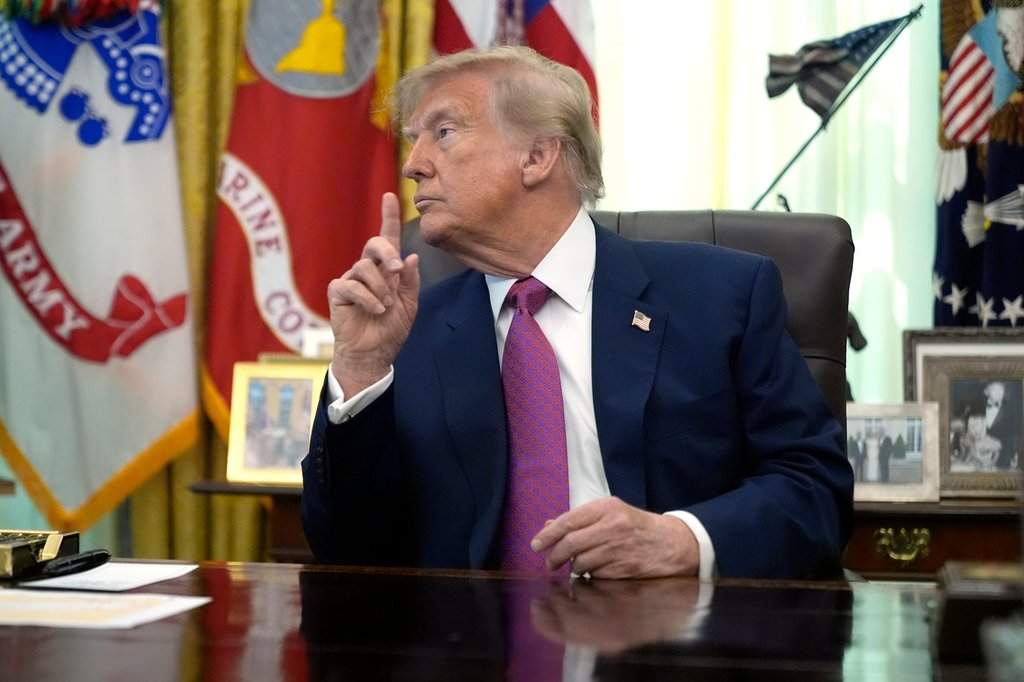
Donald Trump’s declaration of "no more Bombardier" was never just about aerospace balance sheets or tariff disputes over the CSeries program. It was a collision between two irreconcilable ideas of how the world should trade. On one side stood the quiet, bureaucratic machinery of international supply chains—thousands of subcontractors in Kansas, Northern Ireland, and Québec building a single wing together. On the other stood the blunt instrument of political leverage, where a single threat can freeze billions of dollars in capital and alter the economic gravity of an entire province overnight.
To understand why a trade dispute over an airplane can feel like an existential threat in a quiet Canadian suburb, you have to look past the press conferences and walk the floor of a machine shop in Mirabel.
Imagine Marcus. He is a machinist who has spent twenty-two years shaping titanium fasteners for aircraft fuselages. His hands carry the faint, permanent blue stains of cutting fluid, and he knows the precise acoustic hum a milling machine makes when the tolerance slips by a fraction of a millimeter. Marcus does not read trade court filings from Washington, D.C. He reads the job board. When he hears that a foreign leader is threatening to shut out his company's aircraft over subsidies and unfair market access, his morning coffee turns cold. He knows that his mortgage, his daughter’s tuition at Université de Montréal, and the quiet rhythm of his neighborhood depend entirely on the unspoken pact that nations will buy what works, regardless of whose flag is painted on the tailfin.
This is the hidden human cost of trade wars. They are rarely fought with armies; they are fought with uncertainty.
When the United States Department of Commerce slapped preliminary countervailing duties of nearly three hundred percent on Bombardier’s CSeries jets following a furious petition from Boeing—which argued that Canadian state subsidies allowed the company to dump planes below cost into the American market—the shockwaves were immediate. Delta Air Lines had just placed a massive order for up to 125 of the narrow-body planes. Passengers loved the wider aisles, the oversized bins, and the quieter engines. But corporate boardrooms do not run on passenger comfort. They run on risk mitigation.
When a politician signals that foreign-built commercial aircraft will face hostile regulatory hurdles or sudden procurement bans, the math changes. Risk becomes too expensive.
To cope with the existential pressure, Bombardier did what modern corporate giants do when cornered by superpower politics. They partnered with Airbus, handing over a controlling stake in the CSeries program for a single nominal dollar and rebranding it the Airbus A220. The final assembly line moved partly to Mirabel and partly to Alabama, stitching American labor into the very fabric of the contested jet. It was a brilliant, pragmatic survival maneuver. Yet, the underlying tension never vanished. It merely shifted shape.
Trump’s enduring hostility toward foreign industrial incursions highlights a fundamental philosophical divide. The protectionist view treats trade as a zero-sum game: if your factory wins an order, mine loses a job. But the modern aerospace industry does not work like a nineteenth-century steel mill. A modern commercial airliner is a global jigsaw puzzle. The wings might be assembled in Belfast, the avionics designed in France, the engines built in the United States, and the center fuselage fabricated in Québec.
When a leader says "no more," they are often pretending that you can neatly excise one piece of that puzzle without destroying the structural integrity of the whole machine.
Consider what happens when that illusion meets reality. If the United States market closes its doors to a specific regional jet family, airlines do not simply buy American equivalents that don't exist in the same size class. They delay fleet renewals. They pay more for older, thirstier aircraft. Ticket prices creep upward. Regional airports see fewer connections. The friction introduced by political spite creates drag on the entire global economy, turning a commercial rivalry into a slow-moving tax on the traveling public.
And yet, there is a deeper pride at stake north of the border.
In Canada, aerospace is not just a sector; it is a national identity. Ever since the fateful cancellation of the Avro Arrow in 1959—a trauma that still haunts the collective memory of Canadian engineers—the country’s high-tech manufacturing sector has walked a tightrope between brilliant innovation and vulnerability to American market dominance. When Bombardier survived, it proved that a mid-sized nation could compete at the absolute frontier of advanced manufacturing. When it stumbled under debt and political crossfire, it felt like a betrayal of that ambition.
The rhetoric of exclusion plays well in arenas filled with cheering crowds, where complex economic realities can be reduced to simple chants about winners and losers. But the real world is stubborn. It resists clean lines and absolute bans.
As the sun sets over the quiet tarmac in Mirabel, the lights along the runway flicker on. Inside the cavernous hangars, the night shift takes over, adjusting lasers and checking diagnostic screens for the next generation of airframes rolling off the line. They are working on planes that will carry families across oceans, connect remote communities, and burn cleaner fuel into a changing sky.
Outside, the politicians will keep talking, trading threats across borders and drafting new rules for a fractured global market. But inside the hangar, the metal does not care about the speeches. It only cares about the precision of the cut, the strength of the alloy, and whether the wings are strong enough to carry the weight of everything we ask them to bear.