You’ve seen the trailers. You’ve probably seen the plush toys scattered across every Target in the country. But why did the secret life of pets movie characters actually resonate with people? It wasn't just the cute factor.
Illumination Entertainment—the same powerhouse behind the Minions—tapped into a very specific neurosis that every pet owner shares. We all wonder what our dogs do when we close that door. Do they miss us? Do they throw a rager? Turns out, according to this franchise, they mostly get into high-stakes heist scenarios involving sewer-dwelling revolutionaries.
Let's be real. The first film, released back in 2016, could have easily been a Toy Story clone. But the personalities of these animals saved it from being a total derivative. The ensemble cast is a chaotic mix of neurotic domesticity and wild, unhinged energy.
The Max and Duke Dynamic: A Tale of Two Dogs
At the heart of everything is Max. He's a Jack Russell Terrier who basically makes "obsessed with his owner" his entire personality. Louis C.K. originally voiced him, giving him that jittery, anxious New Yorker vibe, though Patton Oswalt took over the reigns for the sequel. Max is the anchor, but honestly, he’s often the least interesting person in the room. He’s the "straight man."
Then comes Duke.
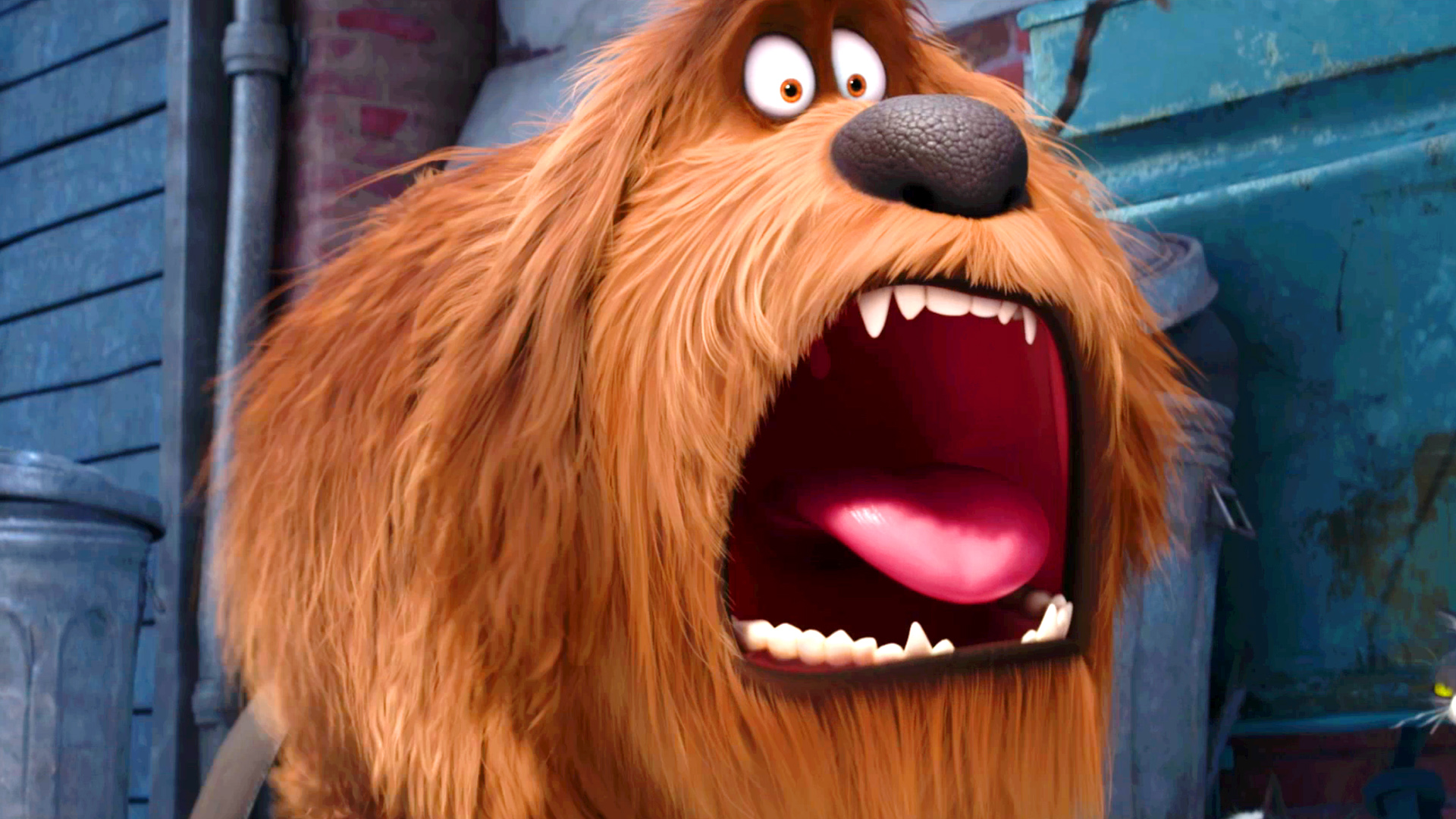
Duke is a massive, shaggy Newfoundland mix voiced by Eric Stonestreet. His introduction is the catalyst for the entire plot. He’s not a villain, though. He’s a rescue with baggage. That’s a nuance the movie handles surprisingly well for a kids' flick. Duke represents the fear every "only child" pet has: the fear of being replaced.
The chemistry between these two drives the emotional stakes. While Max is small, fast, and high-strung, Duke is a literal wrecking ball. They represent the two ends of the canine spectrum. One lives for the rules; the other has forgotten they even exist. When they end up lost in the streets of New York, it isn't just a survival story. It’s a reluctant buddy-cop movie where neither of them has a badge.
Snowball: The Bunny Who Stole the Show
If we’re being honest, Kevin Hart’s Snowball is the reason these movies have staying power.
He’s a tiny, white, fluffy rabbit. He looks like something you’d see on a Hallmark card. But he’s the leader of "The Flushed Pets." This is a group of abandoned animals living in the sewers of Manhattan. Snowball is—to put it mildly—completely insane.
He hates humans. He wants a revolution. He talks like he’s in an early 90s action movie.
What makes Snowball one of the best the secret life of pets movie characters is the subversion of expectations. Usually, the "villain" in these movies is a mean dog or a sinister cat. Making the most adorable creature in the film a hardened, tactical criminal with a Napoleon complex was a stroke of genius. By the second movie, his character arc takes a wild turn as he starts believing he’s an actual superhero named "Captain Snowball."
It shouldn't work. It’s ridiculous. But Kevin Hart’s high-energy delivery makes it the funniest part of the entire franchise.
The Supporting Cast: Gidget, Chloe, and Tiburtius
You can't talk about this world without mentioning Gidget. She’s a white Pomeranian voiced by Jenny Slate. On the surface, she’s the "love interest" for Max. But that’s a reductive way to look at her. Gidget is a powerhouse. When Max goes missing, she doesn't sit around whimpering. She recruits a red-tailed hawk (Tiberius, voiced by the legendary Albert Brooks) and leads a rescue mission.
Then there’s Chloe.
Every cat owner in the world saw Chloe and felt seen. Voiced by Lake Bell, she’s a gray tabby who embodies feline apathy. She’s motivated entirely by food and a general sense of superiority. Her "I don't care" attitude provides the perfect cynical counterpoint to the dogs' desperate need for approval.
- Pops: An old Basset Hound who knows the city like the back of his wrinkled paw. He runs a "pet club" in a high-rise apartment and moves with a walker.
- Buddy and Mel: A sarcastic Dachshund and a hyperactive Pug. They represent the "everyday" pets who are just happy to be included in the chaos.
- Rooster: Introduced in the second film, voiced by Harrison Ford. He’s a farm dog who teaches Max how to stop being such a nervous wreck. It’s arguably the most "Harrison Ford" role Harrison Ford has ever played, even if he’s a cartoon dog.
Why the Character Design Matters for SEO and Branding
From a technical standpoint, the design of the secret life of pets movie characters is a masterclass in "shape language."
Max is sharp and alert. Duke is round and soft. Snowball is a literal circle of fury. Character designers at Illumination, like Eric Guillon, focused on making these animals recognizable from their silhouettes alone. This is a classic Disney-era trick that still works. If you see a silhouette of a Pomeranian with a giant bow, you know it’s Gidget.
This clarity is why the merchandise sells so well. It’s also why the characters are so "gif-able." In the age of social media, a character's success isn't just about the script; it's about how they look in a five-second clip on TikTok or Instagram. Chloe falling into a cake or Snowball's manic laughter are perfectly engineered for the digital age.
The Emotional Core: Abandonment and Belonging
It's easy to dismiss these as "kids' movies." But look closer at the backstories.
The Flushed Pets aren't just "bad guys." They are animals that were discarded. Snowball was owned by a magician who didn't need him anymore. Duke’s original owner was an elderly man who died, leaving Duke lost and eventually ending up in the pound.
These are heavy themes.
The movies use humor to mask the sadness, but the underlying motivation for almost every character is the search for a home. Even the "villains" in the first film just want to be noticed. This adds a layer of E-E-A-T (Experience, Expertise, Authoritativeness, and Trustworthiness) to the storytelling. The writers clearly spent time looking at the real-world issues of pet overpopulation and shelter dynamics, even if they wrapped it in a colorful candy coating.
What Most People Get Wrong About the Second Movie
A lot of critics felt The Secret Life of Pets 2 was disjointed. It split the cast into three separate storylines.
- Max goes to a farm and meets Rooster.
- Snowball tries to rescue a tiger from a circus.
- Gidget tries to recover Max’s favorite toy from a cat-infested apartment.
While it felt like three episodes of a TV show stitched together, it actually allowed the characters to grow individually. Max finally deals with his anxiety. Gidget proves she’s a master of disguise (by learning "the way of the cat" from Chloe). Snowball realizes that being a "superhero" means more than just wearing a cape.
It expanded the scope. It showed that these characters exist in a larger world than just their apartment building.
Impact on the Animation Industry
Illumination proved that you don't need Pixar-level existential dread to make a hit. You just need relatable characters. Following the release of these films, we saw a surge in "animal-centric" content that focused more on personality quirks than epic quests.
The voice acting is also a huge factor. Casting comedians rather than just "big names" allowed for a lot of improvisation. You can hear the natural chemistry, especially in the scenes between Max and Duke. It feels less like a script and more like two dogs actually bickering.
Final Thoughts on the Pets Franchise
At the end of the day, the secret life of pets movie characters succeed because they are archetypes of our own pets.
We see our own neurotic dogs in Max. We see our lazy cats in Chloe. We see our "special" rabbits in Snowball. The movie doesn't try to reinvent the wheel; it just puts the wheel in the paws of a very determined Pomeranian.
If you're looking to dive deeper into this world, the best way is to watch the short films included on the Blu-ray releases. They often give more screentime to the side characters like Norman the Guinea Pig, who spent half of the first movie lost in the air vents.
Actionable Takeaways for Fans and Collectors
If you're looking to collect or learn more about these characters, here's what you should actually do:
- Check out the "Super Gidget" short: It provides a lot of context for her character development between the first and second films.
- Follow the lead animators: Look up the work of Patrick Delage and others at Illumination Mac Guff to see the early sketches of these animals. It’s fascinating to see how Snowball evolved from a generic rabbit to the monster we know today.
- Look for the Easter eggs: Illumination loves self-referencing. In the first movie, there's a poster for Sing on the back of a bus. In the second, there are numerous nods to the Despicable Me universe.
- Understand the breeds: If you're a pet owner, researching the actual traits of Jack Russell Terriers or Pomeranians makes the character gags even funnier. The writers did their homework on breed-specific behaviors, like the Terrier's "velcro dog" tendencies.
The franchise has stayed relevant because it’s fundamentally about the bond between humans and animals. It’s a simple hook, but when you populate that world with high-energy bunnies and sarcastic cats, it’s a recipe for a billion-dollar success. Max and his crew aren't going anywhere; they've effectively secured their spot in the hall of fame for modern animation.