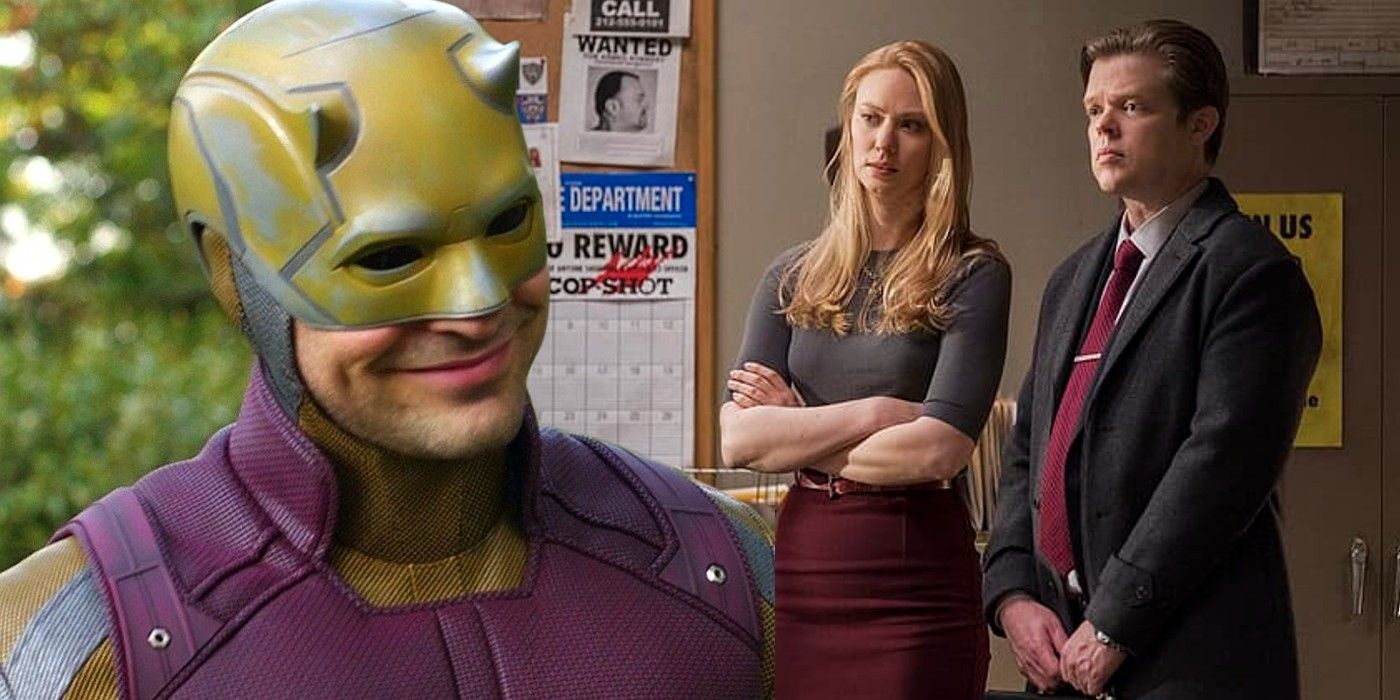
Charlie Cox wasn't a household name in 2015. Neither was Elden Henson. But when the first trailer for the cast of Daredevil on Netflix dropped, something shifted in the atmosphere of superhero media. It felt gritty. It felt real. Honestly, it felt like we were finally getting a version of Hell’s Kitchen that wasn't just a green-screen backdrop for a CGI fest.
Most people forget how risky this show was. Marvel was still riding the high of The Avengers, a movie where gods and billionaire playboys swapped quips while fighting aliens. Then came Matt Murdock. He was a blind lawyer who got the absolute crap kicked out of him in every episode. He bled. A lot. This wasn't the sanitized Marvel we knew. The casting was the engine that made it work, turning a B-list comic character into the face of a street-level revolution that fans are still obsessed with over a decade later. In related news, take a look at: Why Dave Bautista as Kratos is a Total Disaster Waiting to Happen.
Charlie Cox and the Art of the Stare
It’s hard to play blind. It’s even harder to play a blind man who is secretly pretending to be more blind than he is while simultaneously being a ninja. Charlie Cox spent an absurd amount of time with Joe Strechay, a blindness consultant, to get the physical nuances right. He actually learned how to navigate a room using a cane and how to look through people rather than at them.
Cox’s performance is the glue. If he didn't sell the internal torment of a Catholic man who beats people up at night, the whole show would have collapsed into melodrama. You’ve probably seen the hallway fights. Those are legendary. But the scenes where Matt is just sitting in a church, talking to Father Lantom (played by the incredible Peter McRobbie), are where the show really lives. It’s about the guilt. Vanity Fair has also covered this critical topic in great detail.
The cast of Daredevil on Netflix succeeded because they focused on the person under the mask first. Matt Murdock is a mess. He’s a bad friend. He’s a complicated lover. He’s a guy who thinks he’s doing God’s work by breaking collarbones. Cox played those contradictions with such sincerity that when Disney finally brought him back in Spider-Man: No Way Home, the theater roar was louder than it was for some of the Avengers.
The Kingpin Problem
You can't talk about the cast of Daredevil on Netflix without mentioning Vincent D'Onofrio. Most villains in the MCU up to that point were... fine? They were mostly mirrors of the hero with different colored lasers. Wilson Fisk was different.
D'Onofrio didn't just play a mob boss. He played a traumatized child trapped in the body of a mountain. The way he speaks—that halting, strained voice—makes it feel like he’s constantly fighting to keep his own rage from exploding. When he finally does snap, like in the infamous "car door scene" from Season 1, it’s genuinely terrifying.
He made Hell's Kitchen feel small. He wasn't trying to take over the world; he was trying to "save" a few city blocks by destroying them. The chemistry between Cox and D'Onofrio is built on the fact that they barely share the screen. They are two gravitational forces pulling at the same city, only meeting when the world is literally burning down around them. It’s a masterclass in building tension without over-relying on dialogue.
Foggy Nelson and Karen Page: Not Just Sidekicks
A lot of superhero shows treat the "civilian" friends as baggage. They are the people who get kidnapped or give the hero a pep talk when they’re feeling down. Daredevil didn't do that.
- Elden Henson (Foggy Nelson): He provided the soul. Foggy is the moral compass of the show. When he finds out Matt is Daredevil at the end of Season 1, he doesn't think it's cool. He thinks it’s a betrayal. Their friendship is the most heartbreaking part of the series because it’s so grounded in reality.
- Deborah Ann Woll (Karen Page): Karen has a darker backstory than almost anyone else in the cast. Woll played her with a sort of frantic intelligence. She wasn't just a love interest; she was an investigative force who often uncovered more about the conspiracy than Matt did with his super-hearing.
Then you have Jon Bernthal. Look, Frank Castle (The Punisher) is a difficult character to get right. He can easily become a one-dimensional cartoon of "guy with guns." Bernthal brought a raw, vibrating grief to the role. That graveyard monologue in Season 2? That’s some of the best acting in the history of the genre, period. It’s quiet. It’s devastating. It makes you realize that the cast of Daredevil on Netflix wasn't just making a comic book show—they were making a prestige drama that happened to have costumes.
Why the "Netflix Era" Felt Different
There’s a reason people still clamor for this specific group of actors. It’s the tone.
The Netflix era (which included Jessica Jones, Luke Cage, and Iron Fist) had its ups and downs, but Daredevil stayed consistent because the casting directors, Laray Mayfield and Julie Schubert, prioritized gravitas. They hired character actors. People like Elodie Yung, whose Elektra was lethal and seductive but also deeply broken. Or Vondie Curtis-Hall as Ben Urich, the weary journalist who represented the dying gasp of old-school integrity in a corrupt city.
Even the minor roles felt lived-in. Royce Johnson as Brett Mahoney or Toby Leonard Moore as Wesley. They felt like people you’d actually see on a New York City subway at 2 AM.
The Transition to the MCU Proper
Now that we've seen Cox and D'Onofrio jump over to the Disney+ ecosystem in shows like Echo and Hawkeye, there’s been a lot of debate. Is it the same character? Is the tone too light?
The reality is that the cast of Daredevil on Netflix created a version of these characters so definitive that the MCU has no choice but to acknowledge it. They tried to soft-reboot it with Daredevil: Born Again, but after seeing the early footage and realizing something was missing, they reportedly went back to the drawing board to bring back more of the original crew, including Elden Henson and Deborah Ann Woll.
Why? Because you can't replicate that chemistry. You can't just plug Matt Murdock into a new office with new friends and expect the audience to care the same way. The history matters. The scars matter.
What You Should Do Next
If you’re looking to revisit the series or dive in for the first time, don't just binge the action scenes. Pay attention to the silence.
- Watch Season 3, Episode 4: The prison escape. It’s a 11-minute "oner" (one continuous shot). It shows the sheer physical commitment Charlie Cox and the stunt team put into this role.
- Look for the "Easter Eggs" that aren't Marvel-related: The show draws heavily from 1970s crime cinema. Notice the lighting—lots of greens and yellows—inspired by films like The French Connection.
- Track the supporting arcs: Watch how Karen Page goes from a victim in the pilot to a powerhouse by the end of Season 3. It's one of the most complete character evolutions in TV.
- Listen to the score: John Paesano’s music is underrated. It uses a heartbeat-like rhythm that mimics Matt’s own heightened senses.
The cast of Daredevil on Netflix didn't just play superheroes; they played New Yorkers trying to survive in a world that felt like it was tilted against them. That’s why we’re still talking about them today. They gave the MCU a heartbeat.
If you want to keep up with the latest developments on the new series, keep an eye on official casting announcements for Daredevil: Born Again. The return of the original ensemble suggests that Marvel Studios has finally realized what fans knew all along: you don't mess with perfection.
Key Takeaways for Fans
- Physicality is key: The cast performed a significant portion of their own stunts, lending a visceral reality to the fight scenes.
- The "Street-Level" perspective: Unlike the Avengers, these characters deal with local corruption, which makes the stakes feel more personal.
- Longevity: The fact that the core cast is being integrated into the main MCU timeline is a rare testament to the quality of the original Netflix production.
The show remains a blueprint for how to handle mature, serialized storytelling within a larger franchise without losing the "human" element that makes us care in the first place.