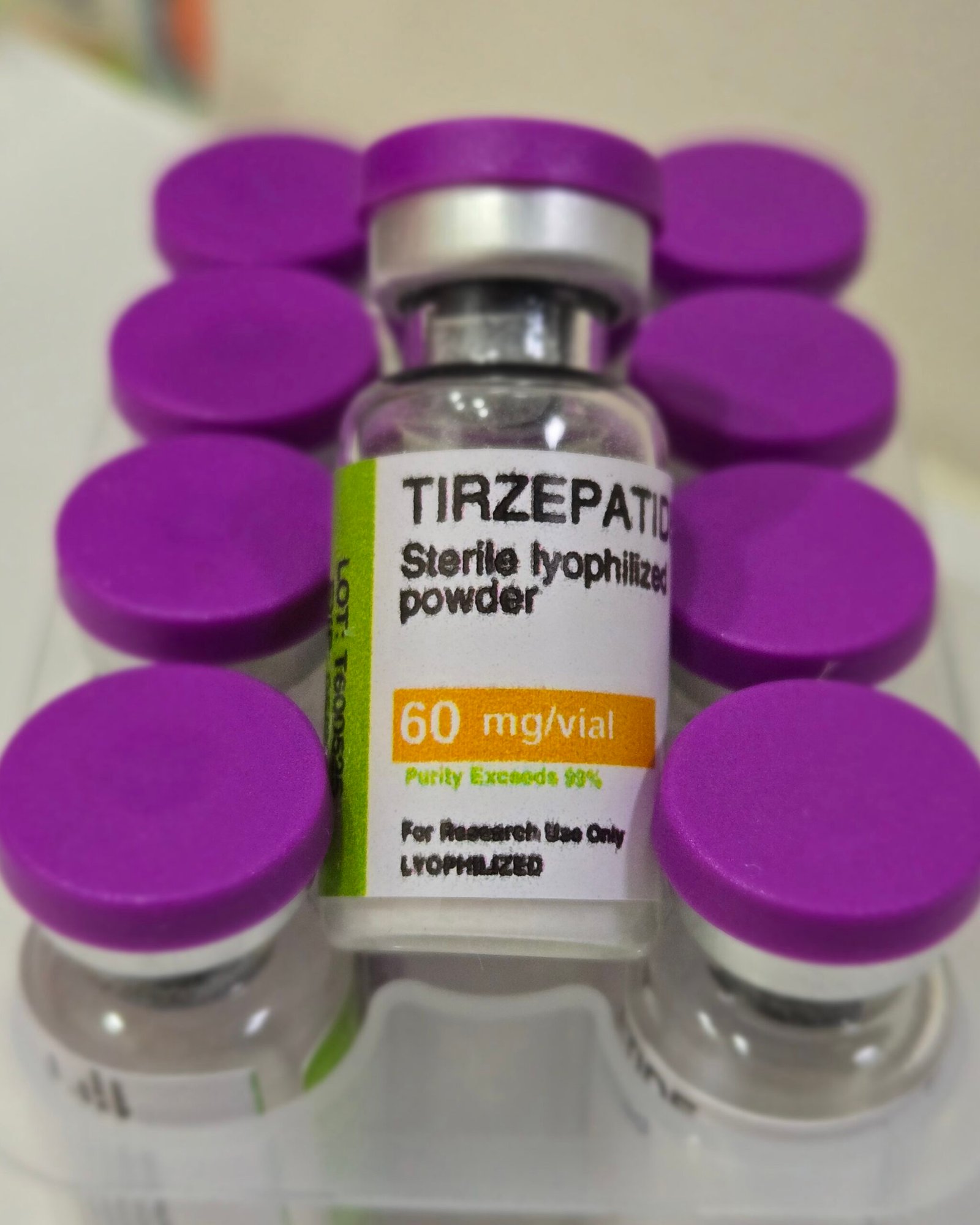
You just opened your shipment, pulled out the vial, and froze. Instead of the crystal-clear liquid you expected, it’s a distinct, unmistakable shade of pink.
Maybe it’s a soft rose hue. Or maybe it’s a bright, aggressive magenta that looks more like a cocktail than a medical-grade injection. Your first instinct is probably to panic—and honestly, that’s a pretty fair reaction when you're about to stick a needle in your body.
But here’s the thing. Pink tirzepatide isn't always a sign of a "bad batch," though it is a massive red flag depending on where you got it. If you’re using the brand-name stuff from Eli Lilly, like Mounjaro or Zepbound, any color at all is a major problem.
If you’re using a version from a compounding pharmacy, the answer is usually much simpler. It’s almost certainly Vitamin B12.
Why is my tirzepatide pink?
Basically, many compounding pharmacies mix the active ingredient (tirzepatide) with other supplements. The most common additive is cyanocobalamin, which is just the fancy scientific name for Vitamin B12.
B12 is naturally a deep red or bright pink in its liquid form. When you dilute even a small amount of it into a clear solution of tirzepatide, it acts like a drop of food coloring in water. It turns the whole vial pink.
Why do they do this? It’s not just for aesthetics.
Compounding pharmacies often add B12 because tirzepatide can be absolute hell on your energy levels and stomach. Many patients experience "GLP-1 fatigue," that heavy, bone-tired feeling that hits a day or two after the shot. B12 is well-known for supporting energy metabolism and red blood cell production.
Some doctors also believe it helps take the edge off the nausea. Whether it actually works better when injected together is still debated in the medical community, but the pink color is a direct result of that "cocktail" approach.
The "Pink" vs. "Clear" Rule
If you want to know if your medication is safe, you have to look at the label first.
- Brand-name Mounjaro or Zepbound: Should be 100% colorless to slightly yellow. Eli Lilly does not add B12. If your official auto-injector pen has pink liquid in the window, do not use it. It’s either contaminated, degraded, or a counterfeit.
- Compounded Tirzepatide: Check your prescription or the vial label. Does it say "Tirzepatide/Cyanocobalamin" or "Tirzepatide/B12"? If yes, it’s supposed to be pink. If the label says "Tirzepatide" only and it’s pink, you need to call the pharmacy immediately.
When pink is actually a warning sign
Let's get serious for a second. We’re in 2026, and the market for these "skinny shots" is still a bit of a Wild West. While B12 is the most likely culprit, color changes can also mean your medication has "gone bad."
Tirzepatide is a peptide—a delicate chain of amino acids. It’s sensitive. If it gets too hot, sits in direct sunlight for a week, or reaches its expiration date, the chemical bonds can start to break down. This is called degradation.
Sometimes, degradation doesn't change the color at all. Other times, it can cause the liquid to turn a murky yellow or even a brownish tint. If your pink vial starts to look "off" or turns a muddy color over time, it’s likely losing its potency. It might not be "poison," but it definitely won't help you lose weight as effectively.
Particles and Cloudiness
Color is one thing, but texture is another.
Regardless of whether your liquid is clear, yellow, or pink, it must be perfectly transparent. If you see tiny white specks floating in it (particles) or if it looks "milky" or cloudy, do not inject it. This often indicates bacterial growth or that the proteins have "precipitated" (clumped together).
A cloudy pink vial is a hard no.
The counterfeit problem in 2026
The FDA and Eli Lilly have been playing cat-and-mouse with counterfeiters for years. In some cases, labs have been caught selling "tirzepatide" that was actually just B12 or even raw insulin.
Lilly issued an open letter recently warning that they’ve discovered "tirzepatide" being sold online that had completely different chemical structures than the real thing. Some of these fake products were pink.
If you bought your "tirzepatide" from a random website without a prescription, or from a "research chemicals" site, the pink color is a gamble. It could be B12. It could also be a different peptide entirely, like Retatrutide, which some underground labs tint to distinguish from other products.
Actionable steps for your next dose
Don't just stare at the vial and wonder. Here is what you should actually do:
- Verify the Pharmacy: If you’re using compounded meds, ensure the pharmacy is PCAB-accredited or at least a licensed 503A or 503B facility in the US.
- Read the COA: Reputable compounding sources provide a "Certificate of Analysis." This document proves what’s inside. If they can't show you one, find a new source.
- The Temperature Test: Real tirzepatide should be kept in the fridge (between 36°F and 46°F). If your pink liquid arrived hot or sat in a 100-degree mailbox, the pink color might be the least of your worries. Heat kills peptides.
- Ask for "Plain" Tirzepatide: If the pink color makes you nervous or if you're sensitive to B12 (some people get acne or "B12 jitters"), you can ask your provider for a formulation without additives.
If your vial is pink because of B12, you're fine. It’s just a supplement. But if you’re ever in doubt, remember that the cost of a new vial is way lower than the cost of an ER visit for a systemic infection or a bad reaction to a mystery liquid.
Always trust your gut. If the pink looks "wrong," or if the liquid is cloudy, toss it and call your doctor. Be safe, stay skeptical, and keep an eye on those labels.