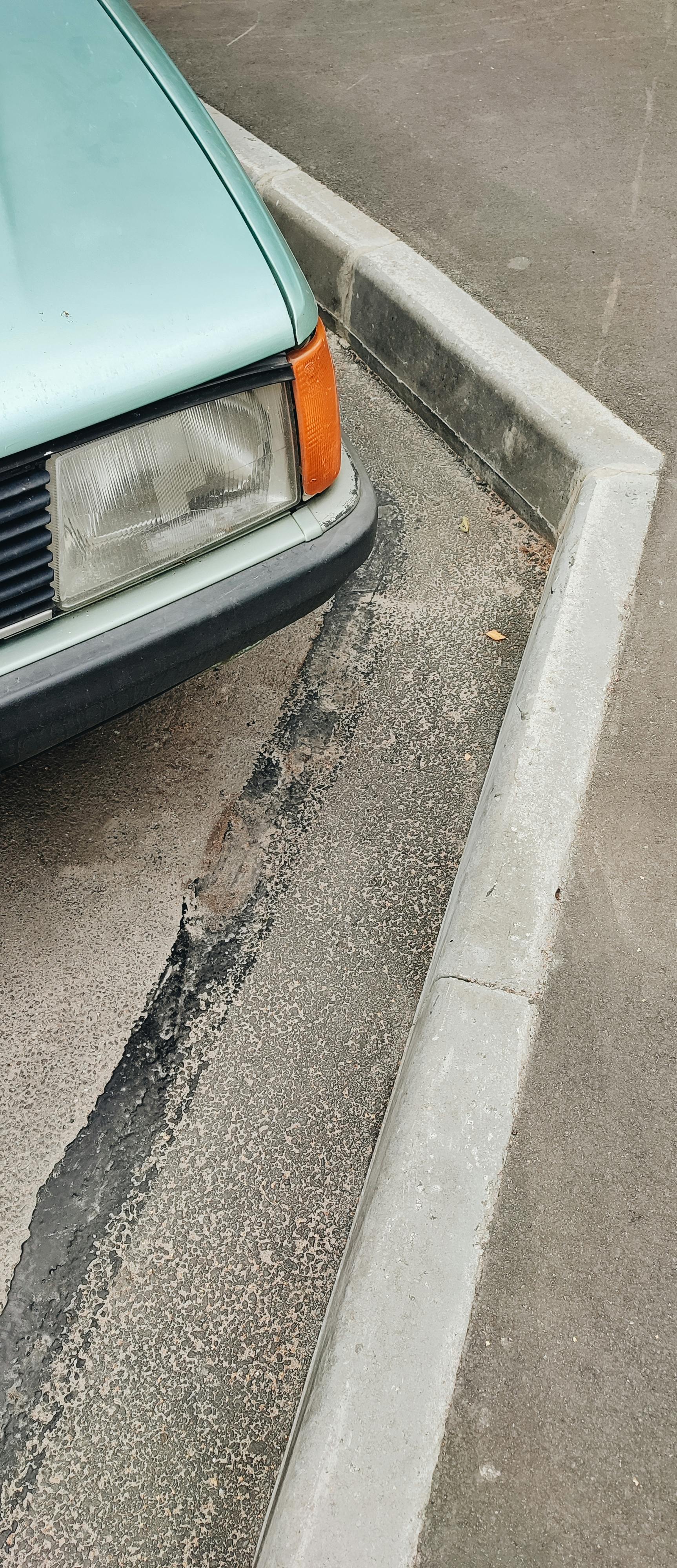
You’ve seen them. Those long, spindly wires poking out from the lower wheel wells of a vintage Cadillac or a meticulously maintained lowrider. They look like whiskers. Honestly, if you didn't know better, you might think the car was trying to feel its way through the dark. And in a sense, it is. Putting a car with curb feelers back on the road isn't just about nostalgia; it’s a tactile solution to a problem that modern ultrasonic sensors still haven't quite mastered.
People laugh. They think it's a "pimp my ride" relic from the 1950s. But then they scrape a $1,200 alloy rim on a concrete barrier at a Starbucks drive-thru. Suddenly, those "whiskers" don't seem so silly. Also making headlines in this space: The Golden Handcuffs of Mountain View.
What a Car With Curb Feelers Actually Does
The concept is dead simple. It’s a spring-loaded wire, usually chrome, that sticks out about six to twelve inches from the side of the car, near the bottom of the fender. When you’re parallel parking, the wire hits the curb before your tire does.
The sound is unmistakable. Additional insights regarding the matter are detailed by ELLE.
Scritch.
That high-pitched metallic rasp vibrates through the chassis and into the cabin. It tells you exactly where the pavement ends and the curb begins. It's an analog warning system. No software. No cameras. Just a piece of metal doing its job.
Back in the day, especially during the post-WWII automotive boom, cars were massive. We’re talking about "land yachts" like the 1959 Cadillac Fleetwood. These vehicles had hoods longer than some modern studio apartments. Visibility was—to put it mildly—garbage. You couldn't see the passenger-side front wheel if your life depended on it. Curb feelers were a necessity for anyone who didn't want to shred their expensive white-wall tires.
The Lowrider Connection
In the Chicano lowrider community, these aren't just tools. They’re jewelry. If you’re rolling in a '64 Impala with deep-dish chrome wires and 5.20 bias-ply tires, the last thing you want is a curb rash. But more than that, a car with curb feelers signifies a specific aesthetic. It’s part of the "bomb" style or the traditional lowrider look.
Owners often pair them with swamp coolers and sun visors. It’s about the silhouette. The way the feeler extends the line of the fender creates a wider, more grounded appearance. You’ll see them mounted in pairs—one in front of the wheel, one behind—to catch the curb regardless of whether you’re pulling in or backing out.
How Modern Tech Fails Where the Feeler Wins
We have 360-degree bird's-eye view cameras now. We have proximity sensors that beep until you want to rip the dashboard out. So, why would anyone still want a mechanical wire?
Accuracy.
Ultrasonic sensors use sound waves. They’re great at detecting a wall or another car. They’re notoriously bad at detecting low-profile curbs, especially those slanted "Hollywood" curbs. If the curb is lower than four inches, your Tesla might not even acknowledge it exists until you hear the sickening crunch of metal on stone.
A curb feeler doesn't care about the height of the curb. If it’s there, it hits it.
Installation Reality Check
Most people think you just "bolt them on." Sorta.
Most vintage-style feelers use a clamp system. You slide the clamp onto the lip of the fender wheel well and tighten a couple of set screws. However, on modern cars with plastic fender liners, this is a nightmare. There’s nothing to grip. If you’re trying to put these on a 2024 Honda Civic, you’re probably going to have to drill into the metal or create a custom bracket.
And let's talk about the "tangling" issue. If you're someone who uses automatic car washes with the spinning brushes, forget it. Those brushes will wrap around a curb feeler and rip it—along with a chunk of your fender—clean off. A car with curb feelers is a car that gets hand-washed. Period.
The Physics of the "Scritch"
It isn't just about the noise. It’s about the vibration. Because the feeler is typically made of stiff spring steel, the vibration travels through the mounting point into the frame of the car. You feel it in your seat. You feel it in the steering wheel.
This tactile feedback loop is much faster than processing a "beep" from a sensor and looking at a screen to see which corner of the car is glowing red. It’s an extension of the driver’s own nervous system.
Common Misconceptions and Styles
There are two main types of curb feelers you'll find today:
- The Single Wire: The most common. A long, flexible rod with a heavy spring at the base.
- The Loop: A continuous loop of wire. These are less likely to snag on debris but don't provide that sharp, rasping sound that some purists crave.
A big mistake people make is mounting them too high. If the feeler is level with the top of the curb, it might slide over it without making a sound. You want it angled slightly downward. Ideally, the tip should be about two inches off the ground.
Is it Legal?
Generally, yes. There aren't specific laws in most US states banning curb feelers. However, they can fall under "protruding object" regulations if they stick out too far. Most aftermarket feelers are designed to stay within the width of the side-view mirrors. If your feeler sticks out further than your mirrors, you might have a problem with a grumpy highway patrol officer or, more likely, you’ll just snag a pedestrian’s pant leg.
Making the Choice for Your Vehicle
If you're driving a classic, it’s a no-brainer. It adds value, style, and protection. If you're driving a modern car with expensive aftermarket rims, it's a bold choice. You have to be okay with the "old school" look.
But honestly? If you live in a city like San Francisco or Chicago where parallel parking is a blood sport, the utility outweighs the weird looks you’ll get. Protecting a set of $4,000 forged wheels is worth a $20 pair of chrome wires.
Step-by-Step Practical Implementation
If you’re ready to put these on your ride, don't just wing it.
First, measure your ground clearance. Buy a set of spring-loaded steel feelers; the cheap plastic ones are useless and break the first time they hit a pebble. Look for brands like United Pacific or Lowrider Accessories—they’ve been making these for decades and use actual chrome-plated steel.
When installing, mount them on the passenger side first. That's where 90% of curb damage happens. Use a piece of masking tape on your fender to mark exactly where the clamp will go so you don't scratch the paint during the fitment process. Tighten the screws, then give the wire a flick. It should vibrate freely without rattling against the body of the car. If it hits the body when it vibrates, you need to angle it further out or use a rubber spacer.
Check the tension every few months. Road vibration likes to loosen those set screws. A lost feeler is a bummer; a feeler that falls off and punctures your own rear tire is a disaster.
Once they're on, go to a quiet street and practice. Get a feel for the distance. Soon, you'll be parking an inch away from the concrete with total confidence, guided by nothing but a thin wire and a little bit of noise.