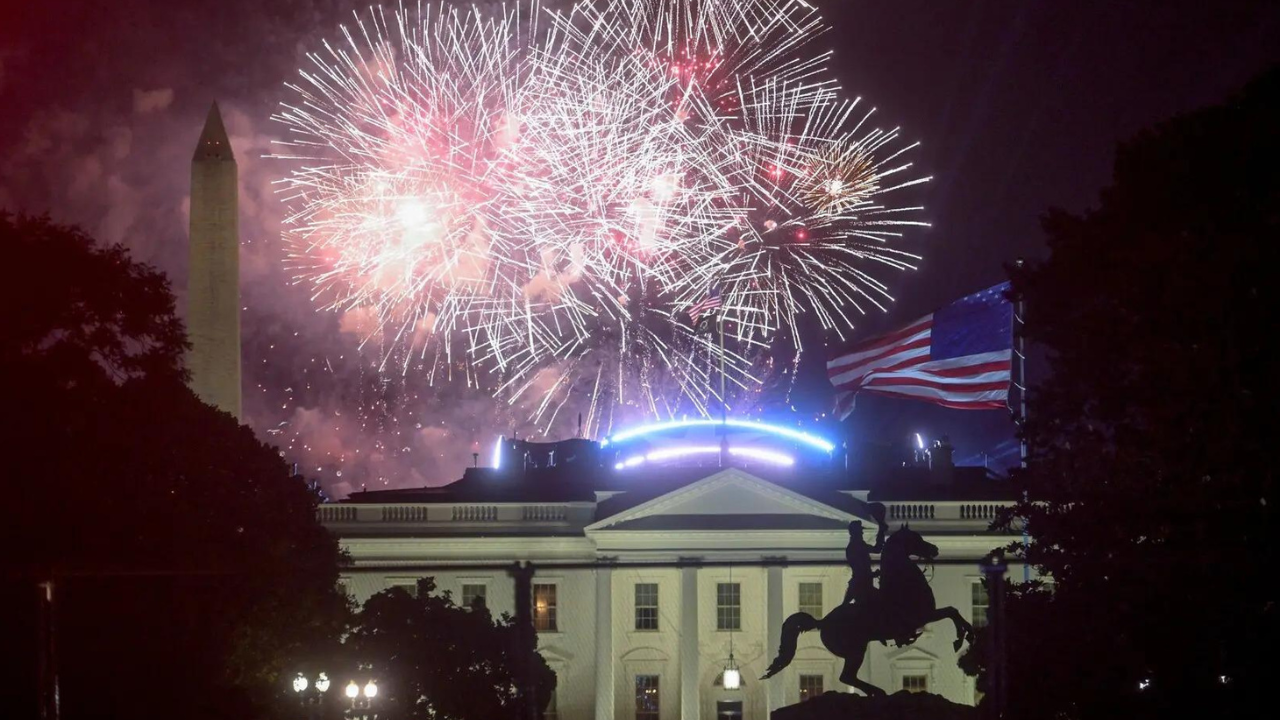
You probably watched the historic UFC Freedom 250 matches on the White House South Lawn over the weekend, unaware of the terrifying plot ticking away in the background. While fighters like Ilia Topuria and Justin Gaethje slugged it out in a temporary outdoor Octagon, federal agents frantically worked behind the scenes to stop a massive, coordinated attack designed to spark a political revolution.
Federal court records unsealed today reveal a terrifyingly elaborate plot involving explosive drones, hidden snipers, and targeted political assassinations. Law enforcement didn't just stumble onto this threat. They stopped it cold just days before the first bell rang.
The Vanguard of the Old Plot
The details of the multi-state conspiracy read like a political thriller script. According to unsealed FBI affidavits, the plot originated in March 2026 within a TikTok group boldly named "Vanguard of the Old." The group consisted of roughly 20 people scattered across the country who believed the United States needed to be torn down and rebuilt from scratch.
To plan the logistics, the conspirators moved their operation over to Signal, relying on end-to-end encryption to coordinate their movements, share detailed tactical maps of Washington, and discuss the location of safe houses.
Their strategy was incredibly complex. The group planned to meet up in Fredericksburg, Virginia, heavily armed and wearing body armor. They intended to create a chaotic "demonstration" on the north side of the White House as a distraction. While law enforcement focused on the crowd, the group planned to launch small, unmanned drones rigged with explosive devices.
The plan called for detonating these explosive drones directly over the north side of the outdoor UFC arena. The conspirators anticipated that the sudden explosions would cause mass panic, forcing high-profile attendees, celebrities, and senior government officials to evacuate southward.
That was where the trap was set. Conspirators acting as snipers and ground shooters were supposed to wait along the southern escape routes, opening fire on the fleeing crowd. The explicitly stated goal of the attack was to assassinate high-value targets and jumpstart a violent revolution.
How a Single Mother Defeated the Conspiracy
The entire plan crumbled because of a tip from a worried mother. Last week, an Ohio woman noticed her 19-year-old son, Tycen Proper, acting strangely. He had suddenly spent about $3,000 of his high school graduation money on a massive stockpile of tactical gear.
The mother contacted local law enforcement to express serious concerns about her son's recent online communications, ammunition hoarding, and sudden purchases of a rifle, a new shotgun, ballistic plates, and a plate carrier.
Local police looped in federal investigators. On June 10, four days before the high-profile fight night, the FBI intercepted the threat. When federal agents interviewed Proper, the young man cracked under pressure. He admitted his participation in the plot, walked agents through the logistics, and handed over his phone.
A rapid, multi-state sweep by the FBI, the Secret Service, and the Department of Justice led to five immediate arrests across Ohio, Missouri, Nebraska, and California.
The individuals currently facing serious federal charges include:
- Tycen Proper of Ohio, who faces charges of attempted murder of a federal officer and conspiracy.
- Daniel Eskridge of Missouri.
- Abraham Hermosillo Alvarez of Nebraska.
- Bryan Omar Roa of California.
- Michael Alan Thomas of California.
Federal officials state that the investigation remains highly active, with several unidentified suspects still at large.
The Inside Reality of an Outdoor Security Nightmare
Holding a massive pay-per-view sporting event on the South Lawn of the White House was an unprecedented logistical gamble. The event was put together to celebrate President Donald Trump's 80th birthday and tie into the early festivities of America's 250th anniversary. But from a security standpoint, it was a waking nightmare.
Before the fights even began, podcaster and UFC commentator Joe Rogan publicly questioned the wisdom of the venue, calling the outdoor setup a security mess and a gimmick. He was right to worry. Securing an indoor arena like the T-Mobile Arena in Las Vegas is a predictable science. You control the entrances, the air space, and the immediate perimeter.
An open-air event on the White House grounds leaves high-profile figures completely exposed to the elements and external threats. The scale of the security footprint for the event was already staggering, requiring a complete ground stop of flights at nearby Reagan National Airport due to a massive post-fight fireworks display.
The Secret Service and the FBI were forced to monitor not just the physical ground perimeter, but the airspace above the National Mall for unauthorized drone activity.
Turf Wars in Washington
Even though the plot was successfully dismantled without a single shot being fired, the aftermath has ignited an uncomfortable political spat among Washington's top law enforcement agencies.
FBI Director Kash Patel took to social media to announce the successful operation, claiming the bureau's rapid multi-state operation stopped the attacks cold.
However, the Secret Service immediately pushed back against the narrative that the FBI deserved all the credit. Secret Service Deputy Director Matthew Quinn gave a tense briefing, visibly frustrated by the public disclosure of an ongoing investigation.
Quinn warned officials not to "choke on their own smoke," stating flatly that the Secret Service led the investigation from the very beginning. He noted that his agency deliberately chose not to leak details to the press to protect the security plan and keep the ongoing hunt for the remaining suspects intact.
Next Steps for Event Security
This close call changes the math for high-profile public gatherings moving forward. If you are involved in organizing large-scale corporate functions, public events, or local community gatherings, you need to adapt to a landscape where digital threats materialize into real-world violence.
First, your security protocol must account for consumer drone threats. The technology to weaponize hobbyist drones is widely available, and standard perimeter fencing does nothing to stop an airborne threat. Look into commercial radio-frequency drone detection systems that alert security teams the moment a drone controller powers on nearby.
Second, don't ignore the digital footprint. The conspirators in this case were radicalized on public platforms like TikTok before moving to encrypted apps. Monitor public forums and social mentions surrounding your event's location for anomalies or targeted harassment campaigns.
Finally, maintain an open line of communication with local law enforcement and federal field offices when hosting high-net-worth individuals. The transition from an online threat to a physical deployment can happen in less than 48 hours.