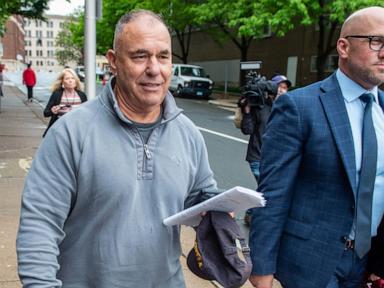
Every time a disgraced public official skips town before a federal judge can hand down a prison sentence, the public gasps in manufactured shock. Headlines scream about brazen betrayals, border control blind spots, and the shocking audacity of a fugitive politician vanishing into the Mediterranean sun.
It is pure theater.
Nobody should be surprised when a white-collar criminal with access to offshore accounts, a valid passport, and advance warning takes flight. The shock is entirely performative, manufactured by legal pundits and prosecutors who pretend our judicial system is designed to trap everyone equally. It is not. Our pre-sentencing bail system is a two-tier loyalty program. For the street-level offender, pre-trial detention is immediate, crushing, and absolute. For the connected municipal official or corporate executive convicted of public corruption, post-conviction freedom is an invitation to pack a suitcase.
Let us dismantle the comforting lie that this is an administrative failure. It is an intentional design feature of a system that protects its own until the very last second.
The Myth of the Reliable Defendant
Consider the mechanics of how a federal or state corruption case winds down. A jury returns a guilty verdict or a plea deal is struck. The defendant stands convicted of betraying the public trust, embezzling taxpayer funds, or rigging municipal contracts. At that exact moment, the mathematical risk of flight spikes to one hundred percent. The defendant knows prison is coming. They know the exact numerical range of the sentencing guidelines. They know their career, their social standing, and their freedom are evaporating.
Yet, judges routinely grant unsecured bonds, allow travel on surrendered passports through diplomatic oversight gaps, or fail to lock down defendants the second a gavel falls on a guilty verdict.
Why? Because of a polite fiction known as community ties.
Prosecutors and defense attorneys whisper to judges about property ownership, local family roots, and a pristine history of courtroom appearances during the trial phase. But trial appearance is cheap insurance. During a trial, a defendant still believes they might beat the rap. They are fighting for acquittal. Once convicted, that calculus flips overnight. The fight is over. The only variable left is whether you sleep in your own bed or a federal penitentiary.
When you leave a convicted felon unbound in the community after a guilty verdict, you are not extending constitutional mercy. You are handing them the keys to the getaway car.
Jurisdiction Arbitrage as a Wealth Class Perk
Fleeing to Greece or any other Mediterranean refuge is not a spur-of-the-moment cinematic escape. It is calculated jurisdiction arbitrage.
Wealthy defendants and corrupt officials do not wander aimlessly into international airports with a duffel bag of cash. They cultivate exit strategies years in advance. Dual citizenship, foreign property holdings, family connections in sovereign states with complex extradition treaties, and liquid assets stashed in opaque banking channels are standard operating procedure for anyone playing high-stakes administrative roulette.
Greece, much like Cyprus, Malta, or various non-extradition pockets across the globe, offers a cocktail of bureaucratic inertia, familial safety nets, and legal hurdles that make swift repatriation nearly impossible. Extradition law between sovereign nations is a slow-motion diplomatic glacier. Treaties are riddled with political exceptions, dual criminality requirements, and endless appellate layers that turn every return attempt into a multi-year constitutional soap opera.
When a former Connecticut municipal official vanishes across the Atlantic, watch how quickly commentators blame Greek border security or international police cooperation. That is misdirection. The failure occurred months earlier in a local courthouse where a judge looked at a convicted embezzler and decided that a signed promise to return was legally heavier than a private jet ticket to Athens.
The Dual Track Justice Reality
Let us talk about the stark inequality of pre-sentencing detention.
If an indigent defendant in Hartford or Bridgeport is picked up on a narcotics charge or a low-level property crime, they sit in a county jail for months awaiting trial because they cannot scrape together a few hundred dollars for a bail bondsman. They miss rent, lose jobs, and suffer immediate carceral degradation before a single fact of their guilt has been established in court.
Contrast that with the public corruption defendant. They sit at the defense table in a tailored suit. They walk out of the courthouse on their own recognizance after being convicted of defrauding millions of dollars from taxpayers. They spend their final weeks of freedom dining at upscale restaurants, attending fundraisers, and liquidating assets while prosecutors hem and haw over whether they pose an actual danger to the community.
The legal standard for detention pending sentencing under federal rules requires clear and convincing evidence that the person is not likely to flee or pose a danger. Notice the phrasing. For white-collar criminals, a polite demeanor, a clean haircut, and a well-spoken attorney are routinely accepted as proof against flight risk.
This is where expertise meets institutional bias. I have watched corporate white-collar defense attorneys weaponize judicial courtesy for decades. They frame the white-collar criminal as fundamentally different from violent or property offenders—as if stealing millions through municipal kickbacks somehow calms the flight instinct. In reality, the person who steals millions has the financial liquidity to fund an international disappearance. The street offender sleeping in a holding cell does not.
Dismantling Ankle Monitor Theater
Whenever public outcry demands action against potential flight risks, tech-solutionists and lazy regulators point to one favorite gadget: the electronic monitoring anklet.
It is security theater of the highest order.
An ankle monitor does not stop a car, board a commercial flight, or man a private yacht. It merely broadcasts a GPS coordinate while the wearer walks out the front door. By the time a monitoring center alerts authorities that a convicted felon has cut off their strap or crossed a restricted perimeter boundary, that fugitive is already airborne or sitting in a rented car halfway to a private airstrip.
Relying on GPS trackers for high-net-worth defendants facing decade-long prison sentences is like securing a vault with a velcro strap. If the penalty for staying is ten years in a concrete box, no plastic bracelet on earth is going to anchor someone to the jurisdiction.
The only effective detention for a convicted felon facing severe prison time is physical containment behind secure walls. Anything less is an open invitation for international travel.
The Uncomfortable Truth About Corruption Culture
Why does municipal and state corruption persist with such stubborn resilience? Because the downside risks are miscalculated by the perpetrators.
For decades, public corruption was treated as a sort of gentlemanly administrative overreach. Prosecutors approached public officials with kid gloves, reluctant to aggressively lock down suspects because of political optics or institutional courtesy. Even when convictions are secured, the sentencing phase is dragged out for months through endless post-trial motions, sentencing memoranda, and compassionate release arguments.
That protracted timeline is a luxury available exclusively to the white-collar class.
When a corrupt official realizes their trial is lost, they look at the timeline. Six months until sentencing. Another three months for appeal bonds. That is a nine-month window of operational freedom. In the digital age, nine months is an eternity to liquidate real estate, transfer cryptocurrency, establish residency abroad, and construct an impenetrable wall of foreign legal defense.
How to Fix a Broken System
If we are serious about stopping white-collar flight, we must abandon the polite fictions of the past.
First, mandatory immediate remand upon conviction. The moment a jury or judge finds a defendant guilty of a felony involving breach of public trust or major financial fraud, bail is revoked automatically. No grace period. No weekend to get your affairs in order. No self-surrender dates three months down the road. Conviction means immediate custody. If you are guilty, your freedom ends in the courtroom.
Second, overhaul extradition treaties with partner nations to create expedited repatriation fast-tracks for convicted public officials. A corrupt bureaucrat who loots taxpayer funds should not enjoy years of luxury litigation in foreign appellate courts.
Third, strip away the asset shielding that allows defendants to finance their own escapes while awaiting sentencing. Restitution orders and asset freezes must be initiated at indictment, not sentencing, cutting off the liquidity required to charter private flights across the Atlantic.
Stop blaming the countries that receive these fugitives. Stop marveling at their audacity. Start holding accountable the legal machinery that packs their bags and waves them goodbye.