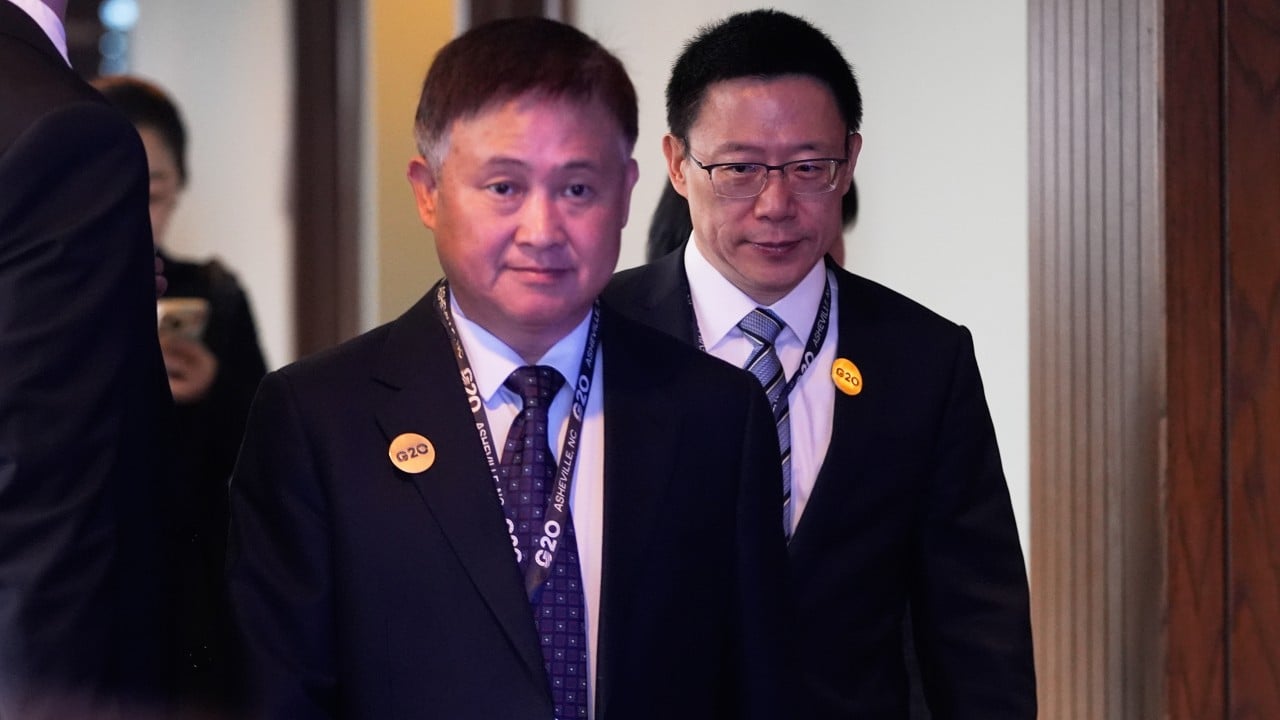
A single phrase spoken inside a heavily guarded conference room in Washington or Geneva can empty a factory floor three thousand miles away. We forget this. We look at currency charts as if they were weather patterns, cold and distant, divorced from the sweat of human labor. But behind every decimal shift in an exchange rate sits a family deciding whether to buy shoes for the winter or save the remaining coins for next month's rent.
Consider a man named Chen. For twenty-two years, Chen has welded steel frames in an industrial suburb just outside Hangzhou. His hands are calloused, his skin is permanently kissed by the scent of ozone and hot metal, and his entire life is tethered to the rhythmic hum of global trade. When the central bank chief of China steps up to a podium at the G20 summit, Chen does not watch the live stream. He cannot afford the luxury of midday television. Yet, within hours, the vibrations of those spoken words reach his workshop floor. An order is cut. A shipment is delayed. The invisible machinery of monetary policy dictates whether Chen works overtime this Saturday or packs his tools early.
We talk about macroeconomic indicators as if they belong to textbooks. Gross domestic product, liquidity ratios, structural reforms, monetary easing. These are the sterile shields we use to sanitize the chaotic reality of human survival. When the central bank governor addresses the world's financial elite at these global gatherings, the goal is rarely to entertain. The goal is to signal intent, to calm trembling markets, and to weave a narrative of stability in a world that feels increasingly unhinged.
Listen closely to what was actually said beneath the diplomatic varnish at the recent G20 meetings. The message was simple, even if wrapped in the dense jargon of central bankers: we are navigating a narrow corridor between inflation and stagnation, and we will use every tool at our disposal to keep the floor from giving way.
To understand why this matters to a person who has never set foot in a bank, we have to look past the spreadsheets. Money is trust materialized. When the central bank chief speaks, they are managing that trust on a planetary scale. If global investors believe that Beijing will successfully stimulate domestic consumption while keeping debt bubbles from bursting, capital flows outward into emerging projects, factories expand, and men like Chen keep welding. If that trust fractures, capital panics. It flees. Projects halt.
I remember standing on a trading floor in Shanghai years ago when a sudden policy shift was announced. The noise was deafening. Hundreds of young analysts sat before arrays of glowing monitors, their faces illuminated by the green and red tickers of cascading stock values. In an instant, a room full of brilliant minds went completely silent. Not a celebratory silence. A fearful one. Someone dropped a coffee mug, and the ceramic shatter sounded like a gunshot. That is the true weight of a central banker's remarks. They are not merely reciting data points; they are pulling levers that dictate the financial heartbeat of billions.
The G20 stage amplifies every syllable. When China’s monetary leadership speaks to the international community, they walk a tightrope. On one side lies the pressure from Western economies worried about excess industrial capacity and cheap exports flooding their shores. On the other side lies the domestic imperative: a cooling property sector, local government debt that weighs like an anchor, and a population that needs to feel confident enough to spend their savings rather than hoard them under the mattress.
This is the human drama hidden inside monetary policy. It is a psychological game played with trillions of dollars.
Think about the young couple in Shenzhen trying to buy their first apartment. Every word uttered by financial regulators in high-level summits trickles down into mortgage rates, down payment requirements, and developer solvency. When the central bank promises targeted support for the real estate market, that couple dares to dream of a permanent home. When those policies falter, the dream recedes into the realm of impossibility. The G20 remarks are the weather vane telling them whether to brace for a storm or step out into the sun.
We often make the mistake of viewing global finance as a machine operated by dispassionate algorithms. We imagine pristine server rooms humming in Zurich or New York, processing trades at the speed of light. But pull back the curtain, and you find human anxiety. You find governors losing sleep over currency depreciation. You find ministers weighing the misery of short-term pain against the promise of long-term stability.
The remarks at the G20 were not just diplomatic theater. They were an exercise in narrative control. In a global economy rocked by supply chain fractures, geopolitical friction, and shifting trade alliances, certainty is the rarest commodity on earth. By projecting calm resolve, the central bank chief attempted to manufacture that certainty out of thin air.
Whether it worked will not be decided in the conference halls of the G20. It will be decided in the quiet hours of a Tuesday night, when a small business owner in Chengdu looks at her ledger and decides whether to hire her next employee, or when Chen walks out of his Hangzhou factory, wipes the soot from his brow, and wonders what the coming year will demand of his tired hands.