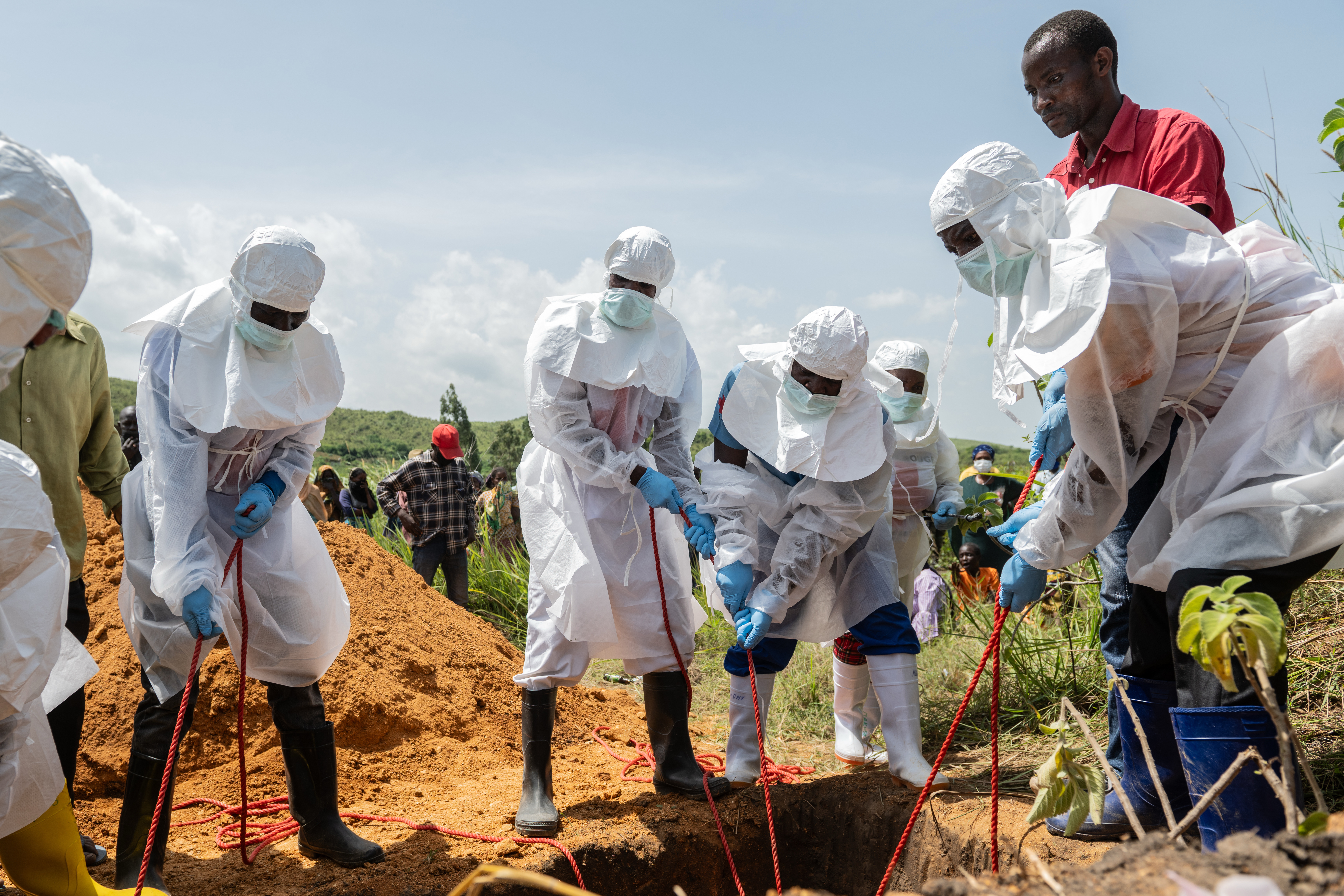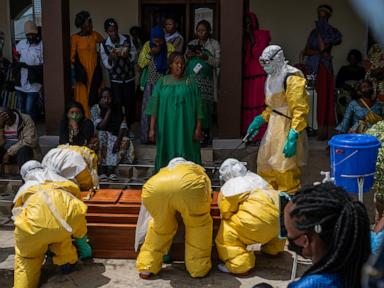
Mainstream media loves a predictable script. When young men in Beni or Butembo storm a Congolese quarantine center to reclaim the bodies of their deceased relatives, the international press prints a collective sigh. They paint a picture of tragic ignorance, backward superstition, and a local population holding back their own salvation. They tell you that "misinformation" is killing people.
They are completely wrong. Learn more on a connected topic: this related article.
The chaos unfolding around Ebola isolation wards in the Democratic Republic of Congo is not a crisis of science literacy. It is a rational, predictable response to a medical model that strips away human dignity at the exact moment people are most vulnerable. If you think the solution to the next outbreak is simply more armed guards and sharper public relations campaigns, you are virtually guaranteeing the next catastrophe.
The Quarantine Trap: Treating Humans Like Biohazards
For decades, the standard international response to a hemorrhagic fever outbreak has been clinical isolation. It makes perfect epidemiological sense on paper. You identify the infected, you remove them from the community, and you break the chain of transmission. Additional analysis by WebMD delves into similar views on the subject.
But humans do not live on paper.
When international NGOs roll into a town, they erect plastic-walled Ebola Treatment Centers (ETCs). To the locals, these look less like hospitals and more like high-security detention facilities.
- The Void of Information: Loved ones walk into a white tent. They disappear behind a plastic barrier. Often, they never walk out.
- The Sanitized Death: Families are told their relative died, but they cannot see the body. They cannot perform traditional washing rituals.
- The Disappearing Corpse: The body is wrapped in thick, opaque body bags and buried in an unmarked plot by workers wearing terrifying, faceless personal protective equipment (PPE).
Imagine a scenario where your child is taken by strangers speaking a different dialect, put into a plastic box, and buried in a ditch without your final goodbye. You would fight back too.
The "riot" at the hospital is not an attack on medicine. It is a desperate rescue mission to salvage the dignity of the dead. In many traditional Congolese cultures, a poorly handled burial condemns the deceased to a restless afterlife and brings a curse upon the living family. Western intervention asks people to risk eternal damnation for the sake of biological containment. It is a trade-off no one should expect them to make.
The Illusion of Misinformation
The World Health Organization and various well-funded global initiatives pour millions into "community engagement" and combating rumors. They assume that if people just understood how the filovirus replicates, they would willingly hand over their dying parents.
This is the peak of arrogant technocracy.
Local skepticism toward international health responses is deeply rooted in historical reality, not baseless paranoia.
| The Institutional Promise | The On-the-Ground Reality |
|---|---|
| "We are here solely to save lives and protect your health." | Decades of brutal conflict occur with zero foreign intervention, yet millions of dollars materialize instantly when a disease threatens global aviation networks. |
| "Trust the government health officials." | The state apparatus has historically been a source of corruption and extraction, not care. |
| "This experimental treatment is for your benefit." | Foreign extraction of biological data often leaves nothing behind for local infrastructure once the crisis abates. |
I have watched public health agencies burn through massive budgets trying to "educate" populations that are already hyper-aware of their surroundings. The locals do not need a lecture on zoonotic spillover. They need to know why a foreign doctor cares about a fever today when nobody cared about the militia violence that slaughtered their neighbors last week.
Weaponized Public Health Costs Lives
When resistance occurs, the immediate reflex of local authorities and international bodies is to deploy security forces. They militarize the health response.
This is fatal. The moment you put an armed soldier outside an isolation ward, you transform a medical sanctuary into a prison.
Militarized Response ➔ Increased Terror ➔ Hidden Cases ➔ Wider Spreads
When communities fear the response more than the disease, they stop reporting symptoms. They hide their sick in secret rooms. They bury their dead in the dead of night, handling highly infectious corpses without any protection at all. The heavy-handed enforcement designed to contain the virus ends up driving it underground, accelerating the very spread it was meant to stop.
Decentralization Is the Only Way Forward
The current centralized ETC model is broken. It acts as a magnet for community rage and a breeding ground for institutional distrust. To fix this, the entire architecture of outbreak intervention must be dismantled and rebuilt from the ground up.
1. Demolish the Plastic Walls
Isolation must happen within the community, not away from it. Dr. Paul Farmer and organizations like Partners In Health proved in Sierra Leone that care improves dramatically when family members are integrated into the process. If you can train a local youth to safely deliver food or sit at a safe distance behind a transparent mesh barrier where they can see and talk to their relative, you eliminate the terrifying mystery of the orange zone.
2. Negotiate the Rituals, Don't Ban Them
Safe and Dignified Burials (SDB) cannot be a non-negotiable dictates handed down from Geneva. They must be negotiated compromises. If the family must wash the body, the health response must find ways to provide chemical disinfectants, protective gear, and oversight so the ritual can happen safely. If a compromise cannot be reached, the family must at least see the face of the deceased through a body bag window before interment.
3. Fund Permanent Infrastructure, Not Parachute Medicine
The international community loves "crisis mode" because it justifies massive emergency procurement contracts. But the money evaporates the moment the outbreak is declared over. If you want a population to trust your doctors during an epidemic, those doctors need to be there treating malaria, clean water deficits, and basic maternal health during peacetime. Trust cannot be parachuted in on a cargo plane.
The uncomfortable reality is that the global health apparatus prefers a compliant, silent patient population. When locals push back, the system labels them as ignorant or violent to cover up its own systemic failures in empathy and cultural competence.
The young men storming the hospital doors are pointing directly at the flaw in the system. Stop looking at them as the disruption. They are the metric telling you that your intervention is failing the human test. Until the global health elite learns to value the social fabric of the communities they enter as much as they value biological containment, the cycle of violence, panic, and death will repeat itself indefinitely.