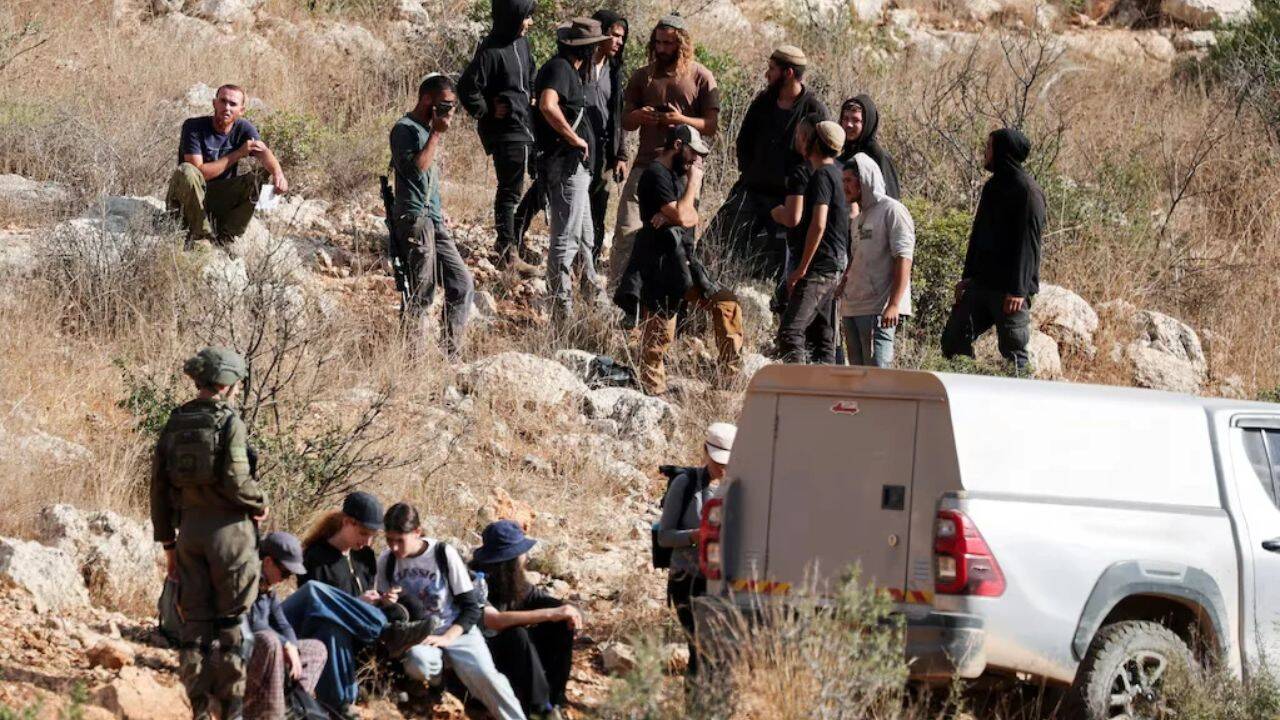
Five Italian women are home. The headlines are written. The diplomatic handshakes are complete, and the standard cycle of Western media outrage has already moved on to the next crisis.
If you read the mainstream wire reports on the recent detention and repatriation of five Italian activists in the West Bank, you got the exact same sanitized, predictable template journalists have used for twenty years. You read about consular intervention. You read about brief statements from Rome’s Foreign Ministry. You read a tidy summary that frames the entire incident as a minor bureaucratic hiccup between friendly nations, resolved smoothly once the passports were stamped at Ben Gurion Airport. If you found value in this article, you should look at: this related article.
That narrative is lazy. Worse, it completely obscures how modern border enforcement, consular diplomacy, and activist strategy actually operate on the ground.
Having spent fifteen years analyzing cross-border crisis management, diplomatic backchannels, and NGO field operations across the Levant, I have watched newsrooms fall for this exact trap dozens of times. When foreign nationals are detained in the West Bank and quietly deported, the press treats the repatriation as the end of the story. In reality, the repatriation is the weapon. For another perspective on this development, refer to the recent update from Reuters.
The Illusion of the Diplomatic Win
Mainstream coverage loves a clean resolution. When the Italian government secures the release of its citizens, editors frame it as a triumph of quiet diplomacy. Rome made a few phone calls, Jerusalem cooperated to avoid a public relations headache, and everyone went home happy.
Look closer at the mechanics of Israeli administrative and immigration law, and that comforting story falls apart.
Foreign activists entering Israel and the occupied territories do not operate under standard criminal jurisprudence unless they commit an act that forces a formal indictment. Instead, they fall under the jurisdiction of the Population and Immigration Authority and military orders governing Area C of the West Bank. When Israeli authorities detain European nationals during demonstrations or protective presence missions, they rarely want a trial. A trial creates discovery. A trial invites international press into a Jerusalem courtroom for six months. A trial turns five obscure activists into household names across Europe.
Deportation does the exact opposite.
By moving straight to detention and rapid repatriation, the state achieves total strategic success without firing a shot or filing a single charge. The activists are removed from the operational theater within days. Their visas are revoked. They are hit with a standard multi-year entry ban—often five to ten years—effectively neutralizing their ability to return to the region.
Meanwhile, the Italian Foreign Ministry gets to issue a press release claiming they "brought our citizens home safely." Both governments walk away looking competent to their domestic audiences, while the actual physical presence of international observers in the West Bank is quietly dismantled, five people at a time.
The "Protective Presence" Myth
To understand why this matters, you have to strip away the romanticism surrounding international activism in the Palestinian territories.
For decades, European NGOs and grassroots solidarity movements have relied on a doctrine known as protective presence. The theory is simple: Israeli soldiers and settlers are less likely to use lethal force or execute aggressive land seizures when white, European passport holders are standing there with cameras and high-visibility vests.
Twenty years ago, that theory held real weight. Today, it is operating on borrowed time.
I have watched NGO directors burn through hundreds of thousands of euros flying well-meaning European volunteers into Tel Aviv under the assumption that a European Union passport still functions as a magic shield. It does not. The operating environment in the West Bank has shifted fundamentally over the last several years, yet activist playbooks remain stuck in 2004.
When those five Italian women entered the West Bank, they were executing a legacy strategy against a modernized enforcement apparatus. Israeli security forces no longer view foreign activists as untouchable diplomatic landmines. They view them as logistical liabilities to be processed, photographed, fingerprinted, and placed on the next ITA Airways flight to Rome.
Why Consular Protection Is a Double-Edged Sword
Most people assume that when a citizen is arrested abroad, their embassy’s primary goal is to defend their legal rights and challenge the legitimacy of the arrest.
That is completely false.
A consulate’s sole mandate is risk mitigation and citizen extraction. Diplomats are not human rights lawyers. They are bureaucrats tasked with preventing a consular case from escalating into a bilateral trade or security dispute. When Italian diplomats step in to secure the release of detained activists, they almost never challenge the underlying validity of the detention or the entry ban. Doing so would require contesting Israeli sovereignty and military jurisdiction in the West Bank—a diplomatic third rail that no European government will touch over a handful of grassroots organizers.
Instead, the consulate acts as an expediter for the deportation. They verify identities, arrange emergency travel documents if needed, and ensure the detainees sign the voluntary departure paperwork so they can be cleared out of Givon Prison before the weekend news cycle peaks.
The activists get their freedom. The diplomats get a quiet inbox. The state gets a sterilized zone free of foreign witnesses.
Dismantling the Wrong Questions
Whenever an incident like this hits the wires, public discourse immediately fractures along predictable, useless lines. Let’s look at the questions people actually ask—and why every single one of them misses the mark.
"Did the activists break the law?"
This question assumes a standard, transparent legal framework applies equally to everyone in the West Bank. It does not. Area C operates under Israeli military law, where closed military zones can be declared verbally by a local commander in thirty seconds. An activist standing on a hillside at 9:00 AM is a legal visitor; at 9:01 AM, after a commander signs a piece of paper, that exact same activist is violating a military order. Asking whether they "broke the law" treats a fluid administrative tool as a fixed criminal code.
"Why didn't Italy demand an apology or sanction Israel?"
Because states do not burn diplomatic capital over deported activists. Italy and Israel maintain deep defense, intelligence, and energy ties. From Rome’s perspective, the system worked: Italian citizens entered a high-risk zone, got detained, and were returned unharmed within days. Demanding an apology would accomplish nothing except stalling defense procurement meetings.
"Does deporting foreign activists actually stop international scrutiny?"
Yes. Completely. Anyone who tells you that a brief wire story about a deportation generates the same pressure as sustained, on-the-ground documentation is lying to you. Outrage over a deportation lasts forty-eight hours. An activist expelled from Ben Gurion Airport cannot film a demolition in Masafer Yatta next Tuesday. Removal works.
The Uncomfortable Truth About Modern Activism
If you are running a solidarity organization, a human rights group, or an independent monitoring mission, continuing to send high-profile European delegations into the West Bank using traditional entry routes is strategic malpractice.
Let’s run a quick thought experiment. Imagine a scenario where an advocacy group spends €15,000 to send five volunteers to the West Bank for a three-week monitoring mission. They fly into Tel Aviv, state their tourism plans at border control, head straight to the South Hebron Hills, and get detained within forty-eight hours. They spend three days in detention, get deported, and receive a ten-year ban.
What was the actual return on that €15,000?
- Zero long-term documentation.
- Zero sustained deterrent effect on the ground.
- Five experienced organizers permanently burned from ever entering the region again.
- One fleeting news cycle that frames the event as a minor travel disruption.
You didn't disrupt the status quo. You subsidized your own permanent exclusion.
The Counter-Intuitive Shift That Actually Works
If international movements want to remain relevant in the West Bank, they have to stop treating deportation as a badge of honor and start treating it as an operational failure. Getting arrested and repatriated does not expose the system; it feeds it.
Here is what the organizations that actually survive and maintain continuous presence on the ground do differently:
- Decouple visibility from presence. The loudest voices get deported first. High-visibility vests and confrontational livestreaming guarantee rapid extraction. The groups that last are the ones operating with low profiles, integrated directly into existing agricultural or educational frameworks rather than arriving as ad-hoc protest delegations.
- Invest in local capacity, not foreign flights. Every euro spent flying a European activist to Tel Aviv and bailing them out of detention is a euro not spent on high-grade camera equipment, satellite uplinks, and legal defense funds for Palestinian residents who cannot be deported because they live there. Foreigners are temporary; locals are permanent.
- Prepare for silent exclusion. Border enforcement no longer waits for you to reach the West Bank. Digital screening at Ben Gurion Airport routinely flags activists before they even collect their luggage, using open-source intelligence, social media histories, and NGO affiliation lists. Walking into border control without strict digital hygiene is no different than handing immigration officers a signed confession.
The Blind Spot in the Newsroom
There is a reason the wire reports on these five Italian women read like a dry police blotter. Journalists rely on official sources—Foreign Ministry spokespeople, police statements, and brief quotes from exhausted detainees stepping off a plane at Fiumicino Airport.
None of those sources have an incentive to explain the broader machinery. The Foreign Ministry wants to look decisive. The Israeli authorities want the incident to look routine. The activists want to emphasize their resilience rather than admit their mission was cut short before it began.
By repeating their talking points verbatim, the press launders a profound shift in how state power operates. We are watching the quiet, systematic erasure of international witnesses from one of the most heavily contested territories on earth, executed entirely through administrative visas, closed military zone orders, and rapid commercial flights back to Europe.
There are no dramatic courtroom showdowns. There are no prolonged diplomatic standoffs. Just a quiet knock at a guesthouse door, a few days in a holding cell, a stamp in a passport, and a polite escort to the departure gate.
Next week, five more activists from Spain, Germany, or France will fly in, follow the exact same playbook, get detained in the exact same way, and be praised in the exact same headlines upon their safe return home—never realizing they were evicted before they even unpacked their bags.