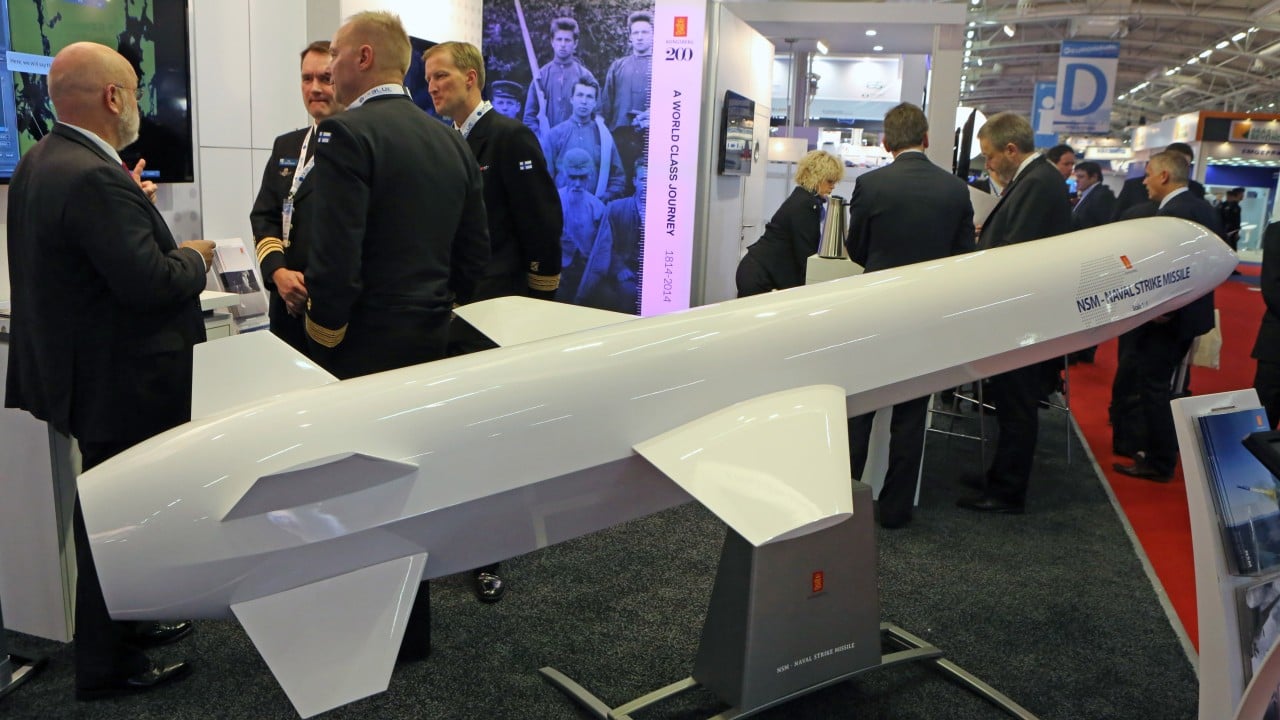
Buying advanced weapons isn't like buying a car. You can sign the papers, wire hundreds of millions of dollars, wait eight years, and still end up with nothing but empty hardware mounts and a massive hole in your national security budget.
Malaysia just learned this lesson the hard way. Norway abruptly revoked the export licenses for the Naval Strike Missile (NSM) system meant to arm the Royal Malaysian Navy's new Littoral Combat Ships (LCS). The cancellation hit right before the scheduled delivery. The sudden move blindsided Kuala Lumpur, sparked a fierce diplomatic row, and triggered a RM1 billion ($251 million) compensation demand. If you enjoyed this piece, you might want to check out: this related article.
As rumors swirled that Washington pressured Oslo behind the scenes, the United States stepped in to deny any role in the collapse of the deal. But the diplomatic cleanup doesn't change the reality. Malaysia paid for a shield and got left out in the cold.
The American Denial and the Ghost of Foreign Interference
When a Western nation cancels a high-profile military contract with a non-aligned Southeast Asian country, observers immediately look toward Washington. The NSM, built by Norway's Kongsberg Defence & Aerospace, utilizes sensitive US-made guidance components. This dependency naturally led observers to suspect that the US used its regulatory leverage to kill the deal. For another angle on this development, see the latest update from BBC News.
US Embassy chargé d'affaires David H. Gamble Jr. issued a direct statement to shut down the speculation. He clarified that the US didn't push for the cancellation. To prove the point, Gamble revealed that Washington actually facilitated the integration of those specific American guidance components into the Kongsberg systems back in 2024 to ensure the order would reach Malaysia.
According to the official US stance, Washington still supports Malaysia’s efforts to defend its maritime borders, pointing to ongoing bilateral exercises and maritime security assistance. If the US didn't pull the plug, the responsibility falls squarely on Oslo.
Norway New Rules Leave Buyers Stranded
Norway isn't hiding behind excuses. The Norwegian Ministry of Foreign Affairs openly defended its choice by pointing to a major overhaul of its export control regulations. The geopolitical shockwaves shaking Europe over the last few years forced Oslo to reassess where its weapons go.
The new policy dictates that Europe's most advanced military technologies will now be reserved strictly for NATO allies and closest partners. Malaysia, maintaining a strict non-aligned foreign policy, no longer qualifies.
"Signed contracts are solemn instruments. They are not confetti to be scattered in so capricious a manner."
— Malaysian Prime Minister Anwar Ibrahim
Prime Minister Anwar Ibrahim didn't hold back during a direct phone call with Norwegian Prime Minister Jonas Gahr Støre. Anwar argued that treating signed international agreements like scrap paper destroys trust in European defense suppliers. The timing makes the situation worse. Malaysia signed the contract in 2018. The country waited out years of production delays and paid roughly 95% of the €126 million ($146 million) base contract value. Canceling the deal days before delivery feels less like statecraft and more like bad faith.
The Massive Financial and Operational Mess
The damage to Malaysia goes far beyond the cash already sent to Kongsberg. Defense Minister Mohamed Khaled Nordin announced a formal notice of demand seeking over RM1 billion to cover both direct and indirect losses.
The financial breakdown exposes why unexpected contract cancellations damage a military's budget:
- The Direct Loss: €126 million ($146 million) already paid in progress payments since 2018.
- The Structural Penalty: The Maharaja Lela-class frigates were physically designed and built around the physical dimensions, weight distribution, and electronic architecture of the Norwegian NSM launcher.
- The Modification Bill: Shipyards must now spend millions to structurally modify the combat ships, rip out specific mounting brackets, rewire the weapon control stations, and integrate an entirely different missile system.
- The Human Cost: Naval crews spent months training to operate the specific software and maintenance protocols of the NSM. That training value drops to zero overnight.
This leaves the Royal Malaysian Navy facing a critical capability gap in the contested waters of the South China Sea. The fleet needed these long-range, sea-skimming missiles to counter rising regional maritime pressures. Now, those combat ships will enter service under-armed while the procurement process starts over from scratch.
Finding an Alternative to the NSM
Malaysia can't afford to leave its fleet without teeth. Since the Norwegian deal is dead, the Ministry of Defence must quickly pivot to alternative suppliers. The global market offers a few immediate options, though each requires structural changes to the ships.
MBDA Exocet MM40 Block 3C
The French-made Exocet is the most logical substitute. The Royal Malaysian Navy already operates older variants of the Exocet on its Scorpène-class submarines and existing frigates. This familiarity reduces the training burden for crews. The Block 3C variant brings modern guidance and reliable range, making it a highly capable anti-ship weapon that fits well within Malaysia's existing supply lines.
Turkish Roketsan Atmaca
If Malaysia wants to avoid Western export restrictions and political strings, Turkey offers a compelling alternative. The Atmaca missile is combat-ready, high-performing, and cost-effective. Turkey’s defense industry rarely attaches political conditions to its hardware sales, offering insulation from sudden shifts in European domestic laws.
Actionable Steps for Sovereign Buyers
The collapse of the NSM contract offers a hard lesson for non-aligned nations buying military hardware. Dependability is an illusion when dealing with suppliers subject to shifting Western export laws. To prevent another RM1 billion surprise, Malaysia's procurement strategy must change permanently.
Enforce Hard Exit and Penalty Clauses
Future contracts must include severe financial penalties for supplier governments that revoke export permits after production begins. If a government pulls a license for domestic political reasons, they must be legally bound to cover the full cost of ship modifications and crew retraining, not just offer a basic refund.Diversify Supplier Nations
Relying entirely on NATO-aligned builders creates systemic vulnerability for non-aligned states. Balancing procurement between European, Turkish, South Korean, or local defense systems ensures that a single policy shift in one Western capital cannot paralyze an entire naval modernization program.Demand Local Industrial Offsets
Stop buying completely assembled, black-box technologies. Future agreements should prioritize technology transfers and domestic assembly. The more maintenance, software integration, and component manufacturing occurring within Malaysian borders, the less leverage foreign politicians hold over the country's national defense.