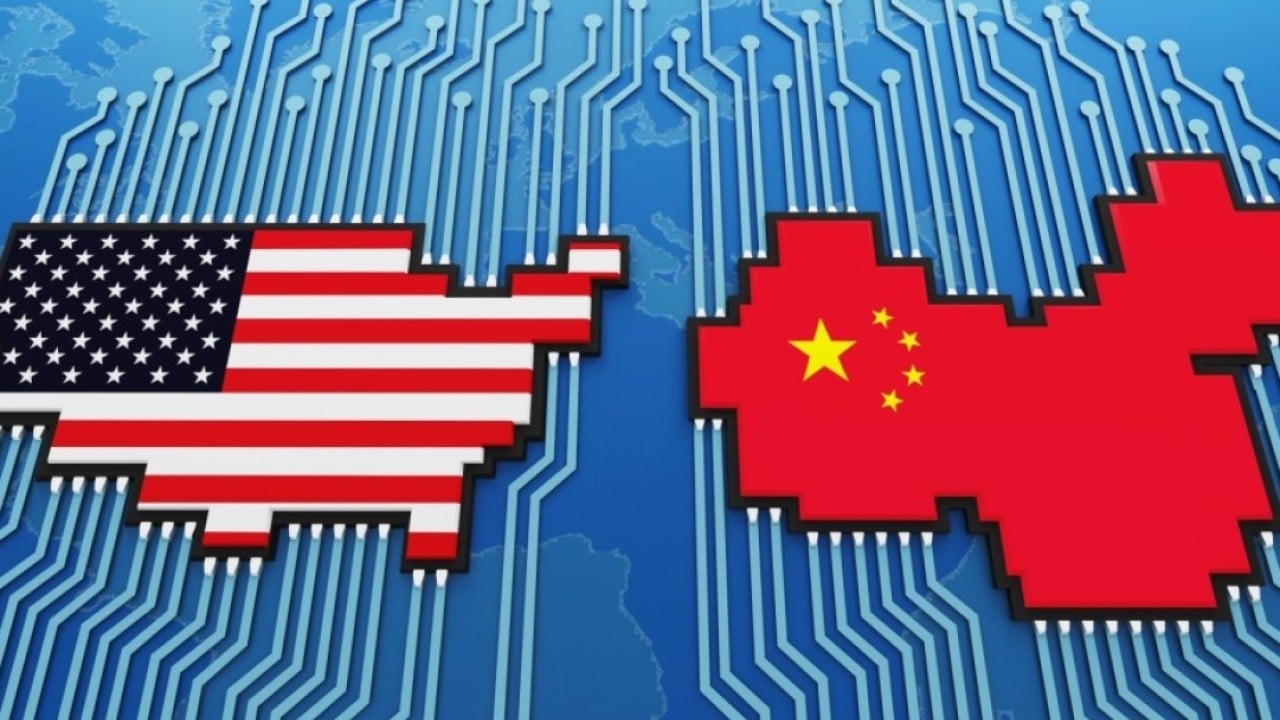
Silicon Valley is staring at an uncomfortable truth. The multi-billion-dollar moat protecting American artificial intelligence isn't just leaking—it's actively being bypassed by open-weight models from Beijing.
For the past couple of years, the playbook for American frontier labs like OpenAI and Anthropic seemed straightforward. They build massive, closed proprietary systems, lock them behind enterprise paywalls, and rely on the US government to restrict foreign adversaries from getting the hardware required to catch up. But the strategy backfired. Recently making headlines lately: Why the EU Ukraine Drone Deal Will Actually Kill Ukrainian Innovation.
In June 2026, the US Department of Commerce enacted emergency export control orders that briefly pulled the plug on Anthropic's flagship models, Fable 5 and Mythos 5, over concerns that foreign nationals and adversaries were leveraging jailbreak techniques to bypass safety protocols. The shockwave hit Silicon Valley immediately. Startups and enterprise developers found their workflows throttled or entirely disabled overnight.
Meanwhile, Chinese tech firms chose a completely different path. Companies like Z.ai, DeepSeek, and Moonshot AI are releasing high-performing, open-weight models directly to the internet for free. More information on this are detailed by The Next Web.
The result? American developers are jumping ship. A quiet migration is happening where US tech businesses drop expensive, heavily regulated American APIs in favor of free, high-efficiency Chinese open software. Washington’s attempt to harden its AI stance on China isn’t just failing to slow Beijing down—it's actively pushing American companies into the arms of the competition.
The Distillation Crisis and the Illusion of Control
The core of the issue centers on a process known as model distillation. You don’t need 10,000 Nvidia H100 chips to build a competitive large language model if you can simply use a rival's highly advanced model to train your own. A smaller, cheaper system learns directly from the outputs of a giant, expensive one, absorbing its reasoning capabilities at a fraction of the cost.
Anthropic explicitly called out this practice in a letter to the US Congress. They alleged that Chinese e-commerce giant Alibaba deployed nearly 25,000 fraudulent accounts to siphon 28.8 million outputs from Claude over a matter of weeks, using the data to quickly refine its own domestic models. OpenAI leveled similar charges against DeepSeek, calling out ongoing efforts to free-ride on American R&D.
Traditional R&D Pipeline:
Huge Compute Budget -> Millions of GPU Hours -> Proprietary Frontier Model

The Distillation Loophole:
Proprietary Frontier Model -> API Siphoning/Distillation -> Cheap Open-Weight Clone
Estimates from defense and industry analysts show that China’s leading models lag roughly three to eight months behind the absolute cutting edge of the US. Without distillation, that gap would likely stretch past 18 months.
The regulatory response from Washington has been erratic. In penalizing frontier labs through sudden, unilateral export blocks, the government forces companies like Anthropic to choose between compliance and global commercial viability. When the White House forces a developer to restrict access based on user nationality, it destroys the reliability of the entire American tech stack. Allies in Europe and Asia are already noting that relying on US cloud infrastructure means operating at the whim of sudden federal interventions.
The Flight to Open-Weight Chinese Code
While Washington tries to build a digital wall, enterprise developers are focusing on the bottom line. Running proprietary models at scale gets incredibly expensive.
When the US government temporarily restricted Anthropic's flagship models, it highlighted a massive architectural risk for startups relying entirely on closed APIs. Developers realized that their entire product could be turned off by a regulatory pen stroke.
Look at OpenRouter, the popular marketplace where developers mix and match AI models for their applications. By mid-2026, Chinese open-weight models accounted for nearly half of all US developer traffic by tokens, a massive jump from just 16% at the start of the year. Models like Z.ai's GLM-5.2 match standard Western models on intense coding benchmarks while costing zero licensing fees to host locally.
Popular software engineering platforms like Cursor, recently valued at a massive $60 billion during its acquisition discussions, built core features like Composer 2 directly on top of Moonshot AI’s Kimi model. Airbnb uses Alibaba's Qwen model family to handle customer service operations. Major infrastructure platforms including Cloudflare, Amazon Bedrock, and Microsoft Azure now natively host these Chinese open models because their corporate clients demand them.
You can't easily ban an open-weight model. The model weights—the actual mathematical values that make the network function—sit freely on open internet repositories. Once downloaded, a company can run the model entirely within their own private data centers, completely independent of US sanctions, firewalls, or export bans.
Redefining Security in the Age of Open Software
Washington relies heavily on supply-chain blockades, hoping that choked hardware access will halt foreign capability. But software adapts much faster than hardware hardware can be tracked.
Beijing’s Ministry of Industry and Information Technology recently struck back, issuing strict notices warning domestic developers to immediately uninstall or upgrade Anthropic’s Claude Code developer tool, alleging it contained unauthorized remote data-transfer vulnerabilities. The split has quickly hardened into a reciprocal blockade where both nations view the other’s software stack as a vector for espionage and systemic sabotage.
If the US wants to preserve its lead without destroying its own market credibility, the current strategy requires an overhaul.
First, shifting the regulatory focus from broad export bans on software access to closing the cloud-computing loops that let foreign entities train new systems on Western servers is essential.
Second, the federal government should shift toward creating open-source infrastructure incentives for domestic builders rather than solely penalizing compliance-focused frontier labs. Relying entirely on closed, expensive APIs leaves the rest of the tech ecosystem exposed to the cheaper, highly accessible alternatives coming out of East Asia.
The geopolitical AI race won't be won by the side that builds the tightest digital cage. It will be won by the ecosystem that creates the most resilient, cost-effective, and globally trusted software. Right now, by choking its own innovators, the West is getting in its own way.
For more context on how these tech disputes impact international security, this report on Anthropic's tech allegations breaks down the legal and structural challenges of preventing model distillation across borders.


