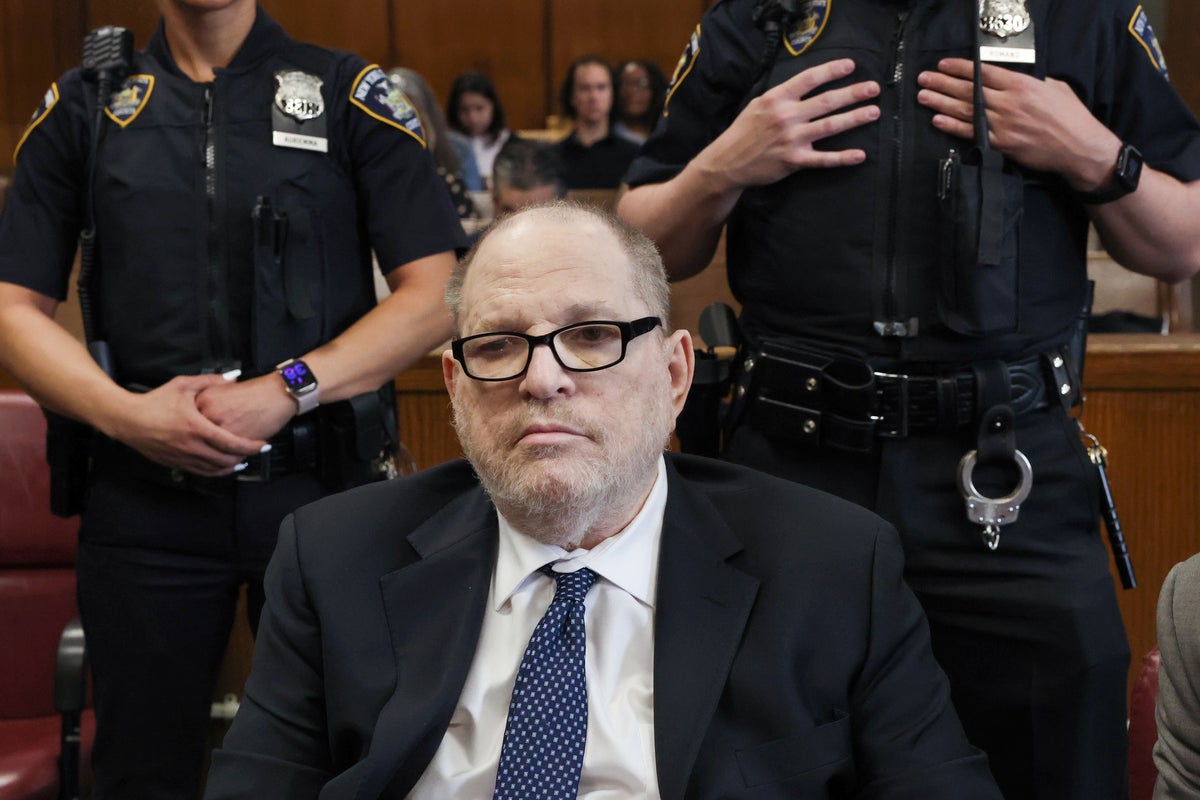
The headlines are screaming about failure. The pundits are calling it a collapse of justice. The court of public opinion has already drafted its righteous condemnation: a deadlocked jury in a Harvey Weinstein sex crimes case means the system broke down.
They are entirely wrong.
The lazy consensus dominating the media coverage insists that a hung jury equals a malfunction. Commentators imply that unless a high-profile trial concludes with a neat, cinematic verdict, the machinery of the judiciary has jammed. This narrative is a fundamental misunderstanding of constitutional design. A deadlock isn’t a bug in the legal matrix. It is the definitive feature of a system built to prioritize the prevention of wrongful conviction over the guarantee of public catharsis.
When twelve citizens cannot agree to strip a human being of their liberty, the system didn't break. It held the line.
The Mirage of the Clean Verdict
We have been conditioned by true-crime documentaries and procedural dramas to expect total resolution. We want the gavel to fall, the music to swell, and the moral arc of the universe to bend sharply in a single afternoon.
Real courts do not exist to provide emotional closure for society. They exist to test whether the state can clear an incredibly high, intentionally difficult hurdle: proving guilt beyond a reasonable doubt to a unanimous room of disparate individuals.
In high-stakes cases involving historical allegations, the evidence is rarely neat. It relies heavily on memory, intent, credibility, and the shifting interpretation of decades-old human interactions. When a jury splits, the media labels it a disappointment. In reality, that split is tangible proof that the jury took their instructions seriously. They refused to bully each other into a false consensus just to satisfy the crowd waiting outside the courthouse doors.
Consider the mechanics of the deadlock. It means that after days of intense deliberation, reviewing transcripts, and debating the minutiae of testimony, reasonable people found reason to doubt. To force a verdict under those circumstances would require jurors to compromise their oaths. A system that coerces unanimity for the sake of efficiency or optics is a kangaroo court. A system that accepts a deadlock is a rigorous one.
The Dangerous Allure of Lowering the Bar
Every time a prominent trial ends without a conviction, a predictable chorus emerges demanding that we reform the process. They want to weaken the standard of proof, allow non-unanimous verdicts in felony cases, or alter the rules of evidence to make convictions easier to secure.
This is a short-sighted trap.
I have spent decades analyzing the intersection of high-profile litigation and public perception. I have watched prosecutors overreach to appease political bases, and I have watched defense teams exploit every crack in a weak case. The rules of evidence are not arbitrary red tape designed to protect the villainous; they are the only shield protecting ordinary citizens from the immense, terrifying power of the state.
Imagine a scenario where we alter the rules to ensure a 100% conviction rate in celebrity trials. The immediate consequence wouldn’t just be the imprisonment of the wealthy and powerful. The precedent would cascade down to every local courthouse in the country. It would be weaponized against the indigent, the marginalized, and the poorly represented far more effectively than it would ever be used against billionaires with elite legal defense teams.
If you lower the bar to catch a monster, you leave everyone else defenseless when the state decides to come after them.
Dismantling the Public Expectation
The public frequently asks: If the evidence was so overwhelming, how could anyone vote to acquit?
The premise of the question is inherently flawed because it assumes the public saw the same trial the jury saw. The public sees curated news clips, editorialized commentary, and social media outrage. The jury sits in a windowless room, starved of outside context, forced to look at the gaps in the state's case.
What the public calls "overwhelming evidence" is often just overwhelming notoriety.
In a courtroom, reputation cannot substitute for specific, localized proof regarding a specific charge on a specific date. A prosecutor can prove beyond a shadow of a doubt that a defendant is a terrible human being, a serial abuser of power, and a moral bankruptcy. But if the specific statutory elements of the crime charged in this particular indictment are not met, a conscientious juror must vote to acquit, regardless of their personal disgust.
This distinction is regularly lost in the coverage. The media conflates a moral evaluation with a legal determination. A deadlock is the friction generated when the raw emotion of a cultural movement collides with the cold, unyielding iron of statutory law. That friction is healthy. Without it, the legal system becomes nothing more than a formalized lynch mob.
The Cost of the Contrarian Truth
Acknowledging that a deadlocked jury is a valid legal outcome is not popular. It doesn't generate clicks, and it doesn't comfort survivors who looked to the courts for validation. This is the inherent downside of prioritizing due process over cultural retribution: it is cold, it is slow, and it frequently leaves people feeling hollow.
But justice was never meant to be comforting. It was meant to be fair.
The prosecution always retains the right to retry the case. The state can analyze what failed to resonate with the first panel, re-strategize, and present their arguments to a fresh set of twelve citizens. That is the corrective mechanism built into the law. The deadlock simply sends everyone back to the drawing board because the state failed to make a flawless case the first time around.
Stop treating the lack of a quick conviction as a systemic emergency. The emergency only happens when we decide that the verdict matters more than the process used to achieve it.
The jury split because the system refused to compromise its standards under the weight of immense public pressure. That isn't a failure. That is the definition of resilience. Retrial or not, the process worked. Move on.