The marble floors of Washington, D.C., are unforgiving. They are polished to a high sheen, designed to reflect the grand statues of history and the sharp leather shoes of those who chase it. But marble has no give. When gravity claims its due, the stone does not cushion the blow.
For weeks, a distinct silence echoed from the highest corridors of American legislative power. The Senate continued its daily grind of gavels, procedural votes, and partisan skirmishes, yet a central pillar was conspicuously absent. Mitch McConnell, a man whose entire career was built on the calculated economy of speech, had vanished from the public eye. When the silence finally broke, it revealed a vulnerability that political theater usually works overtime to hide.
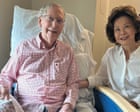
It started with a trip. Not a political misstep, but a physical one. A simple loss of balance at a local hotel dinner turned into a concussion and a fractured rib. In an instant, the fierce machinery of partisan strategy was brought to a dead halt by the fragile mechanics of the human body.
The Armour of Taciturnity
Power in the nation's capital is often measured by who talks the loudest, who grabs the television cameras first, and who tweets with the sharpest venom. But there is another kind of power. It is the power of the quiet room. For decades, the senator from Kentucky mastered the art of saying exactly as much as necessary and not a syllable more. His public persona was a study in stillness—an unblinking, stoic presence that drove opponents to frustration simply by outwaiting them.
To understand the weight of his sudden absence, consider a hypothetical freshman lawmaker entering the Senate chamber for the first time. They come armed with speeches, fiery rhetoric, and a desire to change the world by Tuesday afternoon. Then they run into the institutional wall. They realize that the true levers of government are held by those who understand the rulebook down to the footnotes and who possess the patience of a glacier.
McConnell was that glacier.
When a figure defined by absolute control suddenly disappears into a hospital room, the vacuum is immediate. Rumors fill the space. In politics, an unexplained absence is a blank canvas for an opponent’s brush. Yet, for days, the official updates were sparse, rationed out like scarce commodities. The capital was left to wonder what happens when the strategist who holds the keys to the floor cannot even stand on it.
The Universal Equalizer
Aging in the public eye is a brutal discipline. We demand that our leaders possess the wisdom of decades of experience, yet we expect them to exhibit the physical vitality of youth. It is a paradox that cannot hold forever.
The fall McConnell suffered was not unique to the elite echelons of government. It is a quiet epidemic that plays out in thousands of American households every single day. An elderly relative slips in the kitchen. A grandparent loses their footing on the porch steps. According to public health data, falls are the leading cause of injury-related death among older adults, a stark reality that rarely makes the evening news until it strikes someone second in line to the presidency.
Consider the physical reality of a concussion at an advanced age. It is not just a headache. It is a profound disorientation, a fog that rolls into the mind and refuses to clear. The brain, jarred against the skull, requires time to heal—time that the relentless calendar of the Senate does not willingly grant. Coupled with a broken rib, every breath becomes a conscious effort, a sharp reminder of mortality.
For weeks, the public was treated to a masterclass in institutional information management. The updates were clinical, sanitized, and devoid of the messy human details of recovery. But beneath the press releases lay a deeply human struggle that anyone who has cared for an aging parent understands intimately. The struggle to regain balance. The frustration of a mind ready to work while the frame rebels. The sheer, exhausting effort of healing.
The Mechanics of the Return
When the return finally came, it was not marked by a triumphant press conference or a grand speech. It was marked by a quiet acknowledgment of what had transpired. The truth, delivered with the characteristic dryness that has defined his tenure, reminded the public that behind the political titles are biological entities subject to the same laws of physics as the rest of us.
The real challenge of leadership in the modern era is navigating this intersection of public duty and private frailty. The episode forced an uncomfortable conversation into the open—one about succession, longevity, and the unspoken agreement we make with leaders who choose to stay in the arena long past the age when most people have retired to the quiet comfort of private life.
Watching a powerful figure navigate the aftermath of an injury changes the perspective of the observer. The aura of invincibility drops away. What remains is the stark realization that the vast, complex machinery of governance relies on the physical resilience of a handful of individuals. When one of those individuals falters, the gears grind, the schedules shift, and the illusion of permanent stability is broken.
The Echo in the Chamber
The Senate chamber is a place of deep shadows and long memories. It has seen leaders come and go, empires rise and fall, and the steady march of time claim even the most stubborn statesmen. The return of a leader after a severe physical trial is a testament to willpower, but it is also a reminder of the ticking clock that governs every life, no matter how influential.
The silence has ended, the votes are being cast once more, and the daily battles of the legislature have resumed their familiar rhythm. But the memory of the empty seat remains. It stands as a monument to the fact that power, for all its pomp and circumstance, is ultimately leased, never owned. And the terms of that lease are dictated not by the electorate, but by the fragile, unpredictable nature of the human condition.