Silence.
That is the thing nobody tells you about waiting on an airport tarmac in the middle of a diplomatic press pool—the suffocating, heavy quiet that settles over the concrete just before a hatch opens, a quiet thick with jet fuel, tropical humidity, and the unspoken anxiety of a hundred people holding their breath at once. I have stood behind those metal barricades in sticky heat, camera strap digging into the raw skin of my collarbone, watching the heat shimmer off the asphalt while foreign ministries quietly sweated through their crisp linen suits. On paper, a royal tour is a spreadsheet of handshakes, ribbon-cuttings, and carefully calibrated floral arrangements. In the flesh, it is a high-wire act performed without a net, where a single misread facial expression or an awkward stumble down a staircase can undo decades of quiet statecraft before the local evening news even goes to air.
For four long years, that specific brand of high-stakes theater has been largely absent from the global stage. Since 2022, when the Prince and Princess of Wales stepped off the world’s runways after a bruising, turbulent tour of the Caribbean, the British monarchy has operated mostly from behind the thick stone walls of Windsor and the familiar, controlled rain of London. We watched from afar as the institution absorbed blow after blow—health crises that forced the world’s most photographed woman into sudden, terrifying retreat, the slow-motion grief of a changing guard, and the quiet, persistent questioning of whether an ancient crown still carries weight in a fractured century.
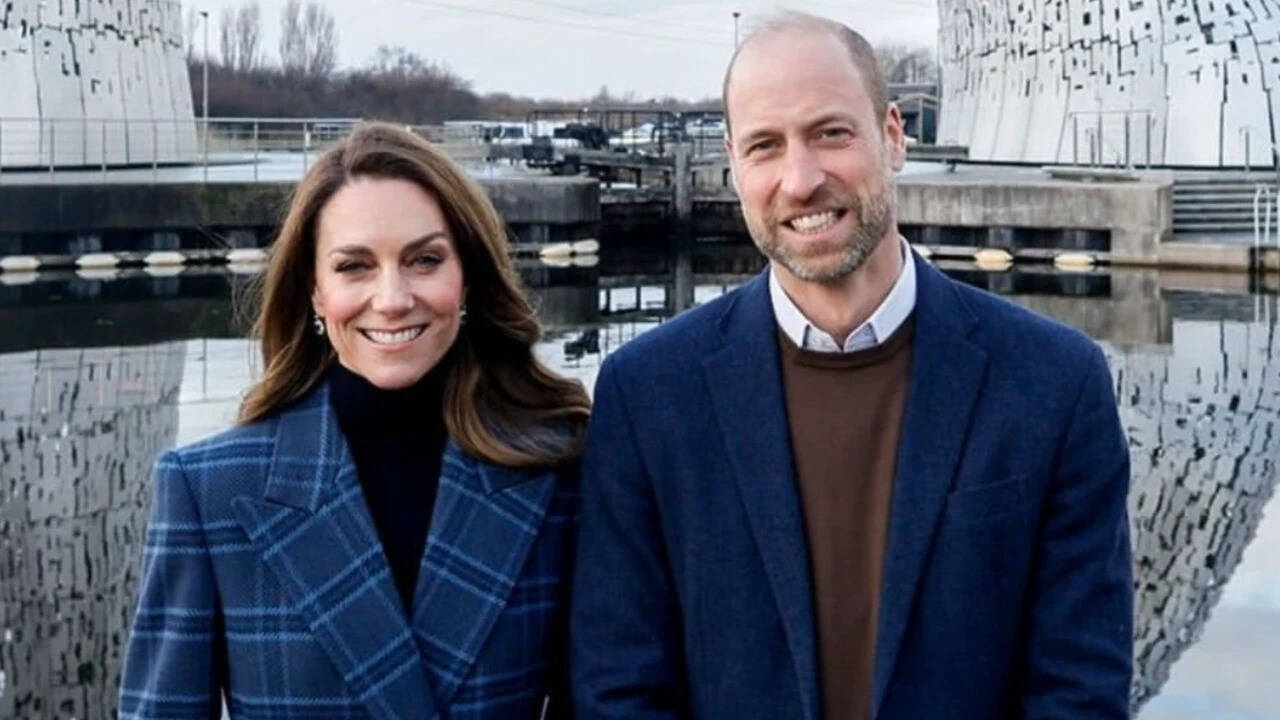
Now, the engines are warming up again. Prince William and Kate are preparing to touch down in India for their first joint overseas tour since 2022, and if you read the dry dispatches coming out of the palace press offices, you might mistake this for a routine diplomatic calendar entry. You would be wrong.
To understand what is actually happening when that plane wheels down in New Delhi or Mumbai, you have to strip away the gold braid and the bespoke tailoring. You have to look at two human beings who have stared down mortality in private, stepping back into the blinding glare of a rising superpower that no longer needs their approval, yet still watches their every move with a mixture of fierce pride, historical memory, and sharp-eyed scrutiny.
The Ghost of 2022 and the Architecture of Return
Think back to March 2022. If you want to understand why this trip to India carries the tension of a coiled spring, you have to look at the bruised aftermath of Belize, Jamaica, and the Bahamas. That was the last time William and Kate boarded a long-haul flight together as official emissaries of the Crown. On paper, it was meant to celebrate Queen Elizabeth II’s Platinum Jubilee. On the ground, it became a masterclass in how rapidly the emotional weather of diplomacy can turn against you.
Images of royal hands reaching through chain-link fences in Kingston became instant, unforgiving metaphors that ricocheted across every smartphone screen on earth. The old playbook—the one built on effortless pageantry, polite waves from open-top Land Rovers, and the assumption of automatic deference—shattered in real time. William himself had to stand at a podium in the Bahamas and admit, with rare, unvarnished candor, that the future was no longer ours to write on someone else's behalf.
Then came the silence. A four-year pause is an eternity in modern public life. During those years, the world changed, and so did the Waleses. When a family—even one living inside palaces—faces the sudden, cold reality of a cancer diagnosis, the glossy veneer of royal duty strips away overnight. You stop caring about protocol when you are sitting in a hospital waiting room. You learn the difference between what looks impressive on a television broadcast and what actually matters when the doors close.
Consider what happens next when that same couple decides to step back onto the international stage. They are not returning as the invincible young royals who first visited India a decade ago in 2016, fresh-faced and riding the effortless wave of early marriage. They are returning scarred, older, and acutely aware that time and public goodwill are finite currencies.
Imagine a hypothetical young diplomat sitting in the British High Commission in New Delhi right now—let’s call her Priya. Priya wasn’t even out of university the last time William and Kate walked past the Gateway of India. Today, she is thirty-one, staring at three monitors glowing with trade figures, visa bottlenecks, and climate tech partnerships. To Priya, the British monarchy isn’t a fairytale; it is a specialized tool in a very crowded toolbox. When her phone buzzes at two in the morning with updates on the royal itinerary, she isn’t worrying about what designer dress the Princess of Wales will wear to a charity gala. She is calculating whether a forty-five-minute conversation between Prince William and an Indian clean-energy founder will unlock the political goodwill needed to push a stalled bilateral trade agreement over the finish line.
That is the invisible machinery behind the curtain. Soft power is not magic. It is simply the art of getting people into a room who would otherwise never return each other's phone calls.
Why India, and Why Now?
If you were advising the future King and Queen of the United Kingdom on where to stage their grand return to global travel, you would not pick an easy room. You would pick the room where the future is actually being built.
India in the mid-2020s is no longer a country waiting to be discovered or lectured by the West. It is the world’s most populous nation, a juggernaut of digital infrastructure, space exploration, and youth-driven ambition, standing shoulder-to-shoulder with the largest economies on earth. The historical weight between London and New Delhi is immense, complicated, and often painful—a shared past etched into the very stones of New Delhi’s avenues and the language spoken in its courtrooms. Yet the modern relationship has shifted dramatically from nostalgia to hard-nosed mutual interest.
When people search online for news about this trip, they usually want to know the practical details: When are they going? Where are they visiting? Are the children coming along?
The answers tell a story of deliberate restraint. George, Charlotte, and Louis are staying home in Windsor, anchored to their school terms and the quiet stability their parents fought so fiercely to protect over the past two years. This is not a family holiday disguised as work. It is a surgical, tightly focused diplomatic mission built around the specific pillars that define William and Kate’s mature public identities: environmental innovation through the Earthshot Prize ecosystem, early childhood development, grassroots mental health, and the vast, living bridge of the Indian diaspora in Britain.
Let’s use an analogy to make sense of why this matters to ordinary people who have never owned a passport or cared a whit about royal titles. Think of traditional diplomacy—prime ministers signing treaties at mahogany tables—as the heavy concrete foundation of a bridge. It is essential, rigid, and slow to pour. A royal visit, when executed with humility and precision, is the suspension cable. It creates tension, flexibility, and visibility. It draws the cameras of the global press to a small community clinic in Mumbai or a mangrove restoration project on the coast, forcing the world to look at human ingenuity that would otherwise remain buried on page fourteen of a policy brief.
I remember watching a similar dynamic play out years ago during a state visit in South Asia. Outside a modest vocational school, a local woman who ran a micro-lending cooperative for female weavers had spent three weeks sweeping the red dust off the threshold every morning. When the motorcade finally arrived, the entire encounter lasted less than four minutes. Yet the photograph of that brief, unscripted laugh between a future head of state and a woman who had never left her district ended up on the front page of forty newspapers the next morning. Within six months, her cooperative had enough international orders to employ eighty more women.
Cynics love to dismiss royal tours as expensive pageantry, and sometimes they are right. When a tour becomes about the visitors rather than the visited, it curdles into vanity. The test facing William and Kate in India is whether they can keep the lens pointed outward.
The Anatomy of a Modern Royal Tour
To appreciate the sheer physical and psychological toll of what awaits them, you have to understand the rhythm of these days on the ground. From the outside, it looks like a seamless glide from one velvet rope to the next. From the inside, it is a grueling endurance test.
A typical tour day begins before dawn in a guarded hotel suite, with briefing books stacked beside cold toast. By eight in the morning, the couple is already in the back of an armored vehicle, navigating traffic that moves like a living river, memorizing the names, pronunciation, and personal histories of dozens of strangers they will meet over the next twelve hours.
Every single second is documented by dozens of high-speed lenses capable of capturing a micro-expression of fatigue at a hundred paces. For Kate, returning to this level of sustained, high-altitude public scrutiny after her health battle carries an emotional weight that no palace press release will ever fully articulate. Everyone in the crowd—from the diplomats in sharp suits to the schoolchildren waving paper flags—will be looking at her not just as a royal figure, but as a survivor. There is a quiet vulnerability in stepping back into that arena when you know the whole world is scanning your face for signs of strength or strain.
And what of William? Over the past four years, the burden resting on his shoulders has visibly thickened. With King Charles navigating his own duties and health realities, William is no longer merely an apprentice waiting in the wings; he is the primary international face of the British Crown. In India, he will be meeting leaders who measure power in decades and demographic shifts, men and women who respect resilience and straight talk far more than aristocratic polish.
Look closely at how their itinerary is expected to bypass the predictable stops of old. Yes, there will likely be moments of solemn respect at national memorials, the necessary nods to shared history that anchor any official visit. But the real energy of this tour lies in the unglamorous spaces:
- Climate labs and urban farms where young Indian engineers are solving water scarcity at a fraction of Western costs.
- Community mental health hubs in sprawling megacities where young workers are wrestling with the silent isolation of hyper-connected modern life.
- Creative incubators where Indian cinema, fashion, and technology are reshaping global culture from the ground up.
This is where the narrative shifts from duty to relevance. If the British monarchy cannot prove that it can listen, learn, and amplify the solutions coming out of the Global South, then no amount of ancient ceremony will save it from drifting into irrelevance.
The Human Thread Beneath the Protocol
Of course, we should be honest about the doubts that linger around a trip like this. It would be naive to pretend that a week of carefully choreographed engagements in India will magically erase centuries of colonial memory or solve the complex economic friction between London and New Delhi. When you stand in the heat of an Indian afternoon, surrounded by the overwhelming scale of a country of 1.4 billion people, the British royal family can suddenly look very small—a quaint, island-bound tradition trying to make itself heard over the roar of a continent on the move.
Even seasoned observers of royal diplomacy admit that the rules of the game are shifting beneath their feet. Younger generations in both Britain and India have far less patience for inherited privilege than their grandparents did. They ask sharper questions. They demand receipts. They want to know what stays behind after the chartered plane takes off and the red carpets are rolled back into storage.
Consider another hypothetical figure on the ground—let’s call him Arjun, a twenty-six-year-old software architect in Bengaluru whose startup builds low-cost diagnostic tools for rural clinics. Arjun doesn’t wake up thinking about Buckingham Palace. His idols are engineers, founders, and athletes. If Prince William walks into Arjun’s workspace, Arjun won’t be impressed by titles. He will be listening to see if the man standing in front of him actually understands the problem Arjun is trying to solve, or if he is simply reading talking points off a laminated card.
That is the razor’s edge of modern royal travel. Authenticity cannot be faked under the harsh glare of tropical sunlight and four-K cameras. Either you are genuinely curious about the human beings standing across from you, or the camera exposes the hollowness in half a second.
Yet, when that genuine connection happens, something undeniable shifts in the air. I have seen it happen in dusty schoolyards and crowded hospital wards—that sudden, electric drop in temperature when protocol dissolves and two people simply look at each other as equals. In 2016, when William and Kate sat cross-legged on the floor with children in a New Delhi shelter, playing games and laughing without a trace of royal stiffness, the photographs endured precisely because the posture was humble. You cannot look down on someone when you are sitting on the same floor.
Ten years later, they are coming back to that same soil carrying the invisible baggage of everything they have survived since—the family fractures, the global upheavals, the quiet terror of illness, and the slow, sobering realization that leadership is less about commanding a room and more about showing up when it would be far easier to stay home.
The hatch of the plane will swing open soon. The cameras will click in a deafening, metallic chorus, the heat will hit their faces like a physical wall, and for the first time in four years, William and Kate will step down the stairs together into the wide, unpredictable world—two familiar figures walking into a country that has already raced ahead into the future, hoping to prove they still belong in the conversation.