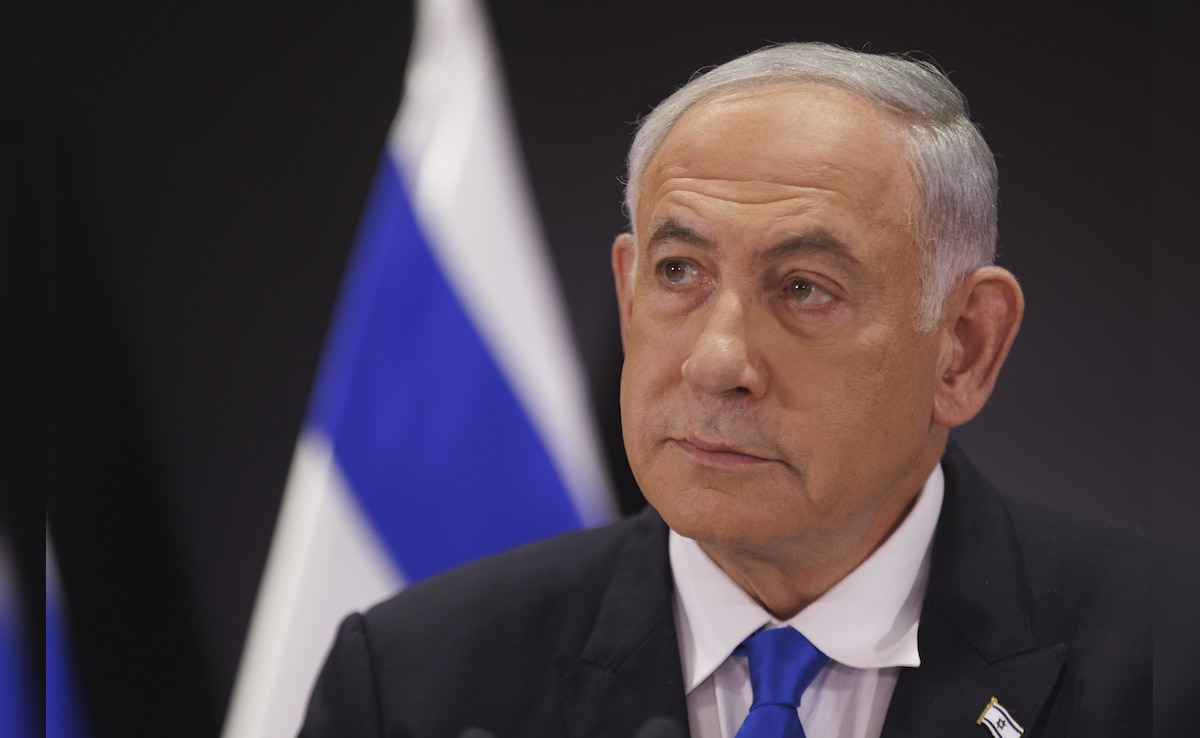
The room in Jerusalem is always colder than you expect. It is a chill born of thick stone walls, humming servers, and the heavy, invisible presence of history. When Benjamin Netanyahu sits at his desk, he isn't just looking at the morning's intelligence briefs. He is looking through a window that opens onto three thousand years of survival, a perspective that turns every diplomatic memo into a matter of life or death.
Across the Atlantic, the view from the Oval Office is different. It looks out over a manicured lawn, a symbol of a superpower that has spent decades writing the rules of the global game. When Donald Trump took that office, he brought with him the mindset of a builder and a dealmaker—someone who views treaties not as sacred texts, but as opening offers.
These two worldviews were never destined to just meet; they were bound to collide, fuse, and reshape the geopolitical landscape. At the heart of their alignment was a single, burning question: What do you do when a piece of paper promises peace, but a neighbor promises your destruction?
The traditional news cycle treated the interaction between the Israeli Prime Minister and the American President as a standard diplomatic choreography. Headlines read like bureaucratic tallies. But stripped of the sterile political jargon, this wasn't about "bilateral agreements" or "strategic frameworks."
This was about the terrifying reality of a ticking clock.
The Illusion of the Ink
To understand why Netanyahu pressed Trump with such urgent intensity, you have to look past the grand signing ceremonies of the past. Consider a hypothetical family living in the northern Israeli town of Kiryat Shmona. Let's call them the Levins. To the Levins, geopolitical strategy isn't an academic exercise. It is the sound of air-raid sirens. It is the calculation of how many seconds it takes to run to a bomb shelter with a toddler in your arms.
When global powers signed the Joint Comprehensive Plan of Action (JCPOA) in 2015—commonly known as the Iran nuclear deal—the West celebrated. Diplomats drank champagne in Vienna. They believed they had bought safety with ink.
But from the vantage point of Jerusalem, that ink was evaporating. The deal contained "sunset clauses," provisions that meant restrictions on Iran’s nuclear program would legally expire over time.
Imagine a restraining order against a stalker that automatically dissolves after ten years. That wasn't a solution; it was a countdown.
Netanyahu knew that a flawed agreement didn't eliminate danger. It merely institutionalized it. It gave a hostile regime a legitimate, paved highway to an atomic bomb, complete with international blessing and the lifting of economic sanctions. The cash flow that followed the deal didn't fund schools or hospitals in Tehran; it flowed directly into the proxies lining Israel's borders—Hezbollah in Lebanon, Hamas in Gaza, and militias in Syria.
For Israel, the nuclear threat was never an abstract foreign policy debate. It was an existential shadow.
Two Men, One Target
When Trump entered the White House, the calculus changed overnight. The new American president had campaigned on the promise that the Iran deal was the worst transaction in history. Netanyahu saw an opening—a rare, alignment of stars where the leader of the free world shared his fundamental skepticism.
But skepticism alone doesn't build a defense.
During their high-stakes discussions, Netanyahu’s mission was to ensure that Trump didn’t just tinker around the edges of the existing policy. He needed a total shift in strategy. The message was uncompromising: any future agreement with Iran must completely eliminate, not merely delay, the nuclear danger.
The chemistry between the two leaders was complex. Trump respected strength and visual proof. Netanyahu, a master of presentation, understood this implicitly. He didn't just bring dense intelligence dossiers to the table; he brought theatrical clarity.
Who can forget the image of Netanyahu standing before a wall of CDs and files, dramatically exposing the secret Iranian nuclear archive smuggled out of Tehran by Mossad agents? It was a cinematic moment designed for an audience of one. It proved that Iran had lied, had kept its blueprints, and was waiting for the clock to run out.
That presentation wasn't just political theater. It was a visceral demonstration of a breach of trust. It gave Trump the ammunition he needed to walk away from the 2015 accord and implement his "maximum pressure" campaign.
The Anatomy of a Real Deal
What does a real agreement look like when the stakes are this high? Netanyahu outlined a framework that went far beyond the scope of traditional Western diplomacy.
First, the dismantling must be absolute. No enrichment of uranium. No centrifuges spinning in underground bunkers like Fordow, built deep inside mountains to withstand conventional airstrikes. If you allow a country to keep the infrastructure of enrichment, you are merely allowing them to keep the keys to the laboratory.
Second, the inspections cannot be scheduled appointments. The current system allowed for delays, a bureaucratic dance where inspectors had to request access weeks in advance. In the real world, if you suspect a crime is happening behind closed doors, you don't give the suspect twenty-four days to clean up the evidence. Inspections must be anywhere, anytime, without warning.
Third, and perhaps most crucially, any deal must address the delivery systems. A nuclear warhead is useless without a missile to carry it. Iran's ballistic missile program had been conveniently left out of the original deal, allowing them to perfect the technology needed to strike reach Tel Aviv, Riyadh, and eventually, Europe and Washington.
But the real problem lay elsewhere, deeper than the technical specifications of enriched isotopes.
The Human Cost of Appeasement
The true danger of a weak agreement is psychological. It breeds a false sense of security among nations that are far removed from the immediate blast radius. It allows leaders in Washington, Paris, and London to sleep soundly, believing they have checked a box and solved a crisis.
Meanwhile, the people on the ground live with the consequences of that complacency.
Think of the Iranian people themselves. A regime enriched by the lifting of sanctions doesn't become more moderate. It becomes more dug in. The money that flooded back into Iran after 2015 didn't ease the suffering of ordinary citizens protesting in the streets of Shiraz or Isfahan. It funded the Islamic Revolutionary Guard Corps (IRGC), the internal security apparatus that crushes dissent with brutal efficiency.
By demanding a deal that addressed Iran's regional aggression and human rights abuses alongside its nuclear ambitions, Netanyahu was arguing that you cannot separate a government's domestic tyranny from its foreign policy. A regime that terrorizes its own citizens cannot be trusted to keep its word to the international community.
The Strategy of the Precipice
Many critics argued that Netanyahu's relentless pressure pushing Trump to exit the deal was a dangerous gamble that could lead to war. They preferred the predictable path of containment.
But containment is a luxury of the safe.
When your country is the size of New Jersey, and your adversaries openly state their desire to wipe you off the map, containment looks a lot like suicide. Netanyahu’s strategy was based on a different historical lesson: deterrence is the only thing that prevents conflict with an ideological adversary.
Consider what happens next when a superpower blinks. Weakness invites miscalculation. If the Iranian leadership believed that the United States and Israel lacked the resolve to use military force as a last resort, they would continue to push the envelope, testing boundaries until a catastrophic conflict became inevitable.
By demanding an ironclad, absolute elimination of the nuclear threat, Netanyahu wasn’t angling for war. He was trying to prevent one. He understood that the only way to secure a peaceful diplomatic outcome was to make the alternative too terrifying for the regime in Tehran to contemplate.
The discussions between Netanyahu and Trump fundamentally altered the trajectory of the Middle East. They broke the consensus of the old foreign policy establishment, proving that the status quo was not holy writ. They showed that bold, disruptive leadership could challenge entrenched assumptions and force a re-evaluation of what security actually means.
The stone walls of the office in Jerusalem remain cold. The maps on the wall still show a small nation surrounded by volatile horizons. The ink on future treaties will eventually dry, and new leaders will take their places on the world stage. But the lesson of this era remains etched into the geopolitical landscape: when dealing with existential threats, half-measures don't buy peace. They only buy time. And time is the most expensive commodity in the world.