The Ghost in the Chancellery
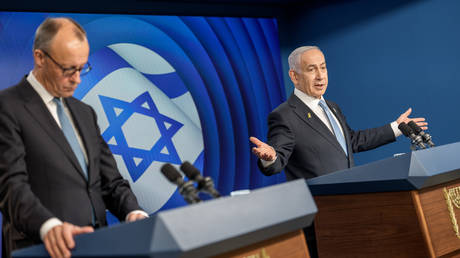
Every official visit follows a script. There are the black Mercedes sedans, the crisp flags snapping in the wind, and the somber walks through memorial halls. But when German officials meet their Israeli counterparts, there is a third party in the room. He is invisible, but he dictates the seating chart, the tone of the voice, and the size of the checks. He is the ghost of 1945.
Germany is a nation that has performed a miracle of collective psychology. It looked into the abyss of its own soul, saw the greatest horror of the twentieth century, and decided to build a modern identity out of the rubble of its own shame. This isn't just politics. It is a secular religion. The central tenet of this faith is Staatsräson—the idea that the security of the State of Israel is not just a foreign policy goal, but a reason for the German state to exist at all. For an alternative perspective, check out: this related article.
But what happens when a moral debt becomes a blank check?
Consider a hypothetical diplomat named Klaus. Klaus grew up in the shadow of the Berlin Wall, taught from birth that "Never Again" was the only compass that mattered. When he sits at his desk in the Foreign Office today, he isn't just looking at shipping manifests for components of the MEKO A-200 frigates or the latest batch of 120mm tank ammunition destined for the port of Haifa. He is looking at his grandfather’s silence. For Klaus, and for the government he serves, saying "no" to Israel feels like a betrayal of the lesson Germany spent eighty years learning. Similar reporting on this matter has been provided by BBC News.
This is how Germany became the silent engine behind a military machine. It is a relationship forged in blood, maintained through guilt, and currently under a pressure that is cracking the very foundations of international law.
The Arithmetic of Atonement
The numbers are staggering, yet they are often discussed in the hushed tones of a confessional rather than the roar of a parliament. In 2023 alone, German arms exports to Israel surged to over 326 million Euros. This was a tenfold increase from the previous year. Most of this was approved in the frantic weeks following the October 7th attacks.
While much of the world’s attention focuses on the United States and its high-profile shipments of 2,000-pound bombs, Germany has quietly become the second-largest supplier of weapons to the Israeli Defense Forces. It provides the precision. It provides the spare parts. It provides the maritime dominance through Dolphin-class submarines—vessels capable of carrying nuclear warheads, partially subsidized by the German taxpayer as a form of "reparations" for a generation that is mostly gone.
The logic is simple: Germany provides the shield so it never has to be the sword again.
But the shield is being used in ways that the architects of Staatsräson never anticipated. When those German-made components find their way into the machinery of a conflict that has leveled neighborhoods in Gaza, the moral clarity of the post-war era begins to blur. The German public, once unified in this mission of atonement, is beginning to fracture.
Younger Germans, like a university student we might call Lena, don't feel the same ancestral weight that Klaus does. Lena sees the images on her phone. She sees the rubble. She hears the South African legal team at the International Court of Justice (ICJ) accusing Israel of genocide, and she sees her own government standing in the courtroom as an intervenor, defending the state it once tried to destroy.
For Lena, the irony is a jagged pill. She asks: "If we learned that human rights are universal, why does our support for one people require us to turn a blind eye to the suffering of another?"
The Legal Tightrope
The halls of the Peace Palace in The Hague are cold. In April 2024, Nicaragua brought a case against Germany, arguing that by providing military aid to Israel, Berlin was "facilitating" genocide. It was a moment of profound existential vertigo for the German leadership.
The defense was clinical. German lawyers argued that their exports are strictly regulated, that most of the "weapons" are actually non-lethal equipment like helmets and medical supplies, and that they have a robust system for ensuring international law is respected.
But legal defense is not the same as moral absolution.
The reality on the ground is far more entangled. Modern warfare is a modular business. A tank is not just a tank; it is a collection of sensors from Munich, an engine from Friedrichshafen, and a chassis from Tel Aviv. By providing the "spare parts" and the "components," Germany ensures the continuous operation of the Israeli military. Without the German "enabler," the logistics of a long-term campaign become significantly more difficult.
This isn't just about hardware. It's about diplomatic cover. When the European Union debates sanctions or even mild rebukes regarding settlement expansion in the West Bank, it is almost always Germany that softens the language. It is Germany that acts as the friction in the gears of international accountability.
The Silence in Berlin
To walk through Berlin today is to see a city obsessed with memory. The Stolpersteine—brass "stumbling stones" in the sidewalks—remind you of the Jews who once lived in the houses you are passing. The Memorial to the Murdered Jews of Europe sits like a gray, undulating sea of concrete in the heart of the capital.
This culture of Erinnerungskultur (memory culture) has created a unique psychological environment. In Germany, to criticize the state of Israel is often conflated with antisemitism. It is a defense mechanism. If you spent decades convincing yourself that your national survival depends on the protection of the Jewish state, any criticism of that state feels like a threat to your own moral recovery.
This has led to a strange, stifling atmosphere. Palestinian activists find their protests banned. Jewish critics of Zionism find their lectures canceled. The state, in its zeal to prove it has changed, has become a mirror image of its former intolerance—enforcing a single narrative of support that brooks no dissent.
The cost of this "enabling" is not just measured in the lives lost in the Middle East. It is measured in the erosion of German civil society. When a government decides that its foreign policy goals outweigh its citizens' right to protest or debate, something vital begins to wither.
The Invisible Stakes
Why does this matter to someone who isn't German or Israeli?
It matters because it reveals the limit of the post-WWII international order. If the nation that considers itself the gold standard of "reckoning with the past" cannot find a way to balance its historical debts with current human rights obligations, then the entire framework of international law is in jeopardy.
We are witnessing the collision of two "Nevers."
"Never again will we allow the Jewish people to be defenseless."
"Never again will we allow a civilian population to be systematically destroyed while the world watches."
Germany has chosen the first "Never" at the expense of the second.
This choice has made Berlin an indispensable partner for Israel, but it has also made it a target. The global South looks at Germany and sees hypocrisy. They see a nation that lectures others on the "rules-based order" while shipping the shells that break that order into pieces.
The tragedy of the enabler is that they often believe they are helping. They think that by providing the tools of war, they are buying the influence to advocate for peace. But influence is a currency that devalues quickly in the heat of a conflict. As the death toll rises and the images of destruction become impossible to ignore, Germany finds itself holding a bag of empty promises and spent casings.
The Echo in the Mirror
There is a moment in every transition of power where the old guard must answer to the new. In Germany, that moment is arriving. The generation that built the Staatsräson is passing the torch to a generation that sees the world in shades of gray rather than the stark black and white of 1945.
They see a world where the victim of yesterday can become the powerhouse of today. They see that true atonement isn't about blind loyalty; it's about the courage to tell a friend when they have lost their way.
Until that shift happens, the shipments will continue. The submarines will slide into the Mediterranean. The tank parts will be crated and shipped. And the ghost in the Chancellery will keep his seat at the table, whispering that the price of the past must be paid in the currency of the present.
The lights in the government offices in Berlin stay on late. There are more forms to sign, more licenses to approve, and more statements to craft that say everything and nothing at once. Outside, the brass stones in the sidewalk catch the streetlights, glowing like embers. They are cold to the touch, but they carry a heat that seems to burn through the decades, reminding every passerby that in the ledger of history, the debt is never truly settled—it just changes hands.
The crane at the Hamburg docks lifts another container. The metal groans under the weight. It is a heavy load, far heavier than the steel and electronics inside would suggest. It is the weight of a century. It is the weight of a promise that has become a prison.
And as the ship disappears into the North Sea fog, the silence returns to Berlin, thick and heavy as a shroud.
Would you like me to analyze the specific types of military hardware Germany provides to Israel and how they differ from U.S. aid?


