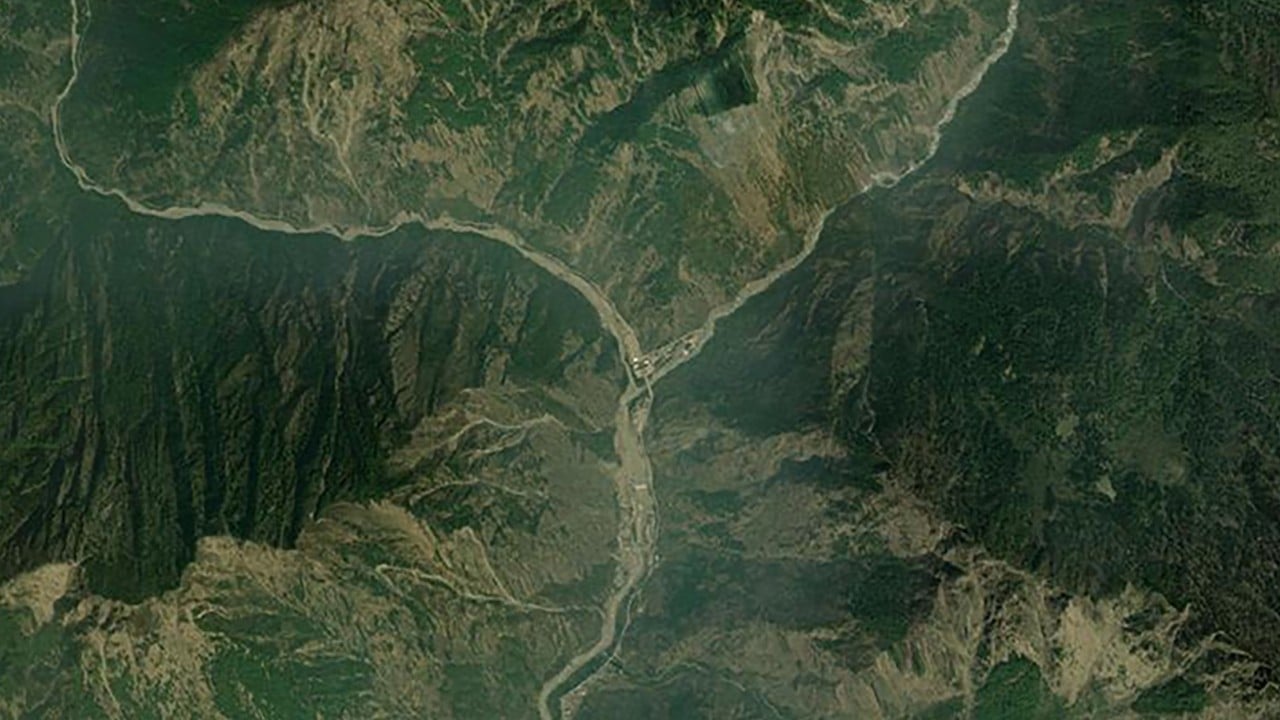
The rain never sounds like water when it hits corrugated tin. It sounds like gravel. Millions of tiny stones hurled from a gray sky, bouncing off roofs, pooling in the red mud of the hillsides, and swelling the bellies of rivers until they forget where their banks used to be.
Consider the Himalayan watersheds. For the families living along the winding arteries connecting China and Nepal, the monsoon is not a season. It is a slow-moving siege. When the slopes give way, they do not slide politely; they roar. Whole villages are swallowed by thick, chocolate-colored slurry before the sleeping inhabitants can unlatch their doors.
We look at satellite maps hours later and see blue pixels turned red. We count the displaced in thousands. But numbers are an anesthetic. They numb the mind to the specific horror of an old wooden lintel splintering under twenty tons of silt, or the frantic search for a schoolbook carried three miles downstream. Climate scientists trace the atmospheric rivers feeding these disasters, pointing to rising global temperatures that hold moisture like a soaked sponge waiting to be squeezed. The tragedy is that we know the mechanics of the drop. Yet knowing the physics of a flood does nothing to dry the floorboards of a home left standing in chest-deep ruin.
Water takes. Elsewhere, something quieter, and equally devastating, steals in silence.
Imagine waking up to find yourself vanishing. Not in a puff of smoke, but strand by strand, morning by morning, until the person in the mirror is a stranger with smooth skin where eyebrows used to be. Alopecia areata is an autoimmune mutiny. The body's defense forces, confused and desperate, turn their weapons inward, treating the hair follicles guarding the scalp as foreign invaders.
For decades, dermatology treated this condition with a shrug. Doctors offered heavy creams, stress management tips, and plenty of well-meaning platitudes about inner beauty. Patients wore wigs, hats, and heavy anxiety. They learned to avoid windy days.
Then came the laboratory turns that change lives without making front-page headlines. Researchers squinting through microscopes tracked the chemical signaling pathways—specifically the Janus kinase, or JAK, inhibitors—that tell immune cells to attack. By throwing a wrench into those microscopic gears, scientists found a way to call off the internal dogs.
Clinical trials watched long-slicked scalps sprout soft, stubborn fuzz, then thick, pigmented hair. It sounds miraculous. It is simply biochemistry doing its job once the interference is cleared. A man who spent fifteen years hiding his bald crown beneath baseball caps suddenly finds himself standing in front of a barber, asking for a trim. The relief is not about vanity. It is about reclamation. It is about walking down the street without feeling like a walking medical mystery that strangers stare at too long.
Water rising over the threshold. Hair falling away from the skin. Two entirely different crises, separated by thousands of miles and distinct universes of scale, yet bound by the same human desperate desire for stability.
We build levees. We synthesize molecules. We map atmospheric rivers and decode the rogue signals of white blood cells. Every breakthrough is a tiny barricade erected against chaos. The rivers will rise again next June, carrying their muddy freight down from the high roofs of the world. And somewhere in a quiet clinic, a patient will run a hand over a newly haired head, marveling at what it means to feel whole. We are always standing between what washes away and what grows back.