In Frankfurt, the glass and steel tower of the European Central Bank does not merely scrape the sky; it leans over it. Inside that monumental loop, the air smells faintly of filtered paper and high-stakes exhaustion. On any given afternoon, foreign exchange traders three thousand miles away in New York or Singapore watch a single woman's facial expression on Bloomberg terminals as if it were a barometer predicting an Atlantic hurricane.
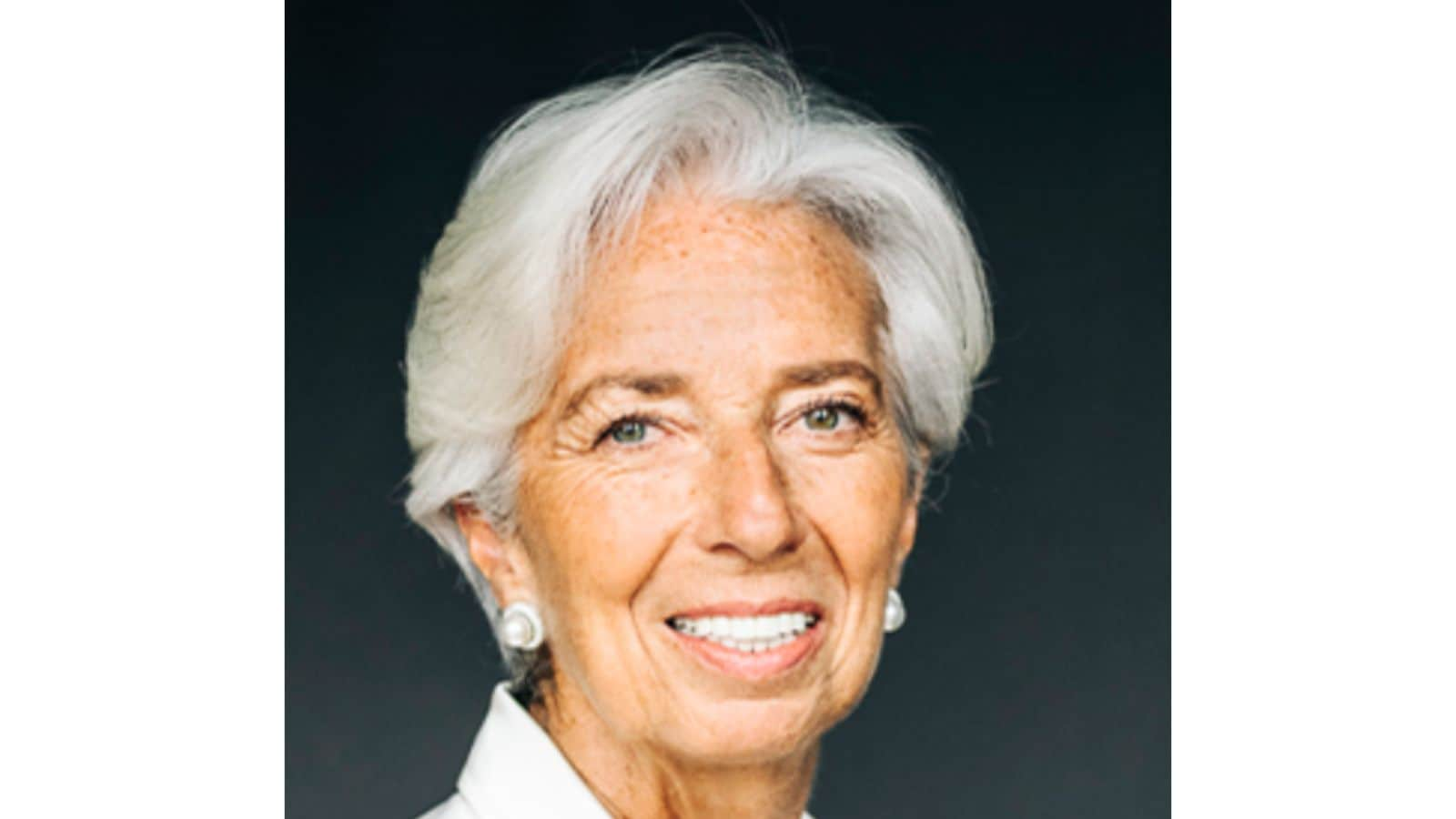
That woman is Christine Lagarde.
For years, her silver hair and immaculate tailoring have served as the aesthetic anchor for a currency shared by twenty nations with entirely different temperaments, debts, and political fires. She is the magistrate of money for three hundred and fifty million souls. But time, that most inflexible of economic variables, has an expiration date pencilled into its margins. The calendar is turning toward 2027, and the architect of Europe's monetary fortress has quietly signaled her departure.
To understand why this matters to someone sitting in a cafe in Lisbon, a factory floor in Stuttgart, or a kitchen table in Rome, you have to look past the dry financial press releases. You have to look at what happens when the person holding the wheel lets go while the ship is still navigating a storm.
Consider a hypothetical shopkeeper in Athens named Nikos. Nikos does not read the Official Journal of the European Union. He does not care about the minutiae of marginal lending facilities or quantitative tightening schedules. He cares about the price of flour, the cost of his commercial lease, and whether his sons will have to emigrate to find work. Yet every morning when Nikos opens his shutters, the invisible hand guiding his daily reality belongs to the decisions made behind those bulletproof glass walls in Frankfurt. When interest rates climb to choke off inflation, Nikos feels it in the crippling cost of his bakery's monthly loan repayment. When rates fall, his breathing room returns.
Lagarde has been the voice translating those cold percentages into human survival. She inherited a central bank scarred by the bitter memory of the sovereign debt crisis, a institution that had learned to speak in the clinical, robotic language of technocrats. She tried to soften the syntax. She spoke of hawks and doves, of inflation as a phantom thief picking pockets in the night.
Yet the phantom has proven stubbornly difficult to exorcise.
When Lagarde took the helm in late 2019, stepping out of the International Monetary Fund and into the Frankfurt hot seat, she faced an immediate baptism by fire. Within months, the world ground to a halt as a microscopic virus locked down cities. Printing presses whirred, injecting trillions into the bloodstream of a comatose continent. Then came the shockwaves of war on Europe's eastern fringe—energy bills soaring through roofs, gas pipelines hissing empty, and inflation spiking to levels not seen since the oil shocks of the 1970s.
She was forced into a corner. To save the euro from breaking apart under the weight of surging prices, she had to pull the heavy lever of interest rate hikes. It was an old medicine, bitter and brutal. It cooled the fever, but it left the patient aching.
Now, as the horizon of 2027 approaches, the succession race has already begun in the hushed, wood-paneled corridors of European capitals. Who follows a giant?
This is the hidden vulnerability of institutions built upon powerful personalities. Central banks are designed to be immutable, emotionless clockwork. They are supposed to function regardless of who sits in the corner office. But in moments of systemic stress, markets do not trade on algorithms alone; they trade on trust. They trade on credibility. When Christine Lagarde walks into a press conference, her cadence, her deliberate pauses, and her choice of words carry the psychological weight of an entire continent holding its breath.
Replacing her is not simply a matter of hiring a competent economist with a clean resume. It is a geopolitical high-wire act.
Imagine the negotiations happening right now behind closed doors in Berlin, Paris, and Rome. Every government wants a central banker who favors their domestic economic posture. The frugal northern states want a hawk who will keep monetary policy tight and inflation chained to the floorboards, protecting the value of their savings. The indebted southern nations want a pragmatist who understands that strangling growth with high rates can crush fragile recovery before it takes root.
The next president of the European Central Bank will inherit a delicate, terrifying balancing act. The European Union is currently wrestling with the green transition—a trillion-euro overhaul of its energy grids and industrial base. It is contending with a fractured global trade order where old certainties of cheap Chinese goods and Russian gas are dead and buried. Defence spending is rising across the bloc as the geopolitical weather turns dangerously cold.
All of these massive shifts require capital. And capital flows through the pipes that the ECB constructs and maintains.
When Lagarde steps down in 2027, she will leave behind a legacy defined not by perfection, but by resilience. She kept the plates spinning while the circus tent was catching fire. She bridged the gap between academic economic theory and the raw, unpolished anxiety of ordinary citizens.
For the rest of us, the departure date is more than a news headline about a changing of the guard. It is a reminder that the systems we rely on—the money in our pockets, the value of our labor, the security of our pensions—rest on human shoulders.
The clock is ticking down in Frankfurt. The gears keep turning. And somewhere out there, the next person who will have to steady the world is watching, waiting for their turn at the wheel.