Silence.
That is the first thing you notice when the federal government decides to turn its machinery inward, aiming the high-beam headlights of the Department of Justice directly into the eyes of the people who used to hold the wheel.
If you have ever worked inside a massive, bureaucratic institution—whether it is a sprawling hospital system, a Fortune 500 compliance department, or a federal law enforcement agency—you know the unspoken bargain. You follow the rules. You document your steps. You keep your head down, absorb the friction of red tape, and trust that as long as you operate within the boundaries of the law, the institution will at least stand out of your way. You assume the badge, or the employee ID, is a shield against political weather.
Then the wind shifts.
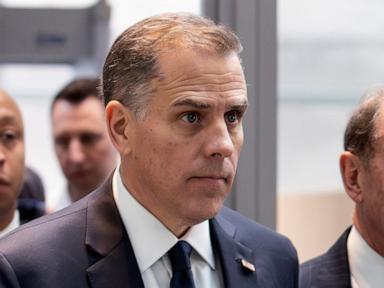
When a federal judge recently dismissed the Department of Justice’s criminal case against two former FBI agents who had been assigned to the Hunter Biden investigation, the headlines treated it like another box score in an endless Washington scrimmage. One side scored a point; the other side lost a round. Readers scrolled past, mentally filing the news alongside a dozen other partisan skirmishes.
They missed the real story.
Because beneath the familiar surnames and the predictable cable-news shouting matches lies a terrifyingly human question that affects every single person who relies on an impartial justice system. What happens to the rule of law when the investigators themselves become the hunted?
The Weight of a Badge in a Divided Room
To understand the invisible stakes of this dismissal, step away from the marble steps of the courthouse for a moment and picture a fluorescent-lit bullpen in a regional field office.
Let us imagine a composite character—we will call him Arthur—to make the abstract machinery of federal prosecution feel real. Arthur is not a television hero. He wears off-the-rack suits, drinks lukewarm coffee from a dented thermos, and spends forty hours a week staring at bank ledgers, subpoena returns, and encrypted messaging metadata. For twenty years, his entire professional identity has rested on a single, unglamorous skill: following paper trails without caring whose name sits at the top of the page.
Now, drop Arthur into the middle of the most radioactive political investigation in the country.
Suddenly, every email he sends to a supervisor is no longer just a routine status update; it is future ammunition for a congressional hearing. Every disagreement he has with a prosecutor over whether a search warrant is ripe becomes a potential headline. If he moves too fast, he is accused of interfering in an election. If he moves too slow, he is accused of running a cover-up.
This is the daily reality of the agents who worked the Hunter Biden inquiry. Long before any courtroom gavel fell, these investigators were caught in a vice between two competing political narratives. One faction demanded immediate, aggressive indictments to prove the system wasn't rigged. Another faction scrutinized every investigative step for signs of partisan bias.
I remember the first time I sat across from a former federal investigator who had been pulled into a politically sensitive audit. His hands didn't shake, and his voice stayed level, yet he kept glancing at the door of the quiet diner where we met. He told me that the hardest part wasn't the workload or the public criticism. It was the sudden realization that his own employer—the vast, supposedly apolitical Department of Justice—might one day treat his standard investigative judgment as a felony.
When you strip away the political theater, a criminal prosecution against former agents strikes at the nervous system of law enforcement. It tells every Arthur sitting in every field office across America that competence is no longer enough. Survival requires clairvoyance.
How a Case Unravels Before a Jury Ever Hears It
Why did the judge throw the case out?
To answer that, we have to look at the architecture of federal criminal law, which operates a bit like a load-bearing bridge. You cannot simply declare that someone behaved badly, crossed an ethical line, or exercised poor judgment, and then expect a federal indictment to hold weight. The prosecution has to prove specific statutory elements—intent, materiality, a clear violation of established criminal code—beyond a reasonable doubt.
In the dismissal of the charges against the two former FBI agents, the court confronted a fundamental flaw in the government's theory of prosecution. Prosecutors had attempted to bridge the gap between contentious internal disputes, procedural missteps, or alleged leaks and actual criminal liability.
Think of it like trying to prosecute an air traffic controller for criminal negligence because two planes had a heated radio exchange during a thunderstorm, even though both planes landed safely on the assigned runways. Friction inside an investigation is normal. In fact, friction is healthy. FBI agents and DOJ prosecutors argue constantly—about probable cause, about timing, about whether a witness is credible, about when to approach a target. Those arguments are the friction that keeps the system honest.
When the DOJ brought charges against the former agents, critics and legal observers immediately spotted the danger: the criminalization of internal bureaucratic conflict and investigative discretion.
During pre-trial motions, defense attorneys hammered away at the core vulnerabilities in the indictment. They argued that the government was stretching statutes beyond their historical and legal limits, attempting to retrofit criminal charges onto actions that—even if viewed in the worst possible light—did not meet the strict threshold of federal crimes. Judges, unlike partisan commentators, are bound by precedent, statutory text, and the Constitution. When a judge dismisses a case at this stage, it is not a casual shrug. It is a judicial declaration that even if you accept the prosecution's factual claims at face value, the law simply does not make those actions a crime.
The bridge collapsed under its own weight.
The Invisible Bill Paid by the Accused
Legal victories have a strange, hollow echo when you are the person who had to survive the fight.
For the general public, a dismissal looks like a clean slate. The gavel drops, the docket updates, and life resumes. For the two former agents at the center of this storm, there is no return to the person they were before the indictment was unsealed.
Consider what happens the morning you learn the Department of Justice—the very institution to which you swore an oath—is indicting you.
First comes the silence from former colleagues. People who used to share jokes with you in the hallway suddenly stop texting, not out of malice, but out of sheer terror that their own phones might be swept up in a subpoena. Next comes the financial devastation. Federal white-collar defense attorneys cost hundreds, sometimes upwards of a thousand dollars an hour. A single round of motions to dismiss can devour a lifetime of pension savings, force the sale of a family home, and drain college funds built over decades of modest government paychecks.
Then there is the permanent digital scar. Search their names today, tomorrow, or ten years from now, and the first result will forever link them to a federal criminal indictment. Even with the dismissal prominently noted, the stain lingers. In the eyes of future employers, neighbors, and strangers, smoke always implies fire.
This is the hidden cost of overzealous prosecution. The process itself is the punishment. Even when a judge steps in to halt an overreach, the financial and emotional toll has already been collected in full.
Why This Matters Even If You Hate Politics
It is tempting to view this entire saga through a partisan lens. Depending on where you sit, you might view the initial prosecution as a long-overdue reckoning for alleged misconduct inside the FBI, or you might view it as a retaliatory weapon aimed at career officials who touched a politically sensitive third rail.
Put both of those instincts aside for thirty seconds. They are traps.
If you cheer when the government stretches the law to punish investigators you dislike, you are applauding the construction of a weapon that will inevitably be turned against investigators you trust. The legal precedents set in high-profile political cases do not stay locked inside the Washington Beltway. They trickle down into federal courthouses in Ohio, Texas, California, and Florida.
Historically, whenever nations allow the line between political disagreement and criminal prosecution to blur, the first casualties are the institutional gatekeepers—the auditors, the inspectors general, the detectives, and the career civil servants. Once those people realize that doing their jobs honestly carries the risk of ruinous prosecution whenever power changes hands, they stop taking hard cases.
They hedge.
They delay.
They bury sensitive files at the bottom of the drawer until the political calendar clears.
Think about what that means for you, an ordinary citizen with no connection to Washington power brokers. An FBI agent who is terrified of political retaliation is an agent who hesitates before investigating public corruption in your city hall. A prosecutor who worries about being indicted by the next administration is a prosecutor who declines to pursue complex financial fraud committed by well-connected executives.
Cowardice in law enforcement does not announce itself with a press conference. It looks like an empty inbox. It looks like cases quietly closed for "lack of resources." It looks like a slow, invisible rot in the equal application of the law.
The Quiet Courage of Saying No
There is a reason the framers of the American legal system insulated federal judges with lifetime tenure. They knew that popular passion, executive pressure, and political vengeance are intoxicating forces. They understood that in moments of intense polarization, the executive branch will always face temptation to use its vast prosecutorial power to settle scores or appease angry constituencies.
The dismissal of this case is a reminder of how that constitutional friction is supposed to work.
It is easy to feel cynical about our institutions right now. Honestly, there are days when looking at the state of our legal and political discourse feels exhausting, like watching two crews tear up the floorboards of a house while arguing over who owns the roof. I share that fatigue. Anyone paying attention does.
Yet in this specific instance, the system held the line. A judge looked past the noise, ignored the political gravity surrounding the Hunter Biden investigation, and enforced a basic, non-negotiable standard: the government cannot invent crimes out of thin air, and it cannot drag citizens—even former federal agents—through a criminal trial without a solid foundation in the law.
The courtroom is empty now. The legal briefs will be archived, the news cycle will move on to tomorrow's outrage, and the two former agents will begin the slow, quiet work of piecing back together lives that were put on hold.
Somewhere tonight, in a fluorescent-lit office thousands of miles from Washington, another investigator is opening a thick manila folder, looking at a name everyone recognizes, and deciding whether to turn the first page.