The prevailing wisdom in Washington holds that strangling Iran’s oil exports and battering its naval assets will force Tehran to capitulate on American terms. In reality, Donald Trump’s eight-month military campaign and naval blockade against Iran have created a massive vacuum across the Middle East—and Beijing is stepping directly into it. By prioritizing kinetic dominance and maximum economic pressure over regional stability, the White House has inadvertently alienated Gulf monarchies, disrupted global energy arteries, and positioned Xi Jinping as the indispensable diplomatic and commercial broker of the Persian Gulf.
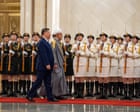
You only need to look at the diplomatic traffic flowing through Beijing in November 2026 to see the shift in real time. While American warships enforce a blockade of Iranian ports and Washington trades threats with Tehran over stalled ceasefire talks in Doha, Xi Jinping has been rolling out the red carpet for Gulf leaders, including Oman’s Sultan Haitham bin Tariq, while dispatching special envoy Zhai Jun across Iran, Oman, and Saudi Arabia. On the surface, Beijing looks like a cautious bystander watching a rival superpower get bogged down in another Middle Eastern conflict. Beneath the surface, China is executing a calculated takeover of regional influence without firing a single shot.
The Illusion of Total Control in the Strait of Hormuz
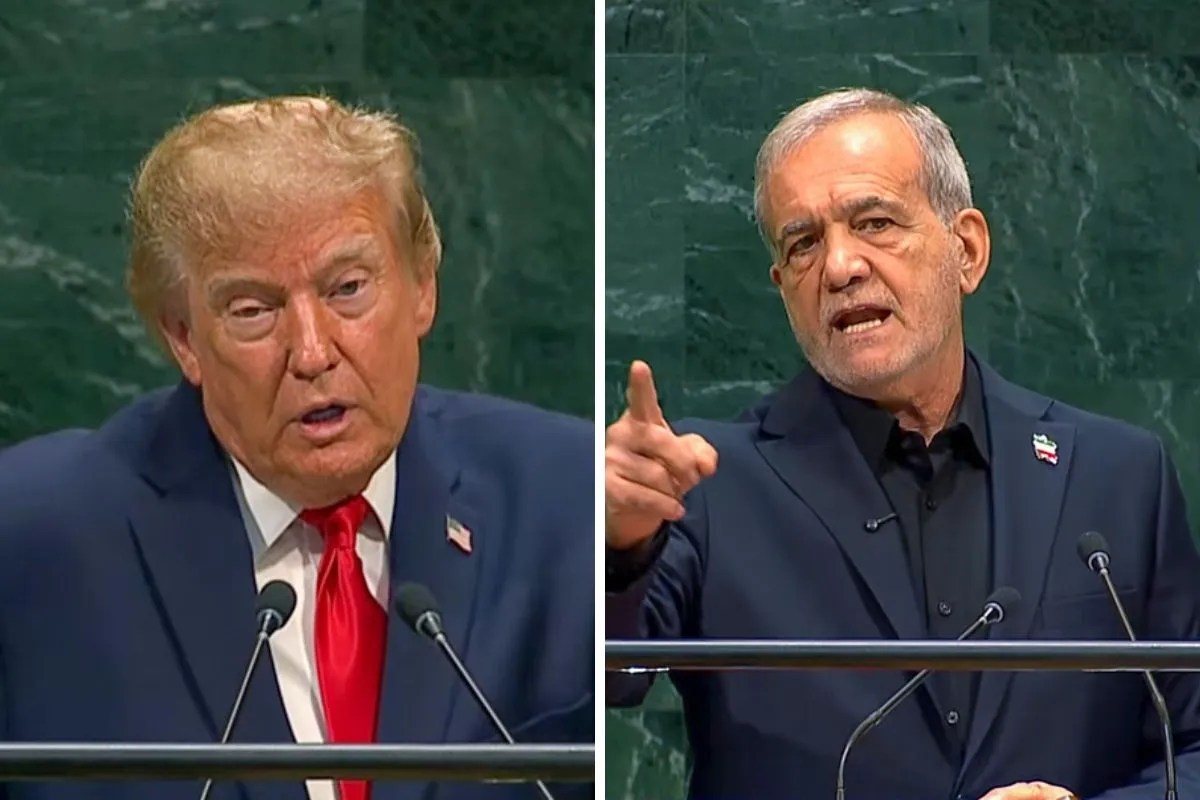
Speaking to reporters in Shenzhen ahead of his high-stakes trilateral summit with Xi Jinping and Vladimir Putin, Trump projected absolute victory. He boasted that American forces had decimated Iran’s navy, air force, and anti-aircraft defenses, reduced its ballistic missile arsenal to roughly 12 percent of pre-war levels, and established total control over the Strait of Hormuz.
Military superiority is one thing. Geopolitical control is another.
The conflict that erupted with joint US-Israeli strikes on February 28, 2026, quickly spilled beyond Iranian borders. Tehran’s retaliatory barrages against Israel and Gulf states hosting American bases shattered the fragile security equilibrium that Arab monarchies had spent years building. When Washington followed up stalled April peace talks in Islamabad with a full naval blockade of Iranian ports, it effectively turned the world’s most critical energy chokepoint into a militarized siege zone.
For the rulers in Riyadh, Abu Dhabi, Doha, and Muscat, the view from the ground looks vastly different than the victory lap in Washington. Gulf capitals rely on predictable maritime transit, investor confidence, and de-escalation to fund their massive domestic economic transformations. A Qatari liquefied natural gas tanker has already been struck by a missile amid the regional crossfire. Diplomatic backchannels in Doha are deadlocked over the release of $6 billion in frozen Iranian funds and basic guarantees for freedom of navigation. Even as Trump threatens to resume large-scale offensive strikes after the new year if Tehran refuses his preconditions, Gulf officials like the UAE’s Anwar Gargash are publicly warning that escalating tensions benefit no one.
When the traditional security guarantor becomes the primary source of regional volatility, local powers look for an insurance policy. That insurance policy sits in Beijing.
How Beijing Turns American Friction Into Diplomatic Capital
China’s Middle East playbook is built on a simple asymmetry: Washington bears the military and reputational costs of regional war, while Beijing reaps the commercial and diplomatic dividends of reconstruction and mediation.
Consider how Beijing has played the 2026 crisis. Despite a 25-year cooperation pact signed with Tehran in 2021 and long-standing intelligence and dual-use supply chains, Xi Jinping refused to rescue Iran militarily when American and Israeli bombs began falling. As Trump himself noted in Shenzhen, neither China nor Russia put warships into the water to challenge the American blockade. Even more telling, Xi assured Trump during their May 2026 Beijing summit that Chinese companies would not sell weapons to the Islamic Republic.
To casual observers, this restraint looks like Chinese weakness or abandonment of an ally. In truth, it is cold strategic discipline. By withholding military intervention, Beijing avoided a direct naval clash with the US Fifth Fleet while preserving its standing as a neutral convener. Every time Washington issues an ultimatum—such as demanding Iran surrender 400 kilograms of enriched uranium and forfeit war reparations before talks can even begin—Beijing’s diplomatic stock rises among Middle Eastern leaders exhausted by maximalist demands.
The Quiet Realignment of Gulf Diplomacy
The numbers tell the story of who is actually shaping the region's diplomatic architecture. While American envoys shuttle between tense, unproductive indirect talks, Beijing has positioned itself as the only major power capable of speaking candidly to every capital in the conflict.
- Direct Access to Tehran: China remains Iran’s primary economic lifeline and diplomatic shield at the United Nations Security Council, where Beijing has consistently opposed further military action and argued that prior nuclear sanctions mechanisms expired in late 2025.
- Deepening Ties With Gulf Monarchies: Gulf leaders view Xi Jinping’s non-interference doctrine as a welcome contrast to Washington’s unpredictable swings between sudden military escalation and abrupt diplomatic disengagement. Sultan Haitham’s state visit to Beijing and envoy Zhai Jun’s regional tour signal that Arab states are actively coordinating post-war security and trade frameworks with China.
- The Trilateral Optics: By hosting both Trump and Putin in Shenzhen for talks on global peace, Xi has cemented China’s image as the central clearinghouse where global crises—including the war in Iran—must ultimately be settled. Even though Trump insists Washington needs no outside help to finish off Tehran, his very presence at Xi’s table validates Beijing’s status as an equal arbiter.
The Oil Shock That Forced China to Diversify—and Win
If diplomacy is the visible face of Beijing’s gain, energy markets reveal the structural shift happening beneath the waves. Prior to the 2026 war and naval blockade, China was the dominant buyer of sanctioned Iranian crude, relying heavily on independent "teapot" refineries in Shandong province to absorb discounted barrels disguised through ship-to-ship transfers off Malaysia.
The American blockade broke that pipeline.
In March 2026, Iran was still loading roughly 2 million barrels of crude and condensate per day. By September, maritime tracking firms recorded zero loadings—the first full month without Iranian seaborne crude exports since the 1979 revolution. Treasury Secretary Scott Bessent has projected that Iran’s economy will contract by more than 25 percent as Tehran stares down a monthly revenue loss of $3 billion to $6 billion once final payments from Chinese refiners clear in mid-December.
Washington viewed this collapse as a decisive triumph. Yet the blockade triggered two unintended consequences that directly strengthen China’s long-term position:
- Accelerated Decoupling From Vulnerable Chokepoints: Losing access to cheap Iranian crude forced Chinese state energy giants and independent refiners to lock in deeper long-term supply agreements with Russia and Gulf Arab producers, while simultaneously accelerating domestic green energy deployment. In the first half of 2026 alone, Chinese financing for Belt and Road renewable energy projects hit a record $20.1 billion as developing nations scrambled to escape fossil fuel price volatility sparked by the Iran war.
- Weaponizing the Renminbi in Gulf Trade: As Washington expanded secondary sanctions against Chinese and Hong Kong entities tied to Iranian procurement, Beijing intensified its push to settle Gulf oil and infrastructure contracts in yuan rather than US dollars. Gulf exporters, watching how swiftly Washington can freeze sovereign assets and blockade maritime trade, have grown far more receptive to non-dollar settlement mechanisms that insulate their revenues from American Treasury enforcement.
| Strategic Dimension | Washington’s 2026 Approach | Beijing’s Counter-Move | Net Geopolitical Impact |
|---|---|---|---|
| Security Posture | Joint strikes, naval blockade, threats of renewed escalation | Zero military intervention, public calls for restraint and sovereignty | US absorbs resentment over regional instability; China projects reliability |
| Diplomacy | Maximalist preconditions, stalled indirect talks in Doha | High-level Gulf summits in Beijing, special envoy shuttle diplomacy | Arab states hedge against US unpredictability by engaging China |
| Energy & Trade | Maritime interdiction, secondary sanctions on refiners | Record $20.1B green BRI investment, deepening Gulf-Russia supply ties | Short-term pain for Tehran, long-term structural shift away from US leverage |
The Counter-Argument Why Beijing’s Opening Has Hard Limits
It would be a mistake, however, to assume China can simply replace the United States as the Middle East’s hegemon. Geopolitical vacuums are messy, and Beijing’s refusal to underwrite hard security exposes the ceiling of its influence.
When missiles are flying across the Persian Gulf and commercial tankers are dodging drone strikes, diplomatic statements from Beijing do not intercept incoming warheads. Gulf monarchs know this intimately. For all their frustration with Trump’s brinkmanship and unilateralism, Saudi Arabia, the UAE, and Qatar still depend on American missile defense batteries, intelligence sharing, and naval firepower to deter existential threats. When Qatar needed immediate energy cushioning during the 2026 disruptions, it turned to US liquefied natural gas supplies—not Chinese promises.
Furthermore, China’s balancing act between Riyadh and Tehran becomes harder to sustain the longer the war drags on. If Iranian hardliners follow through on threats to launch armed tanker convoys to break the US blockade, or if Israel launches unilateral strikes against Iranian nuclear sites without White House approval, the resulting maritime closure would choke off nearly a fifth of global petroleum supply—hitting China’s import-dependent economy far harder than energy-independent America. Beijing wants Washington tied down in the Middle East, not a regional conflagration that sinks the Chinese economy.
The Real Cost of America’s Coercive Diplomacy
Even accounting for China’s military limitations in the region, the strategic ledger tilts sharply against Washington.
Great powers rarely lose influence because a rival defeats them on the battlefield. They lose it when they mistake tactical coercion for durable strategy. By treating the Middle East purely as an arena for unilateral force and sanctions enforcement, the Trump administration has stripped away the diplomatic ambiguity that once kept Gulf states firmly inside the American orbit. Arab capitals no longer view alignment with Washington as a guarantee of quiet prosperity; they view it as an entanglement that puts their ports, desalination plants, and oil terminals in the line of fire.
Meanwhile, a weakened, economically isolated Iran becomes wholly dependent on Beijing for post-war survival. Whenever a ceasefire finally holds and the blockade lifts, Chinese state-owned enterprises will hold first refusal on rebuilding Iran’s shattered infrastructure, telecommunications networks, and energy sector—on concessionary terms dictated entirely by Beijing. Simultaneously, Gulf sovereign wealth funds will continue pouring capital into Chinese tech, manufacturing, and green energy ventures as a hedge against Western political risk.
Washington may succeed in forcing Tehran to sign a piece of paper under the barrel of a naval blockade. Yet when the smoke clears over the Strait of Hormuz, American policymakers will discover they spent billions of dollars and burned decades of regional goodwill only to build a Middle East where every road leads to Beijing.