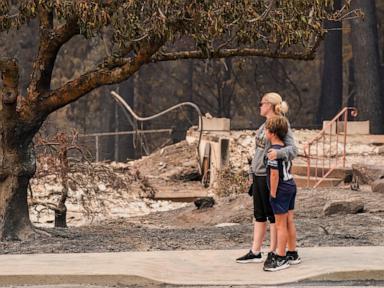
When wildfire smoke blinds the Pacific Northwest and summer temperatures cross dangerous thresholds, the public conversation routinely defaults to meteorological bad luck. We talk about dry timber, erratic winds, and heat domes as if they were unpreventable acts of God. But the ongoing crisis across Washington State is not merely a weather story. It is a structural failure of regional planning, acute infrastructure deficits, and an emergency response framework that remains designed for a climate model that no longer exists.
The Physics of a Compound Crisis
To understand why contemporary wildfire seasons in Washington inflict such systemic damage, one must examine the mechanics of simultaneous hazards. Historically, emergency management treated heatwaves and wildfires as isolated emergencies. Modern climatology proves otherwise.
When high-pressure ridging locks stagnant air over the Pacific Northwest, it creates a dual-threat mechanism. High ambient temperatures dry out underbrush at an accelerated rate, turning forests into tinderboxes. Simultaneously, that same atmospheric lid traps particulate matter from early-season burns and ground-level ozone created when heat reacts with industrial and vehicular pollutants.
This overlap creates a toxic atmospheric loop. Fine particulate matter, known as PM2.5, bypasses the body's natural upper airway filters, embedding deep into pulmonary tissue and entering the bloodstream. When combined with extreme heat, these particles do not just cause temporary discomfort. They trigger systemic inflammation that overburdens emergency rooms, shutting down urban cores even miles away from the active burn lines.
The Infrastructure Deficit
Washington faces a brutal physical mismatch. Most municipal buildings, community centers, and public housing units across the state were built decades ago, long before prolonged weeks of hazardous air quality became a seasonal reality.
Consider the standard emergency shelter model. When evacuation orders force thousands of residents from their homes, authorities direct them to congregate facilities. Many of these sites rely on conventional HVAC systems entirely unequipped with high-efficiency particulate air (HEPA) filtration. Bringing vulnerable populations indoors to escape a fire zone only to expose them to recirculated smoke creates a secondary public health hazard.
Furthermore, electrical grids take immense strain during these compound events. Utilities implement public safety power shutoffs to prevent downed lines from sparking new blazes. Yet, losing electricity during a heatwave strips citizens of air conditioning and indoor air filtration systems, trapping them in dangerous thermal environments with sealed windows.
The Policy Lag
Emergency management agencies are struggling to pivot from reactive firefighting to systemic adaptation. State officials deploy temporary resource distribution—such as handing out DIY box-fan filter kits—yet these measures fail to scale against hundreds of thousands of acres burning simultaneously.
Prevention policies face similar bottlenecks. Controlled burns and fuel reduction strategies require narrow operational windows that are shrinking year over year due to extended drought conditions. When every month is fire season, proactive land management gets squeezed out by endless emergency suppression.
The economic toll compounds the operational deadlock. Rural communities absorb the brunt of property destruction while urban centers bear the health costs of prolonged smoke exposure. Without massive capital investments in building envelope retrofits, upgraded grid resilience, and mandatory clean-air public spaces, Washington's seasonal crisis will remain a recurring catastrophe of our own making.