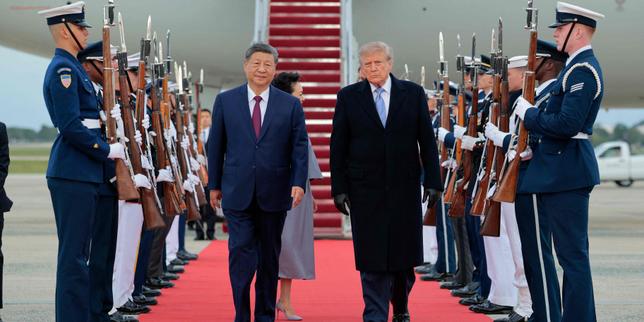
Every major financial desk on the planet reacted to the latest Washington announcement with collective, sycophantic relief. Another extension of the trade truce with Beijing. Another round of diplomatic handshakes staged for the evening news. The mainstream narrative treats this ongoing détente as a stabilizing anchor for global supply chains, a moment of adult supervision preventing a descent into economic mutual assured destruction.
It is complete nonsense.
I have spent the better part of two decades watching corporate boardrooms panic over tariffs, moving production lines across Southeast Asia on the back of temporary diplomatic pauses, only to realize they were rearranging deck chairs on a sinking hull. The lazy consensus says these extensions buy time for structural negotiations. They do not. They buy time for stagnation. They protect inefficient incumbents on both sides of the Pacific while masking a fundamental structural decoupling that has already passed the point of no return.
Let us dispense with the corporate PR and look at the mechanics of what is actually happening.
The Myth of the Negotiating Table
The fundamental misunderstanding shared by pundits and policy wonks is that trade friction between the United States and China is a policy dispute waiting for a clever compromise. It is not. It is a collision between two incompatible economic operating systems.
Washington wants managed interdependence—open markets for American intellectual property combined with absolute national security dominance in critical technology. Beijing wants state-directed industrial self-sufficiency backed by massive domestic overcapacity. You cannot negotiate a treaty that bridges a zero-sum technological sovereignty race.
When bureaucrats announce another six-month or twelve-month extension on tariff hikes, they are not resolving disputes. They are kicking the can down a road that is rapidly running out of asphalt. Corporations take this temporary relief as a green light to maintain legacy supply chains, delaying the painful, necessary capital expenditures required to build genuine operational resilience.
I have watched mid-sized manufacturing executives blow millions waiting for a grand trade deal that will never materialize. They sit on their hands, paralyzed by the illusion of normalcy, while nimble competitors quietly reroute capital into regionalized, localized hubs that care nothing for what happens in Geneva or Washington.
The Weaponization of the Status Quo
To understand why these continuous truces are actively harmful, look at how capital responds to uncertainty. Real economic modernization requires hard, cold clarity. When the rules of engagement are volatile, businesses adapt through aggressive innovation or structural redundancy.
A permanent state of "truce" creates a dangerous half-state. Tariffs remain high enough to impose friction, but low enough that companies keep absorbing the cost rather than fixing the underlying vulnerability. It is a tax on lack of imagination.
Consider the semiconductor space. The narrative pushed by trade diplomats suggests that export controls and periodic talks form a balanced containment strategy. In reality, the constant extension of timelines allows firms to find clever, short-term workarounds—transshipping goods through third-party nations, adjusting bill-of-materials definitions—without fundamentally altering their dependency on vulnerable chokepoints.
The truce does not prevent a trade war. It institutionalizes a slow-motion trade war where the cost is paid daily in productivity drag and lost market signal clarity.
The Cost of Inaction
What happens when you rely on diplomatic breathing room instead of structural transformation? You get the current corporate landscape: bloated margins subsidizing obsolete logistics.
Every time Washington extends these measures, industrial planners in Beijing use the window to accelerate their own import substitution strategies. They do not see a truce as a gesture of peace; they see a tactical delay handed to them by an adversary unwilling to make hard choices. By the time Western executives realize the truce was a strategic feint, the technological gap they thought they were preserving has vanished.
The honest downside to my argument—the part that the contrarian playbook demands I admit—is that aggressive, immediate decoupling is violently painful in the short term. Breaking forty years of integrated supply chains destroys quarterly earnings. It spikes inflation. It forces ugly, expensive rewrites of procurement contracts.
Markets hate pain. Politicians hate inflation. That is precisely why the truce persists. It is an agreement to mortgage long-term strategic viability for short-term stock market stability.
Stop Waiting for the Pivot
If you are running a business or managing a portfolio based on the premise that Washington and Beijing will eventually return to the pre-2018 status quo, you are operating in a fantasy.
The era of hyper-globalized friction-free manufacturing is dead, regardless of how many joint communiqués use the word cooperation. The future belongs to organizations that treat geopolitical volatility not as a weather pattern to wait out, but as the permanent baseline terrain of global commerce.
Stop checking the headlines for the next trade extension. Assume the walls are permanent, price the friction into your balance sheet today, and build a supply chain that can survive the day the music finally stops.


