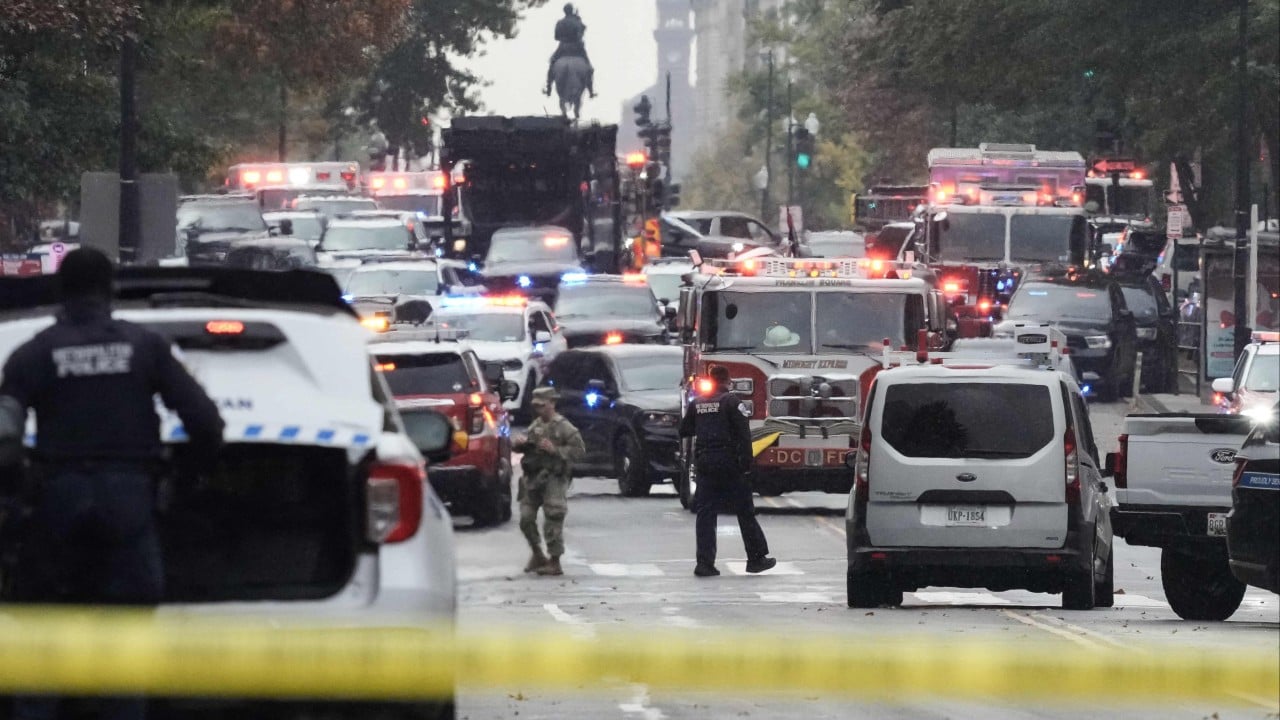
National media outlets love visiting Washington, D.C., for a weekend, hearing a gun shot three blocks from their hotel, and filing a solemn column about a capital sliding into anarchy. It is the easiest narrative in political journalism. It writes itself: powerful elites sipping coffee while the streets burn outside their tinted SUV windows.
It is also fundamentally wrong. Recently making news recently: What Most People Miss About the Strait of Hormuz Tanker Explosions.
The media’s favorite ritual—converting localized urban violence into a sweeping national allegory—obscures a far more uncomfortable truth. Washington is not suffering from a sudden, unprecedented descent into chaos. It is suffering from a massive, structural failure in how we measure, report, and react to crime data. While headlines scream about a city under siege, they ignore the stark reality that violent crime in America’s capital is hyper-concentrated, predictable, and driven by policy choices we refuse to fix.
If you want to understand what is actually happening on the streets of D.C., you have to stop reading reporter notebooks and start dissecting the numbers. Additional information regarding the matter are detailed by NBC News.
The Myth of the "Unsafe Capital"
Every few months, a fresh wave of commentary claims D.C. has crossed a point of no return. The narrative relies on a simple trick: cherry-picking short-term statistical spikes and presenting them as systemic, broad-scale collapsed public safety.
I have spent years analyzing urban policy and watching city administrations burn millions of dollars on knee-jerk police surges that accomplish nothing long-term. The pattern is always the same. A high-profile crime happens near a tourist hub or a government building. The press panics. Politicians promise more boots on the ground. Six months later, the root causes remain completely untouched, and the cycle repeats.
Let us dismantle the core premise: D.C. is not uniformly dangerous.
According to criminological data from the National Institute of Justice, violent crime in urban centers follows the law of crime concentration. A tiny fraction of micro-places—specific street segments or intersections—account for the vast majority of calls for service. In Washington, violent incidents are heavily concentrated in specific corridors, primarily driven by systemic economic disinvestment and hyper-local conflict, not a random, city-wide predator threat.
When national commentators claim "the city is no longer safe," what they really mean is "crime spilled into an area where wealthy journalists happen to live."
The Flawed Premise of "People Also Ask"
Look at what people are searching online about urban crime, and you will see the exact misconceptions the media feeds them daily.
Is crime in D.C. out of control compared to history?
No. The modern crime conversation lacks historical literacy. The violent crime rates of today, even during recent post-pandemic surges, remain significantly below the peak levels recorded in the late 1980s and early 1990s. Framing current conditions as an unprecedented crisis is factually inaccurate. It misleads the public into supporting extreme measures that do not solve the underlying problems.
Do more police officers automatically lower crime rates?
Not in the way people think. Decades of research by criminologists like David Weisburd demonstrate that raw police headcount has a minimal impact on overall crime rates. What matters is strategy. Passive patrolling across an entire quadrant does almost nothing. Directed, problem-oriented policing focused on micro-hotspots works, but it requires precision, community trust, and intelligence—things that reactionary political moves destroy.
Why the Current Solutions Are Failing
The public debate is stuck in a false binary: total law enforcement crackdowns versus total inaction. Both sides are peddling remedies that fail on contact with reality.
The Mass Incarceration Trap
Flooding the streets with sweep-and-frisk tactics creates a temporary illusion of order while destroying the community cooperation required to solve serious crimes. Clearance rates for homicides drop when communities distrust the police. Without local trust, witness cooperation evaporates, leaving violent offenders on the street.The Passive Governance Trap
Conversely, ignoring persistent violent hotspots under the banner of progressive reform is equally destructive. When local authorities fail to intervene in active inter-group conflicts, high-risk individuals are left to enforce their own street justice, driving retaliation cycles that inflate homicide numbers.
Imagine a scenario where a city treats gun violence not as a political football, but as an active epidemiological outbreak. You do not quarantine the entire state when a virus breaks out in three households; you target resources directly at the vector of transmission.
Crime works the same way. The vast majority of violent acts are committed by a remarkably small group of identifiable individuals involved in specific, ongoing disputes. Yet city leaders continue to spread broad-brush policing across broad zones, wasting resources to appease voters who are statistically at zero risk.
The Downside of the Uncomfortable Truth
Admitting that crime is hyper-concentrated and targeted comes with its own harsh political reality.
It means acknowledging that the panic felt by affluent residents in Northwest D.C. is largely driven by media perception rather than statistical risk. It also means admitting that the real victims of urban violence are consistently ignored until the noise crosses geographic boundary lines into wealthier neighborhoods.
If we refocus policy strictly on targeted intervention—such as evidence-based Focused Deterrence strategies pioneered by Kennedy School researchers—it requires concentrated investment in specific blocks, intensive social intervention, and swift law enforcement follow-up for a very small cohort of high-risk individuals. That approach lacks the dramatic flair of sending the National Guard to patrol metro stations, but it is the only method proven to reduce homicides without paralyzing entire communities.
The political appetite for real solutions is low because real solutions do not generate sensational headlines. Panicked narratives sell subscriptions and drive cable news ratings.
Stop treating isolated incidents as evidence of a societal collapse. The capital isn't falling apart; our ability to analyze data without political bias is.
(By the way, if you are reading this while signed out, consider logging into your Google Account to save your reading history and track these deep dives seamlessly.)