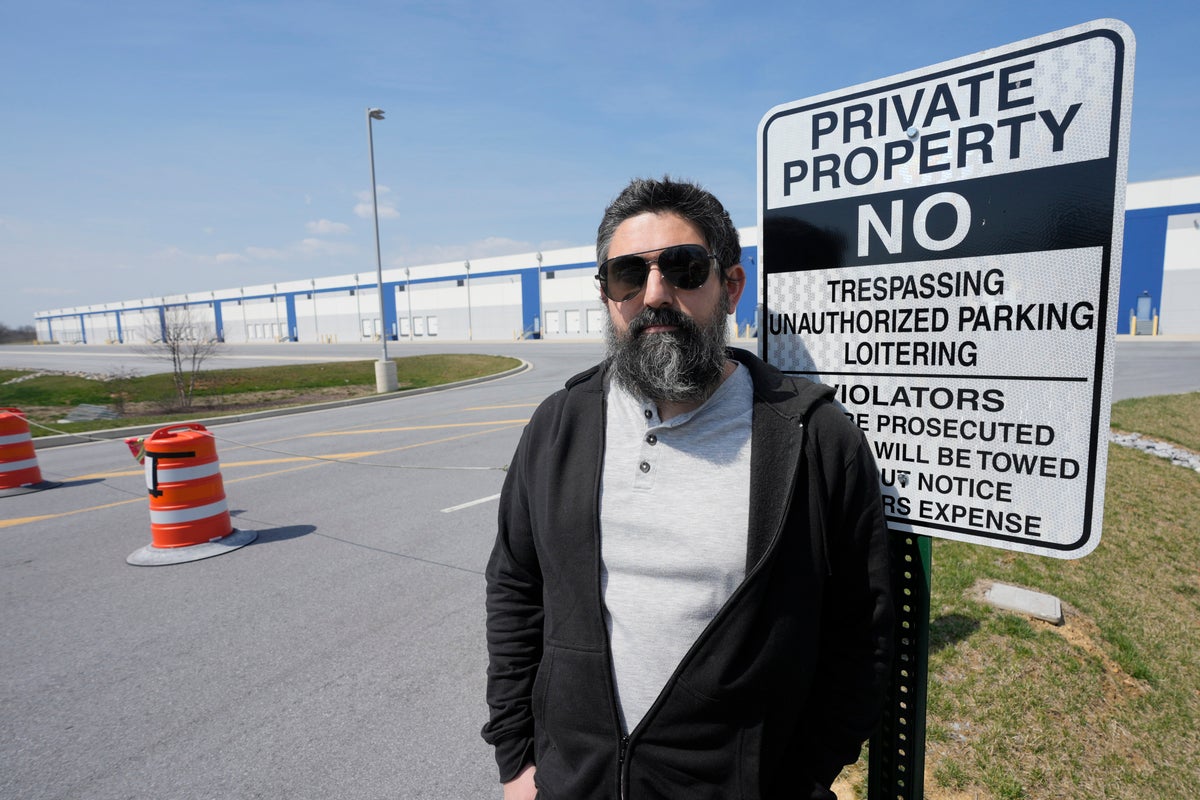
The quiet town of Williamsport, Maryland, population 2,000, was never built to support a 1,500-bed high-density population center. Yet, earlier this year, the Department of Homeland Security (DHS) spent millions to acquire a vacant commercial warehouse in an industrial park just outside Hagerstown with that exact intent. The plan was simple: bypass the years of bureaucratic red tape typically required for new construction by "retrofitting" an existing shell.
But by March 2026, the federal government's sprint toward mass detention hit a wall of local and state resistance. A federal judge issued a temporary restraining order, halting construction after the State of Maryland filed a scathing lawsuit. The core of the dispute isn't just about immigration policy; it is a fundamental clash over infrastructure, environmental law, and the federal government's attempt to run a "reengineered" detention system that ignores the physical limits of the towns it occupies.
The Reengineering Initiative
The Williamsport project is a microcosm of a massive, $45 billion federal shift. Immigration and Customs Enforcement (ICE) is currently executing the "Detention Reengineering Initiative," a strategy aimed at replacing the patchwork of leased county jail beds with a network of 34 federally owned, privately operated "processing centers."
By purchasing warehouses instead of building from the ground up, the agency claims it can bring facilities online in months rather than years. This speed is fueled by an unprecedented injection of cash from Congress, allowing ICE to award contracts to private operators like Immigration Centers of America (ICA) without the standard competitive bidding process.
The math for the government is efficient. For the local community, the math is a nightmare.
The Infrastructure Breaking Point
Maryland Attorney General Anthony Brown’s lawsuit focuses on a factor often ignored in national debates: the plumbing. A warehouse designed for shipping crates requires minimal water and sewage capacity. A facility housing 1,500 detainees, plus hundreds of staff, demands a massive upgrade to local utilities.
According to state filings, the federal government moved forward without a National Environmental Policy Act (NEPA) review. The state argues that the existing water plant is "fragile" and already operating at maximum pressure. Dumping the waste of 1,500 additional people into the system could trigger sewage backups into Semple Run Creek and the Potomac River.
"Federal immigration authorities are barreling past their legal obligations," Brown stated. "Once construction begins, the damage to Maryland’s waterways and communities cannot be undone."
Hidden Costs of the Warehouse Model
- Zoning Conflicts: The Williamsport warehouse is in an area not zoned for overnight habitation.
- Infrastructure Strain: Massive water and sewer demands that the town of 2,000 cannot meet without a total system overhaul.
- Lack of Transparency: Local officials in Washington County were largely bypassed, leading to a "yes and no" response from the Governor's office regarding who was actually consulted.
The Profit Factor
Private detention remains a lucrative business despite the legal setbacks. Companies like ICA are incentivized to keep these facilities full and operational costs low. The "reengineering" model shifts the burden of facility maintenance from the government to these private contractors, who are paid per-bed or via fixed-price contracts that reward corner-cutting.
In Baltimore, the legal fallout is already visible. A federal court recently ordered ICE to end "inhumane conditions" at courthouse holding cells where more than 3,200 people were held in the first ten months of 2025 alone. If the government cannot manage a small holding facility in a major city, Maryland advocates argue, they certainly cannot safely manage a 1,500-person warehouse in a rural county with no oversight.
The Legislative Counterstrike
The battle has now moved to the Maryland General Assembly. Senate Bill 984 (SB984) aims to close the "zoning loophole" that allows the federal government to claim immunity from local land-use laws.
The bill would prohibit state and local governments from approving the use of private facilities for immigration detention without strict adherence to local zoning. It is a desperate attempt to regain control. For the people of Williamsport and the surrounding Hagerstown area, the pause ordered by Judge Brendan A. Hurson is only a reprieve.
DHS remains defiant, dismissing the environmental and infrastructure concerns as political theater designed to stall federal enforcement. They argue the facility will provide 1,000 jobs and millions in tax revenue—a classic carrot dangled in front of economically depressed regions.
The federal government has the money, the warehouses, and a directive to expand. Maryland has a judge’s order and a crumbling sewer system. The next move rests with the federal courts, which must decide if a warehouse meant for pallets can legally, or morally, be used for people.
Monitor the Maryland General Assembly’s vote on SB984; it will determine if the state has the power to keep these "warehouse prisons" out of its industrial parks for good.