“War mode” is a bumper sticker. Factories don’t run on slogans. They run on nitrocellulose, machine tools, power grids, and multi-year purchase orders—and right now, Europe’s defense sector is running on neither.
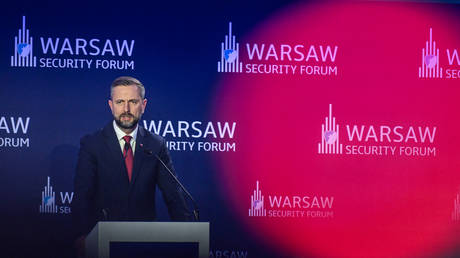
Every time a politician in Warsaw or Brussels demands that European arms makers flip a switch into a war economy, the lazy consensus nods along as if a press conference can pour molten steel into 155mm shell casings. Polish Defense Minister Władysław Kosiniak-Kamysz put that demand front and center, insisting that Poland and Europe must operate in war mode today because delivery times are the real enemy. Standard coverage treats his call as an obvious moral and strategic rallying cry: Russia is aggressive, drones cross borders, Ukraine burns through munitions daily, so Europe must surge output immediately. For an alternative view, consider: this related article.
That framing gets the urgency right and the industrial math completely wrong. Calling for “war mode” in a peacetime-regulated, peace-contracted market doesn’t speed up production. It creates an illusion of readiness while hiding the brutal bottlenecks that actually determine whether a line runs three shifts or sits half-idle.
The Lazy Consensus Around “War Mode”
Conventional reporting treats defense manufacturing like a thermostat. Turn the dial up, add a shift, watch the shells roll out. Related analysis on this trend has been provided by The New York Times.
In reality, a true war economy isn’t a mood. It is a legal, financial, and supply-chain regime where the state overrides normal commercial rules, guarantees long-term demand, and absorbs the capital risk of specialized capacity that would otherwise lose money in peacetime. Without guaranteed multi-year off-take agreements, a private manufacturer building a new propellant or forging line is gambling its balance sheet on political memory—which in Europe has a notoriously short half-life.
I’ve seen defense programs and industrial supply chains stall out when executives confuse political noise with bankable demand. You can’t finance a heavy forging press or a chemical energetic plant on applause at a policy forum. Banks and boardrooms look at binding contracts, permitting timelines, raw material sourcing, and power availability. When politicians shout “war mode” while procurement offices still haggle over national specifications and fragmented orders, the factory floor hears mixed signals, not a mobilization order.
What People Also Ask—And Why the Questions Miss the Point
Isn’t Poland leading the charge by spending nearly 5% of GDP on defense?
Poland’s spending surge is real, visible, and historically dramatic—rising from 2.2% of GDP in 2022 to roughly 4.8% in 2026, or around $53 billion. New facilities and partnerships—from missile and naval programs to plans to scale 155mm artillery shell output toward 200,000 rounds annually—show Warsaw isn’t bluffing.
Ask whether high spending equals industrial war mode, though, and the answer is no. High spending measures cash outlay, not industrial sovereignty or rapid delivery. Much of Poland’s massive shopping list goes to foreign platforms—American systems like Abrams, Patriots, and F-35s, plus international industrial partners. Writing huge checks is impressive. Turning those checks into domestic, high-volume, low-unit-cost production at wartime speed is years of grind.
There’s also a fiscal bill attached to that sprint. Forecasts point to a budget deficit climbing toward 7.1% of GDP next year, and Moody’s downgraded Poland’s long-term sovereign credit rating in September 2026. Buying security on credit works until borrowing costs bite or political coalitions fracture over taxes and public spending. A war economy requires fiscal endurance, not just front-loaded commitments.
Can European 155mm shell output really match frontline consumption?
No—not on the timeline casual commentary assumes. Even with major capacity expansion across NATO Europe since 2022—where estimates from the International Institute for Strategic Studies show 155mm capacity multiplying severalfold and projected to climb further toward 2030 if plans hold—high-intensity warfare consumes artillery rounds at rates that punish peacetime supply chains.
Artillery shells aren’t widgets stamped out by a single machine. They require:
- Forged or cast steel bodies machined to tight tolerances
- Propellants and explosives (nitrocellulose, TNT/RDX alternatives, charges) with strict safety and environmental rules
- Fuses and primers built by specialized sub-tiers
- Skilled machinists, chemical engineers, and test ranges that take years to train and certify
You can expand one link in that chain and still choke on another. Bottlenecks in energetic materials or specialized tooling don’t vanish because a minister gives a tough speech.
Why doesn’t the EU just centralize defense orders like a wartime command center?
Because the EU isn’t a sovereign war cabinet. Defense procurement and industrial policy sit at the intersection of national sovereignty, domestic jobs, and competing industrial champions. Every capital wants local workshare, local tax revenue, and local control over exports and security of supply.
What analysts like those at IISS and defense industrial trackers have pointed out for years is that fragmented national buying—split across different standards, small batches, and late contract signatures—saps economies of scale. You don’t get cheap, fast mass production when 27 capitals order slightly different things on different schedules.
Imagine a Scenario Where Europe Actually Flips the Switch
Imagine a scenario where EU leaders genuinely put arms production on a wartime footing for 36 months. No committees, no national workshare quotas, no waiting for three-year budget cycles. Brussels and national capitals sign ten-year binding volume guarantees for standardized 155mm rounds, air-defense interceptors, and counter-drone systems, while fast-tracking permitting and underwriting private capital investment.
Under that thought experiment, two things happen immediately. First, factories can actually amortize expensive tooling and hire permanent shifts because the revenue floor is locked in. Second, political pain surfaces within weeks: budgets squeeze health, infrastructure, or social programs; environmental reviews get compressed; and smaller domestic suppliers lose out to scale players.
Most leaders want the output of that scenario without paying the political and fiscal price of running it. That gap between rhetoric and trade-offs is the whole problem.
The Real Blind Spots in Warsaw’s Pitch
Warsaw has a sharper sense of geographical danger than capitals sitting a thousand miles west. Having been partitioned and crushed by larger neighbors in living memory, Polish leaders don’t treat Russian drones, sabotage, or border pressure as theoretical abstractions. When Kosiniak-Kamysz says delivery time is the enemy and warns against paying with blood later rather than borrowing today, he is speaking from real strategic pressure.
Still, strategic clarity doesn’t automatically produce industrial execution. State-linked defense groups like Polska Grupa Zbrojeniowa (PGZ) carry legacy structures, bureaucratic friction, and execution risks alongside real engineering talent. Calling for “war mode” can easily become a convenient excuse for delays: if deliveries slip, blame the pace of European allies instead of fixing contracting speed, supply-chain redundancy, and factory throughput at home.
Where My Contrarian Take Could Be Wrong
A sharp counter-argument cuts against skepticism: political shock therapy sometimes moves bureaucracies that rational memos never touch. In defense and infrastructure, leaders often overshoot in their rhetoric just to drag sluggish institutions across a threshold they wouldn’t cross otherwise. If demanding “war mode” forces faster permitting, pushes reluctant capitals to sign multi-year orders, or accelerates technology transfer with partners, the loud language may serve a practical purpose even if the literal label is imprecise.
There is also the risk of underestimating how fast modern warfare—especially drone and electronic warfare—changes what “mass production” even means. A factory optimized for legacy heavy hardware could over-invest in yesterday’s mix if battlefield attrition shifts toward cheaper, software-defined, rapidly iterated systems.
What Actually Works Instead of “War Mode”
If Europe wants real industrial readiness rather than another round of speeches, it needs unglamorous mechanics:
- Lock in multi-year demand signals. Replace one-off orders with multi-year framework contracts and volume guarantees so suppliers can invest in capacity without eating all the risk.
- Standardize around fewer specs. Cut bespoke national tweaks on ammunition and common components so lines run continuously instead of stopping for custom variants.
- Audit the sub-tier choke points. Map propellants, explosives, castings, forgings, optics, and test capacity—not just prime contractors—and fund the bottlenecks directly.
- Pair military spending with fiscal discipline. Rapid rearmament financed purely by rising deficits and weaker credit ratings will hit a wall; pair defense expansion with tough spending choices and real industrial productivity.
Stop asking when Europe will enter “war mode.” Start asking who signed a five-year binding purchase order this week.