The foreign policy establishment is reading the tea leaves upside down again.
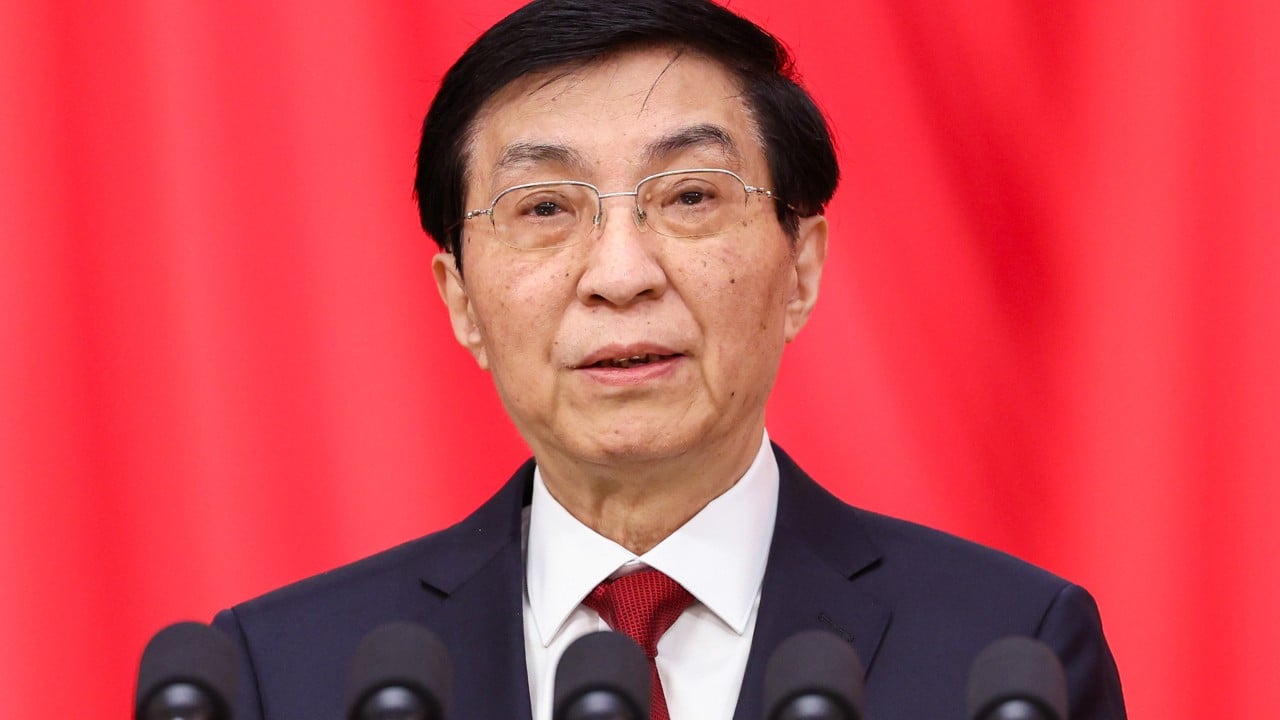
As news spreads of Wang Huning—China’s chief ideologue, the fourth-ranking official in the Communist Party, and the brain behind three presidential doctrines—preparing for a high-profile diplomatic mission to Pyongyang, the mainstream press is regurgitating its favorite tired narrative. They call it a "deepening alliance." They point to multiplying bilateral visits as proof of a cozy, united front designed to terrorize Washington. They paint a picture of two communist autocracies locking arms in a seamless, undivided strategy to reshape the global order. Don't miss our earlier post on this related article.
It is a comforting, simplistic, and entirely wrong interpretation.
The reality is far more tense, transactional, and fragile. Beijing is not sending its premier political theorist to North Korea to celebrate a beautiful friendship. Wang Huning is heading to Pyongyang because Beijing is quietly panicking. If you want more about the context here, NBC News provides an informative summary.
This is not a diplomatic victory lap. It is an intervention.
The Lazy Consensus: "An Alliance of Convenience"
Look at any major Western analysis of China-North Korea relations over the past year. The narrative is incredibly predictable:
- The Claim: High-level visits mean Beijing and Pyongyang are closer than ever.
- The Claim: Kim Jong Un’s growing nuclear arsenal is a tool Beijing happily uses to distract the United States.
- The Claim: Economic trade restarts represent a mutual desire for shared prosperity.
This is lazy geopolitics. It treats North Korea as a passive Chinese satellite and China as an indulgent godfather.
In reality, Beijing has always viewed Pyongyang not as a trusted ally, but as a highly volatile, radioactive shield. The relation is defined by deep, historical paranoia. Kim Jong Un despises his economic dependency on China; Xi Jinping despises Kim’s unpredictable provocations that bring US aircraft carriers right to China’s maritime doorstep.
When a heavyweight like Wang Huning gets on a plane to Pyongyang, it is because the delicate balance of this toxic relationship is threatening to spill over.
Why Wang Huning? Dismantling the Ideological Myth
To understand why this visit is happening, you have to understand who Wang Huning actually is.
He is not a traditional diplomat. He is not a trade negotiator. He is the high priest of Chinese state ideology. He is the architect of "Neo-Authoritarianism" in China, the man who shaped Jiang Zemin’s "Three Represents," Hu Jintao’s "Scientific Outlook on Development," and Xi Jinping’s current centralization of absolute power.
If Beijing wanted to talk trade, they would send a vice premier. If they wanted to talk military coordination, they would send a general from the Central Military Commission.
Sending Wang Huning is a highly specific, deliberate signal. It means Beijing wants to talk about control, systemic stability, and ideological alignment.
The True Agenda: China is watching North Korea’s dangerous flirtation with Vladimir Putin with absolute dread. Moscow, desperate for artillery shells for its war in Ukraine, has been offering Pyongyang advanced military technology, space assistance, and diplomatic cover. This ruins Beijing's monopoly on influence over the Kim regime.
Wang Huning’s job is to remind Kim Jong Un of a brutal structural reality: Russia is a temporary transaction; China is a permanent neighbor.
The Dangerous Illusion of the "China-Russia-North Korea" Axis
The media loves to write about a new "Axis of Authoritarianism" or a "New Cold War" bloc. It makes for terrifying headlines and great television. But it ignores the fundamental friction points between these three players.
Let’s look at the cold, hard mechanics of the region’s balance of power:
| Country | Core Geopolitical Goal in East Asia | View of North Korea's Nuclear Program |
|---|---|---|
| China | Regional stability, hegemony, keeping US military assets far from its borders. | Disapproval. Hates the nuclear tests because they justify US-Japan-South Korea military integration. |
| Russia | Chaotic disruption, diverting US attention and resources away from Europe. | Indifference/Exploitation. Happy to use North Korean weapons and ignore UN sanctions to spite the West. |
| North Korea | Regime survival, international recognition as a nuclear state, reducing dependence on Beijing. | Non-negotiable. The crown jewel of state identity and survival. |
Do those look like aligned interests to you?
Russia wants chaos. China, facing structural economic headwinds, high youth unemployment, and a fragile real estate sector, desperately wants stability to navigate its domestic transitions. Pyongyang's recent antics—including declaring South Korea a permanent hostile enemy state and tearing down monuments to reunification—threaten the very stability Beijing needs to survive its own internal economic pressures.
The Illusion of Economic Leverage
"But China controls 90% of North Korea’s trade!" the foreign policy establishment cries. "They can just turn off the oil!"
I have spent years analyzing regional supply chains and talking to borders-and-customs insiders. Anyone who thinks China can easily use its economic leverage to force North Korea to heel does not understand how the Kim regime operates.
If Beijing cuts off oil and food entirely, the North Korean state does not politely capitulate. It collapses.
A collapsed state on China's northeastern border means:
- Millions of starving refugees flooding into China’s Jilin and Liaoning provinces.
- Loose nuclear weapons up for grabs by rogue military factions.
- A unified Korean peninsula under a democratic, US-allied government in Seoul, bringing US troops right up to the Yalu River.
Kim Jong Un knows this. He knows that Beijing’s fear of his collapse is far greater than its fear of his nuclear weapons. This is the ultimate geopolitical hostage situation. Kim is holding a gun to his own head, and China is forced to keep paying the ransom to prevent him from pulling the trigger.
Wang Huning’s visit is an attempt to renegotiate the terms of this hostage situation, not to celebrate a partnership of equals.
What the Pundits Get Wrong About "People Also Ask"
If you look at the common questions surrounding this visit, the ignorance is astounding. Let's dismantle the most common ones.
"Is China helping North Korea evade UN Sanctions?"
Of course they are, but only just enough to keep the regime breathing. Beijing maintains a strict "warm-water drip" policy. They allow illicit ship-to-ship oil transfers and turn a blind eye to seafood smuggling because a starving North Korea is a dangerous North Korea. But they do not provide the kind of massive, transformative economic investment that would make North Korea genuinely strong or independent. They want Pyongyang weak, dependent, and quiet.
"Will this visit lead to a joint military exercise?"
Highly unlikely. Beijing has consistently avoided formal joint military exercises with North Korea. Why? Because China does not want to be legally or morally bound to defend a regime that might start a war on a whim. Beijing wants strategic ambiguity. A formal military pact with a rogue nuclear state is a liability, not an asset.
The Realist’s Playbook: The Costs of the Status Quo
To be fair, there is a risk to this contrarian view. If Beijing pushes too hard, if Wang Huning’s lectures on ideological discipline and restraint alienate Kim Jong Un further, it could backfire spectacularly.
An alienated Kim is highly likely to double down on his relationship with Moscow, or worse, launch a massive provocation—such as a seventh nuclear test—just to prove that Beijing does not own him. Xi Jinping is playing a incredibly dangerous game of chicken. He must restrain his vassal state without driving it into the arms of a desperate Vladimir Putin.
But pretending that this visit is a sign of a harmonious, rising autocracy bloc is a severe misreading of Asian power dynamics.
Beijing is trying to manage a failing, dangerous buffer state that is slowly slipping out of its orbit. The multiplying visits are not a sign of strength. They are the frantic movements of a landlord trying to reinforce a decaying, structural wall before the entire house comes crashing down.