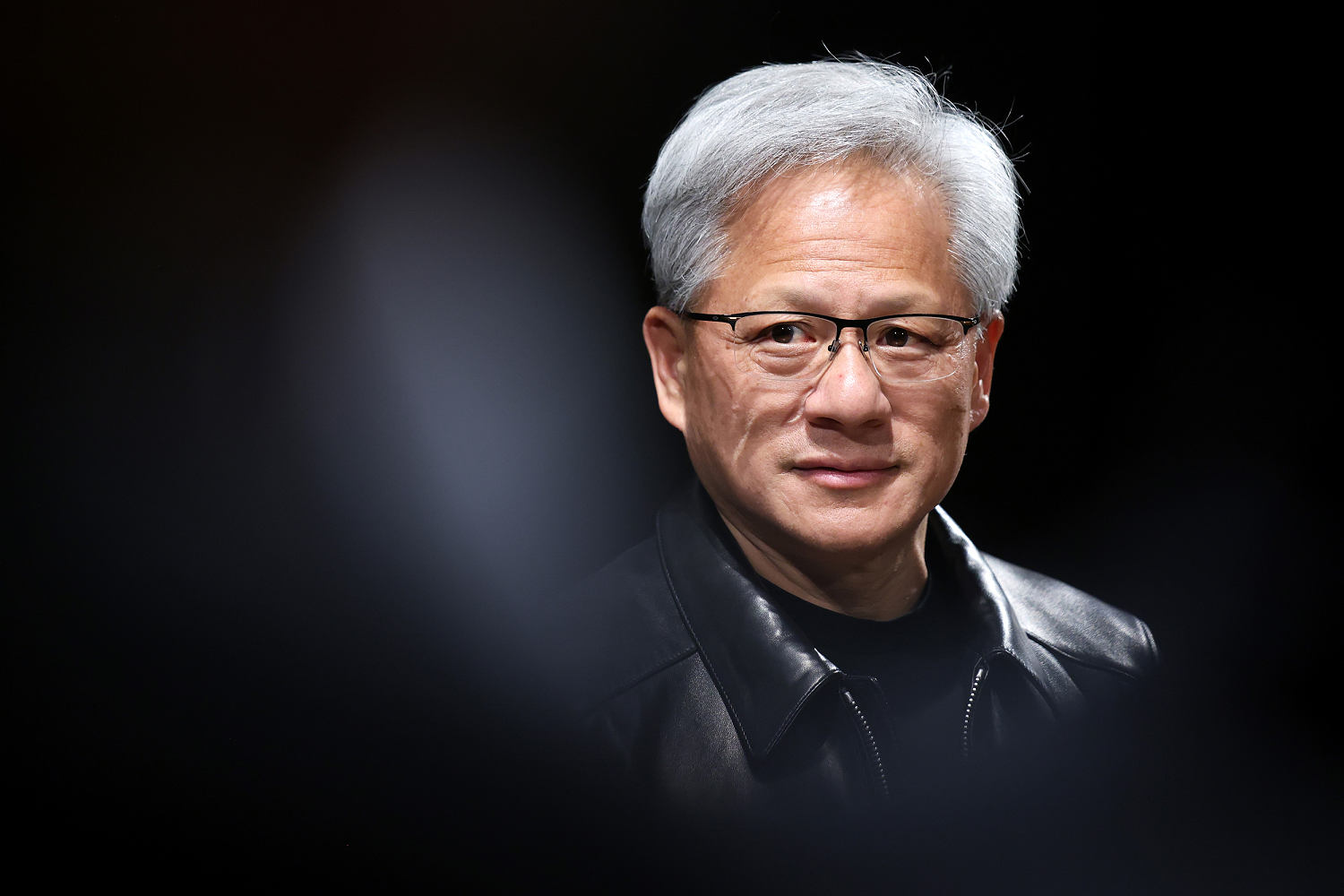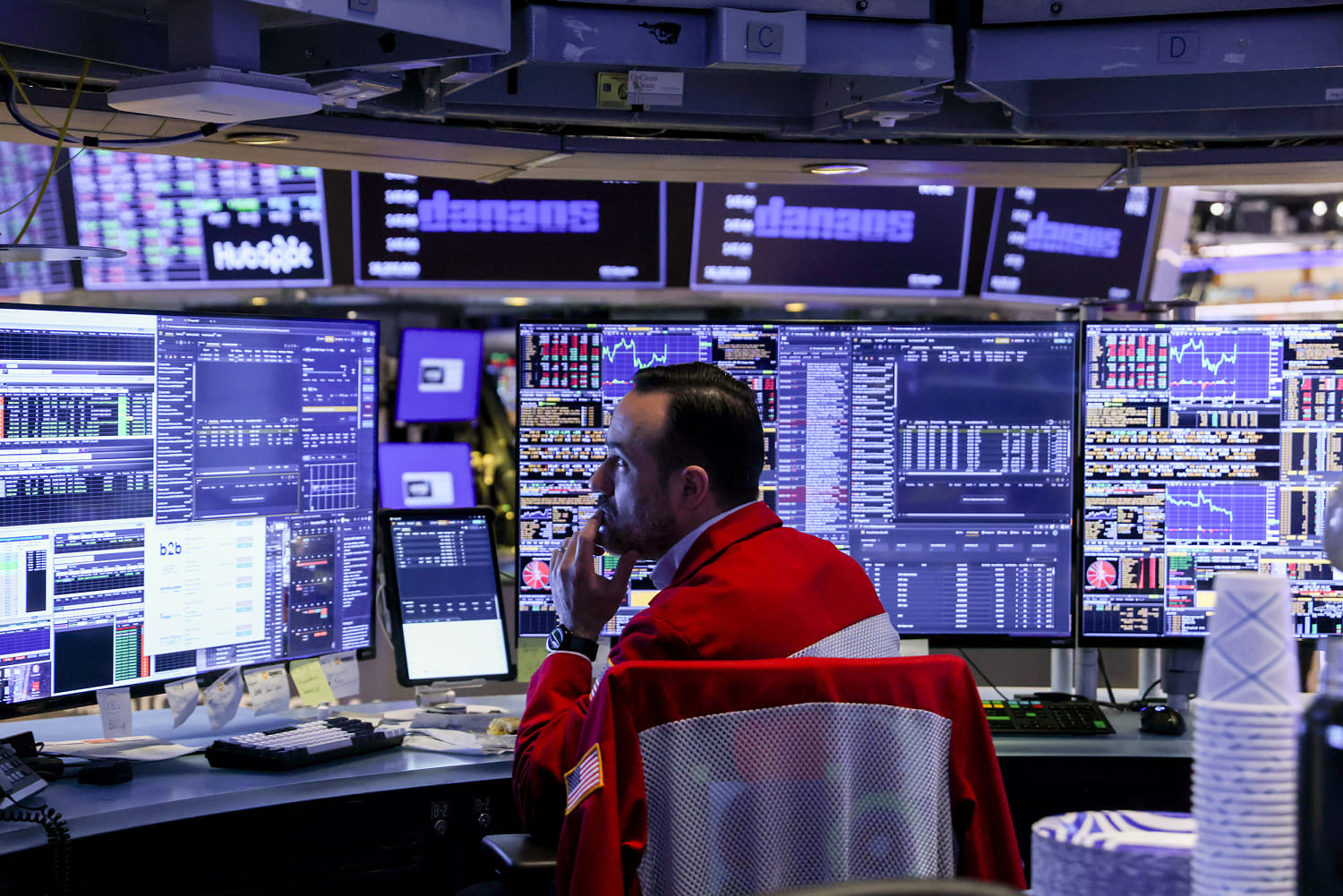
Major equity benchmarks including the S&P 500 and the Nasdaq Composite staged an immediate, forceful rally following the news that Nvidia reinstated co-founder Jensen Huang as chief executive officer. Institutional capital flooded back into semiconductor and cloud infrastructure equities within minutes of the announcement, erasing weeks of defensive positioning. Traders did not treat the leadership change as a routine corporate shuffle. They priced it as the restoration of a singular operating system that built modern artificial intelligence compute.
Wall Street hates uncertainty more than it hates bad news. When a market-defining company experiences executive transition or strategic drift, portfolio managers apply a valuation discount across the entire supply chain. Nvidia is not merely another component in the S&P 500 or the Nasdaq. Because of market-cap weighting, a sharp repricing in a mega-cap semiconductor leader pulls index-tracking funds, quantitative momentum strategies, and sector ETFs upward in lockstep.
The Structural Anatomy of an Index-Wide Surge
To understand why a single personnel decision in Santa Clara moves trillions of dollars in broader index value, you have to look at how modern equity benchmarks actually function. Both the S&P 500 and the Nasdaq Composite weight their constituents by float-adjusted market capitalization. When a company sits near the very top of those rankings, its daily price action ceases to be an isolated corporate event and becomes a macroeconomic variable.
Passive index funds must buy shares in proportion to index weights. When active institutional desks bid up Nvidia on the news of Huang's return, passive vehicles are forced to absorb supply at higher prices to minimize tracking error. Meanwhile, options dealers who sold call contracts ahead of the announcement have to buy underlying shares to hedge their exposure, a mechanical feedback loop known as a gamma squeeze.
The ripple effects rarely stop at the ticker symbol that triggered them. Semiconductor equipment makers, memory suppliers, hyperscale cloud providers, and data center power utilities trade on correlated order-book expectations. If institutional buyers believe Nvidia's product roadmap and execution cadence are back under founder control, they immediately re-rate capital expenditure forecasts for the entire technology sector.
Why Founder Leadership Carries a Measurable Premium
Corporate boards love succession planning on paper. In practice, replacing a technical founder at an engineering-driven hardware and software company almost always introduces friction. Professional managers tend to optimize for quarterly margin predictability, committee consensus, and risk mitigation. Founder-CEOs optimize for architectural survival and multi-year product cycles.
Huang spent decades building Nvidia around a flat organizational structure with dozens of direct reports and zero patience for bureaucratic insulation. In high-stakes chip design, a six-month delay on a reticle tape-out or a miscalculation in interconnect bandwidth can cede an entire generation of data center deployments to rivals. Investors know that Huang personally reviews engineering bottlenecks, supply allocation, and software stack integration down to the compiler level.
Consider a hypothetical example of how this difference plays out during a supply crunch. A traditional executive might rely on standardized procurement forecasts and tiered distributor allocations to smooth revenue across four quarters. A technical founder who knows the exact bill of materials for every server rack will walk directly into foundry negotiations, reallocate wafer starts on the fly, and bundle networking hardware with accelerators to lock in hyperscaler commitments before competitors can ship a rival silicon sample.
The CUDA Moat Requires Constant Enforcement
Hardware specs grab headlines, yet software lock-in generates the margins that justify mega-cap multiples. Nvidia's primary competitive advantage rests on CUDA, its proprietary parallel computing platform and programming model. Millions of developers write code directly against CUDA libraries, creating switching costs that rival custom silicon projects struggle to overcome.
Keeping that ecosystem dominant requires aggressive, continuous coordination between hardware architecture and developer tooling. Whenever leadership changes at the top, enterprise customers start asking quiet questions about backward compatibility, library optimization, and long-term support. Reinstating Huang removes that doubt instantly. Enterprise chief technology officers and cloud architects treat his presence at the helm as a guarantee that the hardware-software co-design philosophy remains intact.
What the Market Had Been Pricing In Before the Reversal
Markets rarely rally this violently unless sentiment had grown overly pessimistic beforehand. Prior to the reinstatement, institutional desks had begun treating Nvidia like a maturing cyclical chipmaker rather than a foundational compute platform. Analysts questioned whether hyperscalers would aggressively shift workloads toward custom ASICs (application-specific integrated circuits) built in-house to reduce vendor dependency.
That narrative gained traction whenever execution looked hesitant or strategic messaging turned defensive. Hedge funds paired long positions in rival chip designers and custom silicon contractors against short exposure in Nvidia, betting that gross margins had peaked. The moment the board announced Huang's return, those pair trades unwound simultaneously.
Short covering explains the initial spike in volume, but sustained index gains require real institutional accumulation. Long-only mutual funds and sovereign wealth desks used the announcement as clearance to rebuild overweight positions in semiconductors. They were not chasing a headline; they were reversing an underweight stance that had become career risk the moment the original architect returned to the building.
Historical Precedents for the Return of the Founder
Wall Street has seen this movie before, though rarely at this scale of market capitalization. When a company's identity and technical architecture are fused with its creator, bringing that person back acts as an immediate antidote to institutional drift.
| Company | Founder Returned | Primary Catalyst | Immediate Market Reaction |
|---|---|---|---|
| Apple | Steve Jobs (1997) | Product line bloat and collapsing market share | Stabilization followed by multi-decade hardware/software reinvention |
| Starbucks | Howard Schultz (2008) | Rapid over-expansion and diluted store experience | Supply chain overhaul and sharp recovery in same-store sales |
| Dell Technologies | Michael Dell (2007) | Direct-sales model erosion and margin compression | Operational restructuring and eventual pivot to enterprise infrastructure |
| Nvidia | Jensen Huang | Perceived strategic hesitation and custom-chip competitive pressure | Immediate surge across the S&P 500 and Nasdaq Composite |
History also offers a sobering warning about founder returns. The second act only works when the returning leader adapts to the scale the company achieved in their absence. Returning to micro-manage details that worked at a $10 billion valuation can choke decision-making at a multi-trillion-dollar enterprise. Markets celebrate the announcement on day one, then spend the next four quarters auditing whether the operational magic still scales.
The Gray Areas Wall Street Ignores During a Rally
Euphoric trading sessions tend to paper over legitimate structural risks. Reinstating a visionary founder solves the execution-confidence problem, yet it does nothing to eliminate physical constraints in the global semiconductor supply chain.
Advanced packaging capacity, high-bandwidth memory yields, and electrical grid bottlenecks at new data center sites remain hard physical limits. Even the most demanding chief executive cannot conjure extra advanced lithography capacity out of thin air or accelerate utility substation approvals by eighteen months. If hyperscale customers hit power or capital expenditure ceilings, order growth will moderate regardless of who occupies the corner office.
There is also the acute issue of key-person risk. When a single executive's return triggers a massive rally across two major stock indexes, the market is inadvertently admitting how fragile the corporate bench looks without them. Corporate governance purists view extreme reliance on one leader as a structural vulnerability rather than a permanent strength.
Sovereign Regulation and Export Controls
Geopolitical friction presents another hurdle that charisma and engineering rigor cannot easily bypass. Export restrictions on high-performance accelerators, shifting tariff regimes, and antitrust scrutiny from regulators in Washington, Brussels, and Beijing operate outside any single company's control.
Huang has historically navigated diplomatic tightropes with uncommon agility, designing compliant product variants to preserve revenue streams while maintaining strict adherence to trade rules. Even so, regulatory goalposts move without warning. Investors bidding up the Nasdaq on leadership news still have to underwrite the reality that sovereign policy can erase billions in addressable market overnight.
How Institutional Desks Are Repositioning Now
Behind the flashing green numbers on financial television, risk managers are making cold, mechanical adjustments to their portfolios. The reinstatement forces a reassessment of three distinct areas across public equities:
- Semiconductor Capital Equipment: Toolmakers that supply etching, deposition, and inspection systems benefit directly when Nvidia accelerates node transitions and packaging complexity.
- Hyperscale Cloud Providers: Big tech buyers face a double-edged sword—reliable roadmap execution helps them deploy new AI services on schedule, but a stronger Nvidia preserves its pricing power and protects its gross margins at their expense.
- Alternative Chipmakers: Rivals pitching open-source software alternatives or lower-cost inference accelerators face a harder sales cycle whenever Nvidia's top leadership projects total operational focus.
Retail traders often fixate on the daily percentage move in a single stock. Institutional allocators watch the breadth of the rally—how many stocks advance alongside the index leaders. When semiconductor strength pulls industrial power suppliers, cooling technology firms, and enterprise software vendors higher on heavy volume, portfolio managers treat the move as a genuine regime shift rather than a one-day head fake.
Separating Signal From Noise in Mega-Cap Volatility
Every major index surge triggers a predictable wave of commentary claiming that markets have entered a new permanent plateau. Veteran analysts know better. Single-day rallies driven by executive announcements reflect an immediate repricing of probability, not a guarantee of uninterrupted earnings beats.
The true test begins during the next earnings call and the product cycle that follows. Analysts will scrutinize gross margin guidance, data center revenue concentration, and networking attach rates for concrete proof that the operational tempo has accelerated. Words move algorithms on day one; booked orders and shipped silicon sustain valuations over the next twelve months.
Watch the spread between Nvidia's performance and the equal-weighted S&P 500 over the coming weeks—if capital stays concentrated exclusively in a handful of mega-cap names while broader industrial and consumer equities lag, the market is signaling concentration risk rather than genuine economic expansion.