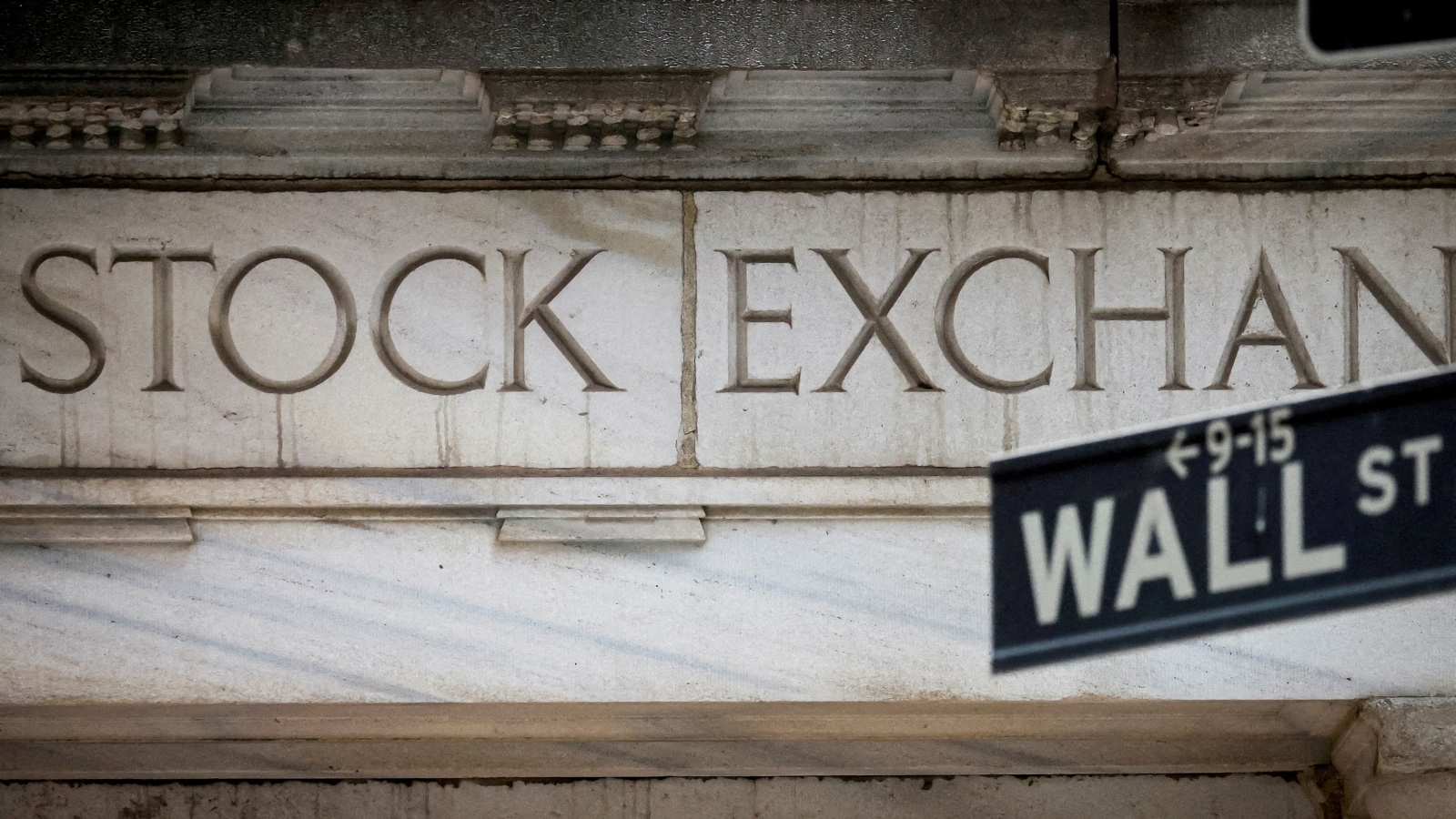
Wall Street just had an absolutely ridiculous quarter, and they have your AI-stock obsession to thank for it.
If you've been watching the stock market lately, you know the enthusiasm surrounding artificial intelligence has reached a fever pitch. But while retail investors are busy debating which chipmaker or cloud giant to buy next, the biggest banks in the world are quietly raking in historic, mind-boggling sums of money. They aren't doing this by making genius bets on the next big tech startup. Instead, they’re acting as the house in a massive, high-stakes casino, taking a cut of every single transaction.
JPMorgan, Goldman Sachs, Citigroup, and Bank of America recently dropped their quarterly earnings reports, and the numbers are staggering. Together, their equities trading divisions brought in a massive $19.3 billion. That's an astonishing 72 percent jump from the same period last year.
When Jamie Dimon, the notoriously cautious CEO of JPMorgan, admits that the current operating environment is "getting close to as good as it gets," you need to pay attention. But this massive profit engine isn't a sign of a healthy, stable market. It's a glaring red flag that the current trading frenzy has reached a highly volatile, potentially dangerous peak.
The Illusion of a Risk-Free Market
To understand why these record-breaking bank earnings should make you nervous, you have to understand how modern investment banks actually make their money.
Years ago, banks used to take huge, direct directional bets on the market. If they thought a stock was going up, they bought it. If they were wrong, they lost billions. Post-crisis regulations largely put an end to that. Today, Wall Street's trading desks operate primarily as facilitators. They provide liquidity, clear trades, and finance massive leveraged bets for hedge funds and institutional clients.
They don't care if a tech stock goes up or down. They only care that people are trading it.
And right now, people are trading with absolute abandon. The massive volatility around semiconductors, memory chip manufacturers, and hyperscale cloud providers has created a dream scenario for these trading desks. Every time a hedge fund whipsaws its position in an AI-linked stock, the banks collect a fee. When institutional investors scramble to adjust their portfolios to match rapidly changing index weights, the banks win.
It is a transaction-heavy, high-volume environment where the house always wins, regardless of whether the underlying technology actually delivers on its multi-trillion-dollar promise.
When Every Investor Starts Thinking Alike
While the banks are cashing in, a structural risk is quietly building beneath the surface of the market.
Markets require disagreement to function efficiently. For every seller who thinks a stock is overvalued, there needs to be a buyer who thinks it's going higher. But as the industry increasingly relies on complex, automated algorithms and similar machine-learning models to spot opportunities, that essential disagreement is starting to vanish.
Recent academic research, including a notable study from New York University, reveals that institutional portfolios are becoming highly correlated and increasingly similar. As funds utilize similar data sets and analytical tools to spot market signals, they end up piled into the exact same trades.
This creates a terrifying phenomenon known as crowded trading.
[Normal Market]  ---> Buyers & Sellers disagree ---> Smooth price discovery
[Crowded Market] ---> AI Models agree on buying ---> Sudden, violent price swings
When thousands of automated systems attempt to buy the same hot semiconductor stock at the same millisecond, the price skyrockets. But the reverse is also true. If a negative headline drops or an earnings report disappoints, these identical models will all try to exit the building through the same tiny door at the exact same moment. The result isn't a gentle decline; it’s a sudden, brutal liquidity vacuum that can wipe out billions of dollars in valuation in a matter of minutes.
The Eye of the Storm
We are seeing the perfect conditions for a market dislocation right now. Goldman Sachs recently reported its highest quarterly profits in five years, driven by a $7.4 billion equities trading haul that practically surpassed what the entire top tier of Wall Street used to make in a typical quarter before 2020.
At the same time, massive deals are keeping the investment banking units flush with cash. Massive public listings—like South Korean memory giant SK Hynix raising $26.5 billion in its Nasdaq debut, or massive private funding rounds like SpaceX—are generating hundreds of millions of dollars in underwriting fees.
But beneath the celebration, even Wall Street insiders are nervous. Jeremy Barnum, a top executive at JPMorgan, pointed out that "it would be naive not to be worried" about how incredibly perfect this environment is.
History shows us that when the operating environment gets "as good as it gets," the only direction left to go is down.
How to Protect Your Portfolio Right Now
You don't have to panic and dump all your assets into cash, but you absolutely should stop treating this speculative tech wave like a guaranteed bet. When the institutions facilitating the trades are making historic profits off the sheer chaos of the market, it's time to adjust your strategy.
Here is how to navigate this high-volatility environment without getting caught in a sudden market rout:
- Check your concentration risk. If you own broad index funds, you already have massive, passive exposure to the largest tech and AI-linked stocks. Take a close look at your individual holdings. If more than 15% of your total portfolio is tied up in a handful of high-flying semiconductor or hardware names, you are highly vulnerable to a crowded exit.
- Build up your cash buffer. Having liquid cash on hand isn't just about safety; it's about opportunity. When the automated algorithms inevitably trigger a massive, irrational selloff, having dry powder allows you to buy quality companies at a deep discount.
- Look for uncrowded sectors. While everyone is chasing the infrastructure layer of this technological cycle, look for steady, cash-flow-positive businesses in traditional sectors that have been completely ignored by the speculative crowd. These boring companies often provide the best ballast during a market storm.
Wall Street isn't making billions because they believe in the long-term potential of every new software tool. They are making billions because they are the toll collectors on a very busy, very volatile highway. Don't mistake their record-breaking toll revenues for a sign that the road ahead is safe. Protect your capital, keep your head, and let the speculators fund the banks' next record quarter.