The Quiet Ache of Promises Kept Too Slowly
Wait. Look at the clock on your dashboard or your phone. It is easy to lose track of years when a headline finally arrives, yet years are the exact currency with which trust is bought or spent.
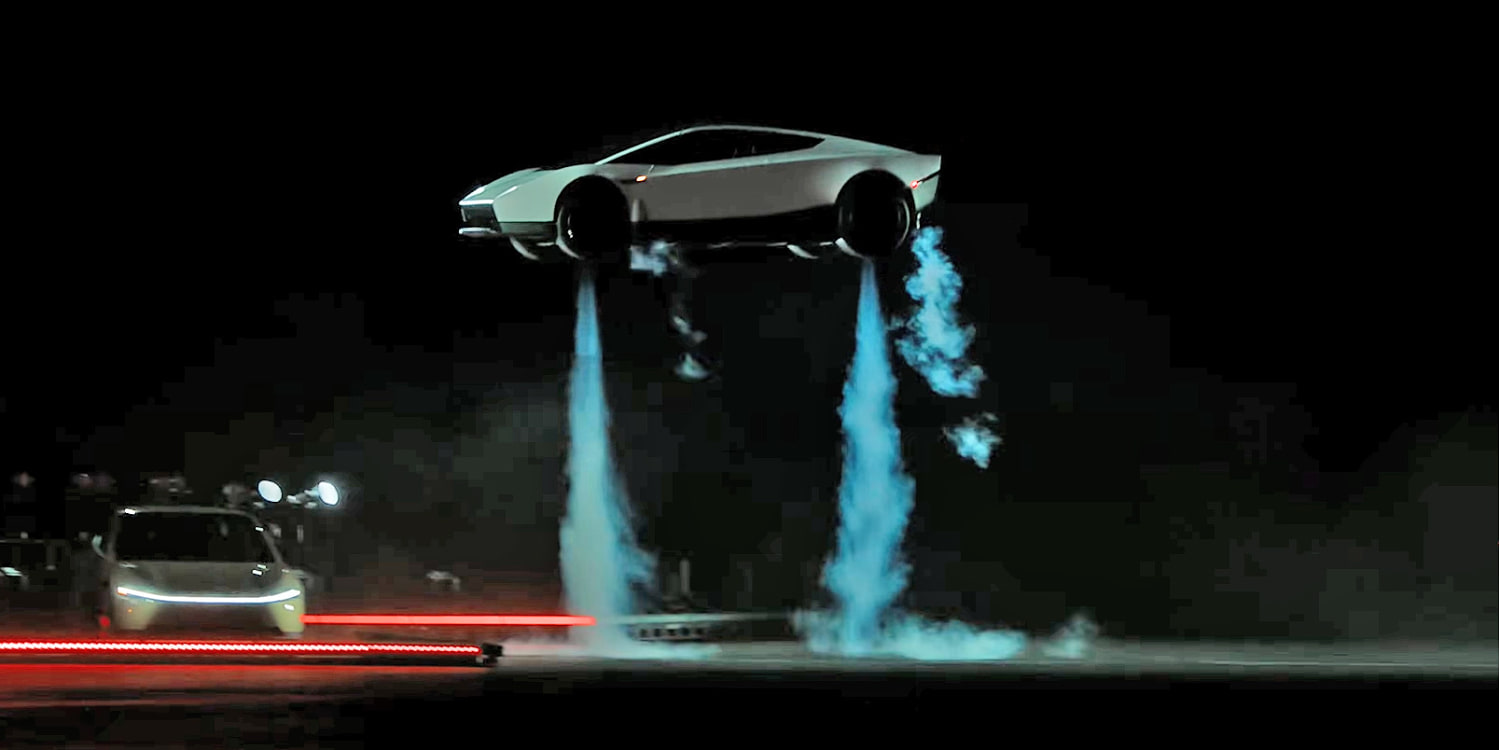
When Elon Musk stands before a crowd to show off a version of the Tesla Roadster that appears to hover or leap—years after it was first teased—the reaction in the room is rarely simple. Part of it is awe. Part of it is exhaustion. Another part is a sharp, lingering skepticism that has been sharpened by long delays, shifting timelines, and the quiet frustration of people who put down deposits when gas still felt like the default and electric performance cars were still proving they belonged on a racetrack rather than just a suburban cul-de-sac.
I have watched enough product launches over the last two decades to recognize the smell of ozone mixed with anticipation in a crowded hangar or studio. Concrete floors echo differently when a crowd leans forward. Palms sweat. Phones rise like glowing periscopes. And somewhere in the middle of that electric hush sits a basic human question that tech coverage almost never asks plainly: What does it do to our patience—and our imagination—when a machine promises flight and takes half a decade or more just to show up?
Because this is not really about a single car, or even a single billionaire's flair for drama. It is about the friction between human longing and engineering reality. It is about what happens when ambition stretches across years of supply chain snarls, battery chemistry trade-offs, regulatory hurdles, and shifting corporate priorities, leaving ordinary people wondering whether the future is arriving or merely rehearsing.
A Deposit Paid in Hope
To make the stakes tangible, let us trace a hypothetical scenario grounded in real consumer behavior from the era when the next-generation Roadster was first unveiled. Picture Hannah, a structural engineer in Denver who reserved a spot in line years ago with a sizable deposit. Back then, she was thirty-two, single, and driving a ten-year-old hatchback with a cracked windshield wiper blade that squeaked every time a mountain storm rolled in.
For Hannah, the Roadster was never just a zero-to-sixty number on a spec sheet. It was a symbol of what human ingenuity could still pull off when nobody in the boardroom settled for "good enough." When talk circulated about cold-gas thrusters—an idea Musk floated publicly years earlier—she did not picture a cartoon jetpack glued to a coupe. As an engineer, she thought about downforce, pressure vessels, weight penalties, and how hard it is to keep compressed air or propellant from turning a sleek sports car into a heavy, complicated science project.
Still, she waited. One year passed. Then two. Then three.
Hannah got married. She bought a house with a driveway that sloped slightly toward the street. Her ten-year-old hatchback finally gave up its transmission on a Tuesday morning in November, leaving her standing on the curb in a downpour while a tow truck driver sighed and shook his head. She did not blame the Roadster for her broken transmission, of course. Life keeps moving even when flagship products slip. Yet every time another quarter went by without the car in her garage, the deposit sitting in limbo felt a little less like an adventure and a little more like a loan given to a dream.
That is the invisible weight behind years of delays. A company treats a timeline slip as a trade-off between speed, safety, and manufacturing scale. A customer experiences it as time passing in real life—birthdays, career shifts, aging parents, changing priorities.
Consider what happens next: a public demonstration arrives, sparks fly across social feeds, and suddenly everyone is arguing over whether the car is truly "flying," hovering on air cushions, leaping briefly off the ground, or demonstrating thrust-assisted aerodynamics. The spectacle is undeniable. The questions beneath it are much harder.
Flight, Hover, or clever Physics
Let us strip away the hype for a moment and look honestly at what "flying" means when people talk about a performance car like the Roadster.
In everyday speech, "flying" covers everything from a true aircraft with wings generating lift to a vehicle that briefly lifts off the pavement or uses thruster assist to alter grip, acceleration, or short-range hops. In engineering, those differences are oceans apart. True sustained flight requires continuous lift greater than weight, control surfaces or vectored thrust that keep a craft stable in three dimensions, certification standards that make automotive crash testing look like a fender bender, and an airspace framework that was not built for thousands of commuters suddenly treating neighborhood streets like runways.
When someone refers to a "flying" Tesla Roadster after years of delays, the phrase usually points toward thrust-assisted movement—such as cold-gas thrusters or rocket-derived propulsion concepts discussed over the years—rather than a licensed airplane replacing your daily commute. Think of it like a metaphor for the difference between a sprinter pushing off starting blocks with extra force and a pole vaulter clearing a bar: both involve upward or forward power, yet one is still bound to the physics and rules of the ground in ways the other is not.
Why does that distinction matter so much? Because confusion breeds disappointment, and disappointment breeds cynicism. If a crowd expects a silent, effortless jump over gridlocked traffic and sees a dramatic thrust demonstration or a brief lift-off under tightly controlled conditions, two people watching the exact same clip can walk away with opposite conclusions. One sees proof of relentless engineering ambition. The other sees years of waiting culminating in a proof of concept that still feels miles away from everyday roads.
Both reactions come from a real place. Hardware is brutal. Anyone who has ever tried to build a physical object—whether a custom bicycle frame, a prototype drone, or a mass-market vehicle—knows that software can be patched overnight, while stamped steel, high-pressure tanks, thermal limits, and battery packs obey unforgiving physical laws. Every pound added to create thrust or lift takes away from range, cabin space, or handling unless you solve the energy equation all over again.
The Weight of Unfinished Promises
Wait a second. Let us be candid here.
There is something unsettling about living in an era where announcements happen years before delivery, and where spectacle sometimes outruns the quiet, unglamorous work of shipping a finished product to someone's driveway. Even when you admire the boldness of trying something audacious, it is fair to ask: at what point does perpetual anticipation wear down the very curiosity that fuels innovation?
I have felt that tug myself. There were stretches where I followed every rumor, every leaked photo, every engineering clue with genuine excitement—and other stretches where I felt slightly foolish for caring so much about a vehicle that existed mostly in speeches, prototypes, and future tense verbs. Admitting that tension does not make me anti-innovation. It makes me honest about how human attention works. Attention is finite. When you spend it on vapor for too long, it gets brittle.
Historically, major leaps in transportation have rarely followed a neat straight line. Railroads faced fierce skepticism and early disasters. Automobiles were dismissed at first as noisy toys for wealthy eccentricities that scared horses and tore up dirt roads. Aviation went from fragile wooden frames hopping a few feet above sand dunes to transoceanic flight in decades—yet even then, the gap between an exciting demonstration and a safe, affordable, widely adopted machine was measured in grueling years of trial, failure, and refinement.
The difference today is speed of visibility. Decades ago, a prototype might sit in a quiet workshop until it was closer to production. Now, every whispered concept, every late-night remark, every test run is broadcast across the globe in high definition within seconds. The timeline feels longer because we are forced to watch every tick of the clock in public.
Why Delays Hurt More in Public
When a project unfolds behind closed doors, setbacks look like normal engineering. When it unfolds on a global stage, a delay can look like a broken vow.
Customers, rivals, investors, and casual observers all bring their own expectations to the screen:
- Buyers see money tied up and plans deferred, sometimes for years on end.
- Engineers see the sheer complexity of packaging extreme power safely inside a street-legal chassis.
- Critics see a pattern of over-promising timelines and ask whether flashy reveals distract from core execution.
- Dreamers see a refusal to let the world settle into beige predictability.
None of those viewpoints is pure fiction. Each one captures a real slice of what happens when an ambitious company pushes against time and physics at once.
What Happens When Reality Catches Up
Suppose the Roadster demonstration—whenever and however it unfolds—does more than turn heads. Suppose it forces a sharper conversation about what comes next.
First comes physics and safety. Putting high-energy propulsion or lift mechanisms on or near a road car raises immediate questions: How does it behave in crosswinds? What happens if a valve sticks or a system loses pressure mid-maneuver? How do you keep bystanders safe when a vehicle generates intense airflow, heat, or sudden motion? Engineers do not get to wave a wand over those questions; every single one demands testing, redundancy, and cold math.
Second comes regulation and infrastructure. Even if a vehicle can hop, hover, or accelerate like nothing else on four wheels, public roads are shared spaces governed by strict rules. A car that leaves the pavement—even briefly or with thruster assistance—steps into territory where liability, licensing, noise, and road wear suddenly matter a great deal.
Third comes the human question waiting at the end of the line: Who actually gets to experience it, and when? A dazzling showcase in front of an cheering crowd is one milestone. Putting a reliable, safe, street-ready machine into the hands of everyday drivers—without turning their lives into an endless waiting room—is another altogether.
Let us return to Hannah in Denver for a moment. Years after her initial excitement, she is older, wiser about timelines, and far less impressed by grand speeches alone. She still loves clever engineering. She still lights up when a problem that seemed intractable gets a smart physical solution. Yet if she ever finally sits behind the wheel of a Roadster—grounded, hovering, leaping, or roaring off a line—she will not measure it solely by speed or spectacle. She will measure it by whether the journey felt worth the years it took to get there.
The Spark We Cannot Quite Let Go Of
Why do we keep looking when a "flying" car is revealed after years of delays?
Because deep down, even when we roll our eyes at missed deadlines, we are still drawn to the idea that the boundaries of the possible are not carved in stone. We like the defiance of looking at something heavy, bound to gravity and routine, and asking what happens if we push a little harder.
Yet defiance without follow-through eventually tests everyone's patience. The real magic of any breakthrough is not the moment a spotlight hits a prototype in a dark room. It is the quiet day—months or years later—when the dust settles, the numbers hold up, the safety checks pass, and the thing that once sounded like a wild story finally becomes real under someone's fingertips.
Watch the horizon, sure. Enjoy the theater if you like theater. Just keep one eye on the clock—and the other on the pavement—because the hardest part of any leap is always the landing.


