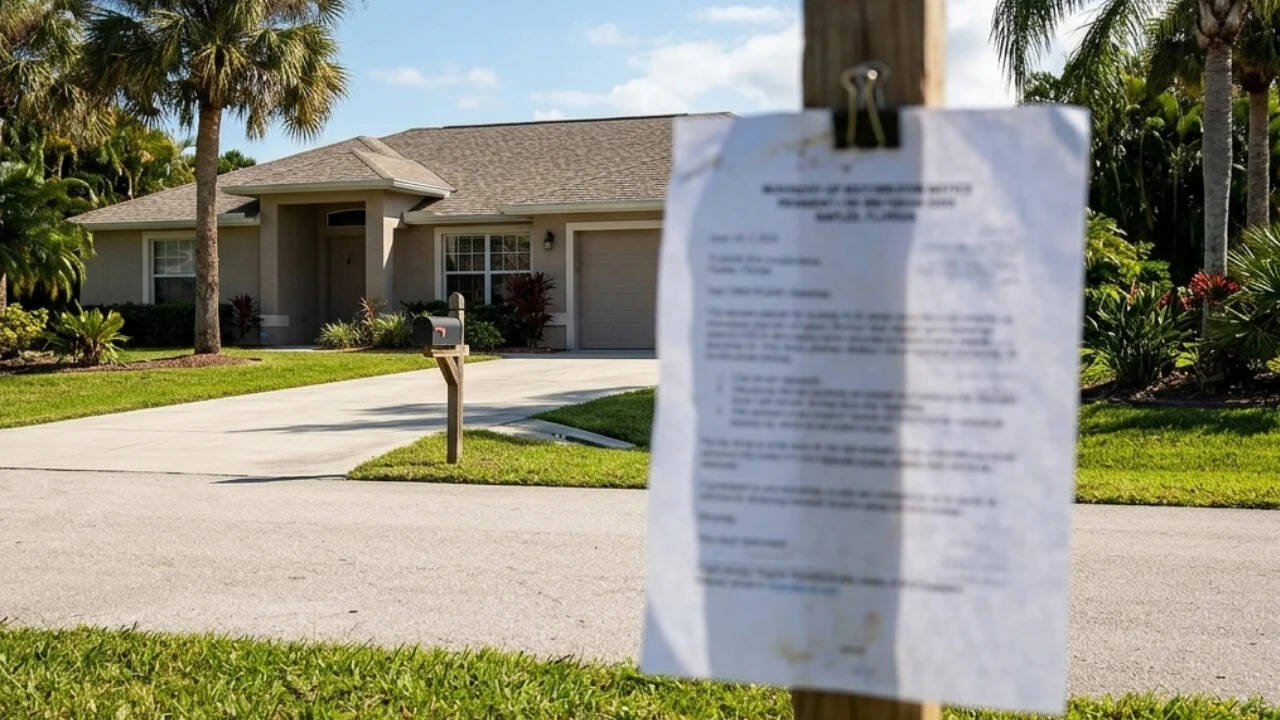
Five and a half years of missed mortgage payments. Seventeen years of legal warfare. Zero equity left to show for it.
Every time a headline like this hits the wire, the comment sections light up with predictable outrage. Big banks are heartless. The courts are rigged. A homeowner tried to save their family roof and got crushed by a faceless financial machine.
That is the lazy consensus. And it is flat-out dangerous for anyone holding a note or fighting a foreclosure.
Nobody loses a home in a vacuum over seventeen years. A seventeen-year saga means a borrower—and likely a revolving door of desperate or under-equipped legal strategies—spent nearly two decades treating a financial contract like a moral debate. Courts do not rule on sympathy. They rule on standing, statutes of limitations, notice compliance, chain of title, and procedural deadlines.
When a husband’s legal challenge collapses seventeen years into a foreclosure battle after sixty-six missed payments, the real story is not that the system is a monster. The real story is that dragging out a broken dispute for nearly two decades usually turns a solvable financial crisis into a permanent legal trap.
You Are Asking the Wrong Question About Foreclosure
Most people reading about sixty-six missed mortgage payments ask the wrong question right out of the gate. They ask how a bank gets away with taking a house after all that time, or why a court lets a homeowner fight for seventeen years only to lose.
Ask a better question. Why did the conflict stay alive for seventeen years in the first place?
In real estate finance, time is not a neutral bystander. Time alters legal postures, inflates balances, clouds titles, and exhausts stamina. When a borrower misses sixty-six payments—more than five years of monthly obligations—the debt does not politely freeze in amber. Late fees, advances for property taxes and hazard insurance, legal costs, and accrued interest stack up. Even when a lender stumbles on paperwork or faces procedural hurdles, the underlying lien does not magically evaporate just because a homeowner stays put or files motions.
People also confuse living in a property during litigation with winning the case. Staying in a house while lawyers argue over servicing transfers, assignments, or appellate timelines can feel like a victory in the short term. Emotionally, it feels like holding the line. Legally, it often just delays the reckoning while the math grows uglier every single month.
A stalled foreclosure is rarely a free pass. Usually, it is just an expensive intermission before the curtain drops.
Let us clear up a basic misconception before going further. A mortgage is the security instrument that pledges real property as collateral for a debt; the promissory note is the binding promise to repay the money. Foreclosure is the legal process by which a lender enforces that security interest after default. When people conflate those mechanics—assuming a technical hiccup in how a loan was transferred wipes out the underlying obligation—they walk straight into preventable losses.
How Seventeen-Year Battles Actually Happen
I have watched borrowers and small property owners burn tens of thousands of dollars—and years of their lives—chasing silver-bullet legal theories in foreclosure defense. I have seen people turn down reasonable workouts early on because someone at a barbecue told them the bank "lost the note" and the whole thing would get thrown out.
Sometimes a lender does mess up. Servicing transfers get sloppy. Assignments get recorded out of order. Notices get sent to the wrong address. Statutes of limitations get argued fiercely across trial and appellate courts, especially in judicial foreclosure states like Florida where lenders must go through the court system rather than a non-judicial power-of-sale process.
Here is the catch nobody wants to admit: procedural wins and permanent wins are not the same thing.
In Florida, a dismissed foreclosure action does not automatically hand a borrower a free-and-clear house forever if subsequent defaults occur or if courts analyze acceleration and dismissal rules in ways favorable to the note holder. Appellate courts routinely spend years sorting out technical arguments—whether a prior acceleration triggered a limitations clock, whether a new default creates a new cause of action, whether a party had standing at inception, or whether a challenge was raised too late or in the wrong posture.
Imagine a scenario where a homeowner misses sixty-six payments, watches a first foreclosure action stall or get dismissed years later, and assumes the war is over. Instead of negotiating a deed in lieu, a short sale, a cash-for-keys exit, or a structured resolution while equity or leverage still exists, the homeowner doubles down on protracted litigation. Years pass. Appeals fail. A spouse's separate legal challenge runs into procedural walls or arrives too late to rescue the outcome. Seventeen years after the wheels started turning, the exit doors that used to be wide open have rusted shut.
That is not a fairy tale about predatory banks. That is what happens when strategy gets replaced by endurance.
Dismantling the "People Also Ask" Myths
When a story like this trends, search engines fill up with the same predictable questions. Most of them rest on shaky assumptions.
Can you really stop a foreclosure by dragging it out in court for years?
You can delay it. Stopping it permanently is a completely different beast.
Delays happen all the time in crowded dockets, contested motions, evidentiary disputes, and appeals. From the outside, a decade-long docket looks like a fortress. Inside the file, it is often just a slow bleed of legal fees, mounting arrears, and mounting stress. Unless you have a rock-solid, case-dispositive legal defense—and the financial runway to pursue it—delaying a foreclosure just buys time. Time is useful only if you use it to execute a plan. Using time merely to avoid reality is a trap.
Why would a husband's legal challenge fail after 17 years?
Because courts care about rules, standing, timing, and record preservation—not how long you have been angry.
After seventeen years, almost every factual and procedural angle has usually been litigated, waived, or narrowed by prior rulings. A spouse's claim can fail for plenty of grounded legal reasons: lack of standing to challenge certain aspects of the loan or judgment, untimeliness, failure to preserve issues properly, or prior orders that already settled key questions. By year seventeen, the legal playing field is rarely a blank slate. It is a minefield of prior rulings and strict deadlines.
Should homeowners fight every foreclosure to the bitter end?
No. Fighting blindly to the bitter end is financial malpractice disguised as grit.
If there is genuine fraud, wrongful foreclosure, an accounting error that flips the math, or a legitimate legal defense worth pursuing, fight smart and fight early. If the debt vastly exceeds the property's value, the monthly payment was never sustainable after a life or income shock, and litigation costs are draining cash that could rebuild your life elsewhere, fighting to the bitter end just rewards lawyers and delays recovery.
What the Heavy Hitters Get Right About Risk and Ruin
You do not need a law degree to understand why dragging out a losing hand destroys people. Look at how serious thinkers in risk, economics, and law analyze bad bets.
In Antifragile, Nassim Nicholas Taleb hammers home the danger of hiding risk rather than eliminating fragility. Stretching a bad financial position over seventeen years does not make a household antifragile. It concentrates tail risk and keeps a person tethered to a decaying situation for nearly two decades.
Behavioral economists like Daniel Kahneman documented how loss aversion warps human judgment. People hate losing something they already have far more than they value an equivalent gain. When your home is on the line, loss aversion whispers: Just hold on. File one more motion. Maybe a miracle happens next month. That psychological pull keeps smart people in bad positions long after the rational exit has passed.
Even in legal theory, doctrines like statutes of limitations, finality of judgments, and standing exist for a reason. Courts are designed to bring disputes to a close so property titles remain marketable and society can move on. Fighting against finality for seventeen years is like arm-wrestling a freight train.
The Brutal Trade-Offs of My Approach
I am going to tell you to be ruthless about cutting your losses early, negotiating pragmatically, and treating housing as a financial asset and shelter rather than a hill to die on.
Fair enough. That approach has real downsides, and pretending otherwise would make me no better than the gurus selling false hope.
First, cutting losses early hurts emotionally. Walking away from a family home, admitting a financial plan failed, or taking a negotiated exit stings. Pride takes a hit. Neighbors talk. Family members may second-guess you.
Second, early exits can occasionally leave money on the table if a rare legal defect exists. Every once in a blue moon, a lender makes a fatal, indisputable error that genuinely defeats a claim. If you settle or exit early out of pragmatism, you give up the lottery-ticket chance of a technical windfall.
Third, distress options come with credit and tax friction. A foreclosure, short sale, or deed in lieu carries credit consequences, potential deficiency questions depending on state law and loan structure, and possible tax implications that require real tax advice—not internet guesses.
I accept those trade-offs because I have seen the alternative. Chasing a one-in-a-hundred legal miracle for seventeen years usually costs far more than taking a controlled hit on year one or year two.
How to Actually Handle a Delinquent Mortgage Before It Becomes a Saga
If you—or someone you know—is staring down missed payments or a looming foreclosure action, stop reading outrage headlines and run a cold-blooded playbook.
| Stage of Trouble | What Most People Do | What Actually Works |
|---|---|---|
| Missed 1–3 payments | Hide from calls, hope extra cash shows up next month | Audit household cash flow immediately; contact the servicer to verify loss-mitigation options and get everything in writing |
| Missed 4–12 payments | Listen to bad advice that "the bank can't touch you" | Pull complete payment history and escrow accounting; evaluate loan modification, repayment, short sale, or structured exit with qualified counsel |
| Active litigation / multi-year dispute | File endless motions with no endgame or budget | Demand an honest assessment of actual defenses vs. litigation burn rate; set a hard walk-away threshold and protect liquidity |
Here is the unconventional truth that separates survivors from cautionary tales: the best time to solve a mortgage crisis is before the emotional attachment and legal fees outgrow the house.
- Audit the numbers without emotion. Pull the note, mortgage, payment history, escrow statements, and payoff figures. Know what is actually owed, what is escrowed, and what the property is realistically worth today.
- Separate legal defenses from wishful thinking. Have a real estate litigation attorney tell you—in plain English—whether you have a defense that can actually win on the merits or merely buy time. Ask what it costs per month to litigate.
- Price your time and sanity. Seventeen years is a huge chunk of an adult life. Calculate what focusing your energy on earning, rebuilding credit, renting smartly, or relocating could do for your net worth over five years versus burning cash in court for fifteen.
- Negotiate from clarity, not panic. Lenders and servicers hate prolonged, messy files almost as much as borrowers do—especially when timelines stretch out. A clean, realistic resolution early often beats a scorched-earth fight a decade too late.
Sixty-six missed payments is a massive warning sign. Seventeen years of legal battle is a monument to sunk cost.
Stop fighting the last decade's war. Do the math, pick your exit before the court picks it for you, and move on with your life.