Standard automotive reporting treats Volvo Cars' plan to cut roughly 2,500 jobs—about 2,000 of them in Sweden—alongside a SEK 5 billion cost-reduction push as a straightforward reaction to two external shocks: American import tariffs and fierce competition from domestic electric vehicle makers in China. That surface reading misses the deeper structural trap. Tariffs and price wars act as catalysts, but the underlying vulnerability comes from an operating cost structure built for higher volume growth, slower electric platform transitions, and wider unit margins than Volvo Cars achieved in the third quarter of 2026.
To understand why Volvo Cars is trimming white-collar roles and consultant headcount concentrated around Gothenburg while targeting full financial impact by the end of 2027, analysts need to separate what the company actually reported from what competitors routinely gloss over. Known facts come from Volvo Cars' third-quarter 2026 financial disclosures and executive commentary: group revenue fell 22.6% year on year to SEK 66.89 billion, operating profit swung from a SEK 6.43 billion gain in Q3 2025 to a SEK 5.59 billion operating loss (SEK 3.7 billion adjusted operating loss), gross margin compressed from 20.4% to 14.7%, China revenue dropped nearly 50% year on year, and global vehicle sales declined 11% sequentially to 141,300 units. Educated hypotheses involve how quickly localized manufacturing, platform consolidation around SPA3 and HuginCore, and regionalized product decisions can restore operating leverage once tariff friction and Chinese pricing pressure persist.
What Standard Headlines Miss About the Pincer Movement
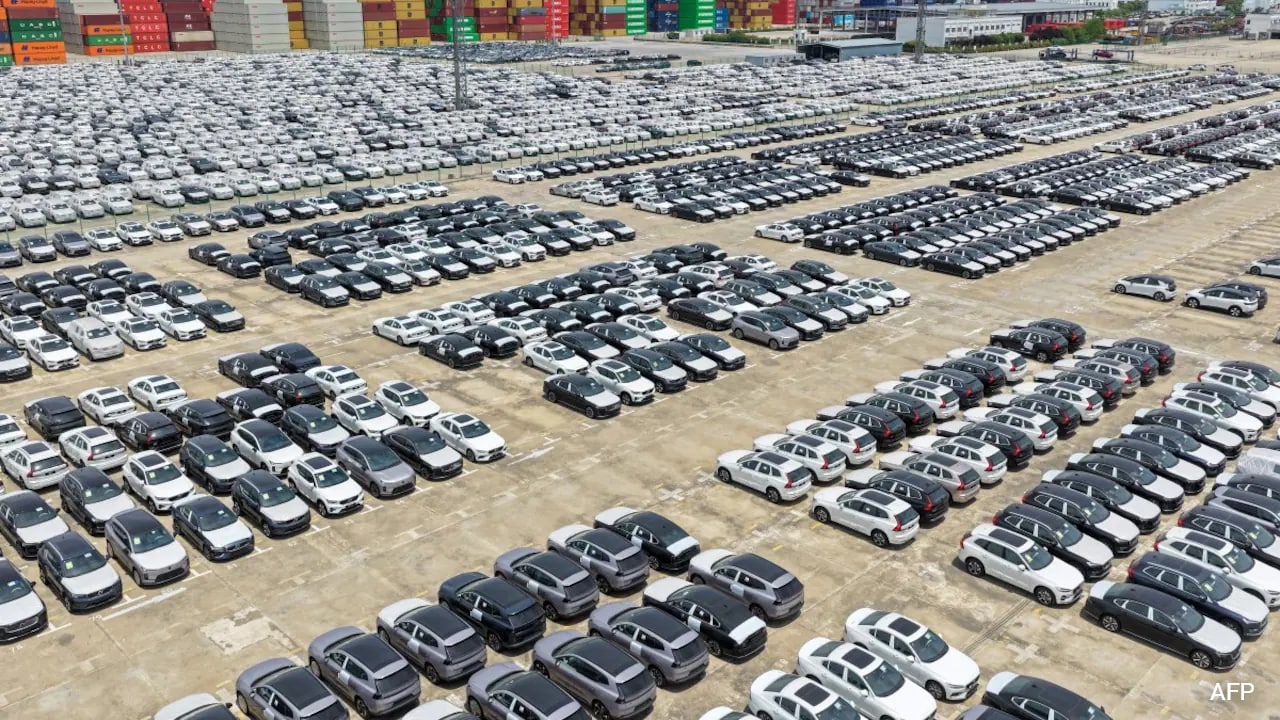
Conventional coverage frames Volvo Cars' distress as a two-front war between Washington trade barriers and Shenzhen price aggression. Treating those forces as isolated headlines obscures how operating leverage turns a revenue drop into a sharp swing into red ink. When fixed and semi-fixed overhead—engineering payroll, corporate administration, tooling amortization, and regional sales infrastructure—remains sticky while unit volume falls from 158,500 vehicles in the prior quarter to 141,300 units, contribution margin cannot absorb the base load.
In industrial economics, operating leverage magnifies swings in EBIT whenever variable contribution falls short of fixed commitments. A near-halving of revenue in China removes high-utilization volume just as domestic Chinese automakers compress pricing across battery-electric and plug-in hybrid segments. Simultaneously, United States import tariffs raise landed unit costs on vehicles and components built outside North America, while a SEK 1.1 billion write-down of Corporate Average Fuel Economy credits and a SEK 0.9 billion hit from recognized Polestar losses further weigh on third-quarter results.
Competitor articles often treat layoffs as an automatic cure for margin compression. In practice, headcount reduction lowers cash outflow and overhead over time, yet it does not immediately fix unit-level tariff exposure or restore pricing power in a hyper-competitive market. Management itself frames the SEK 5 billion savings target—aimed at cutting indirect expenditure by nearly 25% against fiscal year 2024—as a way to lower the break-even point and shore up cash flow while volume remains pressured.
The Four Forces Squeezing Volvo Cars
Rather than viewing Volvo Cars' predicament as a simple tug-of-war between the United States and China, four interacting forces explain why margin erosion accelerated in Q3 2026:
- Trade protectionism and landed cost inflation: Higher U.S. tariffs on imported vehicles and parts penalize cross-border manufacturing footprints that rely on European or Asian assembly to supply American buyers.
- Domestic price deflation in China: Aggressive pricing and rapid model iteration by local Chinese manufacturers erode volume and pricing power for foreign brands, driving Volvo Cars' nearly 50% year-on-year revenue drop in the market.
- Product transition and ramp friction: Slower-than-planned ramp-up on newer electric models, including the EX60, delays high-margin or next-generation volume while legacy mix shifts.
- Fixed overhead and affiliate drag: Elevated indirect expenses, raw material pressures, regulatory credit write-downs (SEK 1.1 billion), and Polestar loss recognition (SEK 0.9 billion) compound operational headwinds.
The first mechanism connecting these four forces is margin compression under falling scale. Gross margin fell from 20.4% to 14.7% year on year as lower volume reduced factory absorption and price competition squeezed realized net revenue per vehicle. When gross margin drops by 570 basis points at the same time revenue contracts by more than a fifth, even disciplined cost control takes quarters to catch up.
The second mechanism is capital allocation drag. Automakers transitioning to software-defined vehicles and dedicated electric architectures carry heavy R&D and capital commitments. While Volvo Cars has established foundational elements such as its SPA3 vehicle platform and HuginCore computing architecture and is concentrating assembly around five dedicated global plants alongside multi-brand assembly evaluations with Geely in Chengdu and Ghent, heavy fixed outlays remain unforgiving when quarterly sales dip.
Why Sweden and White-Collar Roles Absorb the Shock
Cutting roughly 2,000 roles in Sweden out of about 2,500 globally—roughly 80% of the announced reduction—reflects where headquarters, core engineering, and corporate staff are concentrated rather than an arbitrary tilt against Swedish workers. Around Gothenburg, Volvo Cars houses central R&D, administrative functions, and specialist engineering groups that expanded during prior growth and electrification waves.
Executing reductions through expiring consultant contracts, natural attrition, hiring freezes, and voluntary exit packages is a deliberate operational choice, not just a polite gesture. In Sweden, statutory notice periods under the Employment Protection Act (LAS), collective agreements such as Teknikavtalet and Omställningsavtalet, and co-determination rules under MBL shape how quickly involuntary redundancies can proceed and what severance or transition support through TRR is triggered. Ending external consultant contracts and leaning on voluntary departures avoids immediate friction while trimming recurring payroll expenses through 2027.
From an operational standpoint, however, white-collar cuts carry a real execution risk: institutional knowledge loss. Engineering and software integration teams hold tacit knowledge about vehicle platforms, testing pipelines, and launch readiness. If reductions trim specialist capacity faster than workflows are simplified or duplicated tasks are eliminated, launch execution on upcoming models can slow down—the exact operational bottleneck Volvo Cars cannot afford while ramping new electric vehicles.
Regional Footprint, Geely Alignment, and Break-Even Math
Lowering the break-even point requires attacking both sides of the unit economics equation: reducing fixed and indirect overhead while aligning production with regional trade rules. Historically, global automakers optimized for global scale—building specialized models in one region and shipping them worldwide to maximize plant utilization. In a fragmented trade environment marked by tariffs and regional industrial policy, that model exposes every cross-border shipment to duty friction and currency swings.
Volvo Cars' push to concentrate assembly at five dedicated global plants while assessing multi-brand assembly with parent Geely in Chengdu and Ghent points toward tighter asset utilization and regional adaptation. Empowering regional decision-making while trimming duplicated corporate layers can shorten response times to local pricing and regulatory shifts, provided headquarters retains strict technical governance over core platforms and safety standards.
Consider how break-even math behaves in practice for a mid-sized premium automaker. If quarterly revenue drops by roughly SEK 19.5 billion year on year—from SEK 86.43 billion to SEK 66.89 billion—while gross margin narrows by nearly six percentage points, cutting SEK 5 billion in annualized indirect and variable costs helps stabilize cash burn and lower the volume threshold needed to break even, yet it cannot by itself offset a steep volume drop if top-line demand stays depressed. Cost cutting buys runway; volume recovery and mix improvement restore sustainable profitability.
Limits of Restructuring and Strategic Risks
Every corporate restructuring faces constraints that sharp analysts must highlight rather than hand-wave away. First, timing mismatch is acute: job reductions and cost programs announced in late October 2026 are slated to reach full financial effect by the end of 2027, whereas tariff costs and Chinese price pressure hit current cash flows immediately. Second, over-cutting R&D or engineering can starve future product competitiveness at a moment when rivals in China and elsewhere are moving rapidly on electric powertrains, battery cost, and in-cabin software.
Third, dependence on external demand and affiliate performance remains outside pure internal cost control. If U.S. tariff regimes remain elevated, if Chinese domestic competition keeps pricing depressed, or if Polestar continues to require financial recognition of losses, internal efficiency gains will only partially insulate the income statement. Fourth, Sweden's labor framework and voluntary program dynamics mean savings depend on uptake, negotiation timelines, and avoiding messy handovers across remaining teams.
Strategic Play for Restoring Operating Leverage
To turn the SEK 5 billion cost program into durable margin recovery rather than a temporary contraction, Volvo Cars management should sequence three concrete operational moves through 2027:
- Ring-fence core launch engineering while cutting non-core complexity: Audit every R&D workstream and consultant contract around Gothenburg and global offices against near-term launch milestones (including EX60 ramp execution and SPA3/HuginCore integration). Eliminate low-priority variants, overlapping committees, and non-essential external consulting first so remaining engineers have clear ownership and clean handovers.
- Match regional assembly and sourcing to tariff and demand reality: Accelerate localization and regional allocation across existing plants—including U.S. production capacity and multi-brand assembly options in Europe and China—to reduce tariff exposure on high-volume models while keeping factory utilization high. Avoid chasing unprofitable volume in China solely to defend market share; prioritize contribution margin and cash generation.
- Tie quarterly cost milestones directly to cash conversion and break-even tracking: Track indirect cost reductions, inventory discipline, and capital expenditure against a hard quarterly break-even volume target through the end of 2027. Treat every non-core asset or affiliate exposure—including Polestar—with strict capital discipline so cash generated by core vehicle operations stays inside the business.