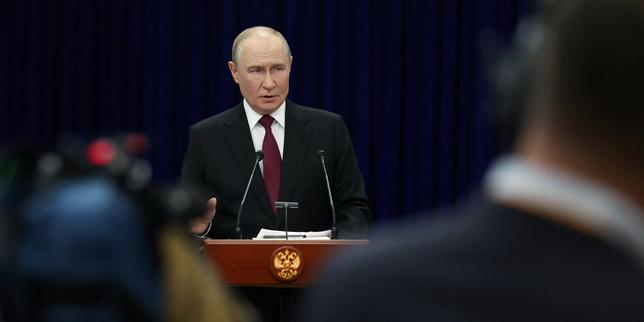
The war in Ukraine has reached a brutal inflection point where diplomacy is basically dead on arrival. Vladimir Putin just made his stance crystal clear. He stated bluntly that Russia does not negotiate with terrorists. This came immediately after Volodymyr Zelensky warned about the security risks hanging over Russian airspace.
If you are trying to find a path toward peace talks right now, you are looking in the wrong direction. The rhetoric coming out of Moscow and Kyiv is hardening. Every single missile strike and retaliatory drone warning pushes a negotiated settlement further out of reach. Let's look at why this specific clash over airspace security slammed the door shut on any immediate dialogue.
The Airspace Warning That Triggered Moscow
Volodymyr Zelensky didn't mince words regarding the safety of Russian skies. Ukraine has steadily increased its capability to strike targets deep inside Russian territory. They are using long-range domestically produced drones and unconventional tactics to bring the reality of the war directly to the Russian population.
When Kyiv signals that Russian airspace is fundamentally insecure, it is not just psychological warfare. It is a strategic disruption. Major Russian cities and logistics hubs rely heavily on secure skies for military and civilian transit. By demonstrating that Russian air defense networks can be bypassed or overwhelmed, Ukraine shifts the strategic balance.
Putin's response was swift and uncompromising. Framing Kyiv's actions as terrorism allows the Kremlin to bypass traditional rules of state-to-state conflict in domestic messaging. It justifies an uncompromising military posture. When a leader declares that negotiating equals surrender to terror, compromise vanishes from the vocabulary.
Why Real Diplomacy Is Dead Right Now
Talks fail when neither side has an incentive to stop fighting. Right now, both Moscow and Kyiv believe time or the battlefield will yield a better outcome than a conference table.
Russia calculates that Western political fatigue will eventually set in. They believe their industrial base can outproduce Ukrainian supplies over the long haul. On the other side, Ukraine knows that accepting any territorial freeze right now means locking in Russian gains and inviting a future invasion.
Look at the ground reality. Hundreds of thousands of troops are dug into fortified positions along an expansive front line. Drone warfare has turned open terrain into a surveillance nightmare. Neither side can afford to show weakness. When Zelensky warns about airspace security, he is telling the Russian public that their government cannot protect them. When Putin calls them terrorists, he is telling his military to double down on destruction.
The Dangerous Escalation Cycle
This verbal sparring match directly fuels escalation.
- Ukraine targets military infrastructure deep inside Russia to disrupt supply lines.
- Russia responds with heavy missile barrages targeting Ukrainian energy grids and urban centers.
- Both sides dig deeper into maximalist war aims.
The international community keeps searching for a mediator. Turkey, China, and various European nations have tried to float peace formulas. They all hit the same brick wall. Moscow demands total capitulation and the recognition of annexed territories. Kyiv demands a full withdrawal to 1991 borders and strict security guarantees. There is zero overlap between those two positions.
Moving Beyond the Headlines
You cannot understand this conflict by just looking at daily casualty counts or headline pronouncements. You have to look at the structural mechanics of the war economy. Russia has transitioned its entire industrial output toward military production. Ukraine is relying heavily on unpredictable international funding loops and a rapidly scaling domestic defense tech sector.
When leaders swap insults about terrorism and insecure skies, they are signaling to their domestic bases. They are hardening resolve. They are making sure that anyone talking about compromise gets labeled a traitor.
The security of Russian airspace will remain contested. The retaliatory strikes will continue. And until the battlefield balance shifts dramatically enough to force a rethink in Moscow or Kyiv, expect more rhetorical defiance and zero genuine peace talks. Keep your eyes on the supply lines and the production factories, because that is where this war is actually being decided.

