Disasters bring out the absolute best in humanity, and occasionally, the absolute worst. When catastrophic flash floods swept through Nepal and the border regions, claiming hundreds of lives and leaving over a thousand people missing, rescue workers rushed to save survivors. But another kind of actor showed up on the riverbanks.
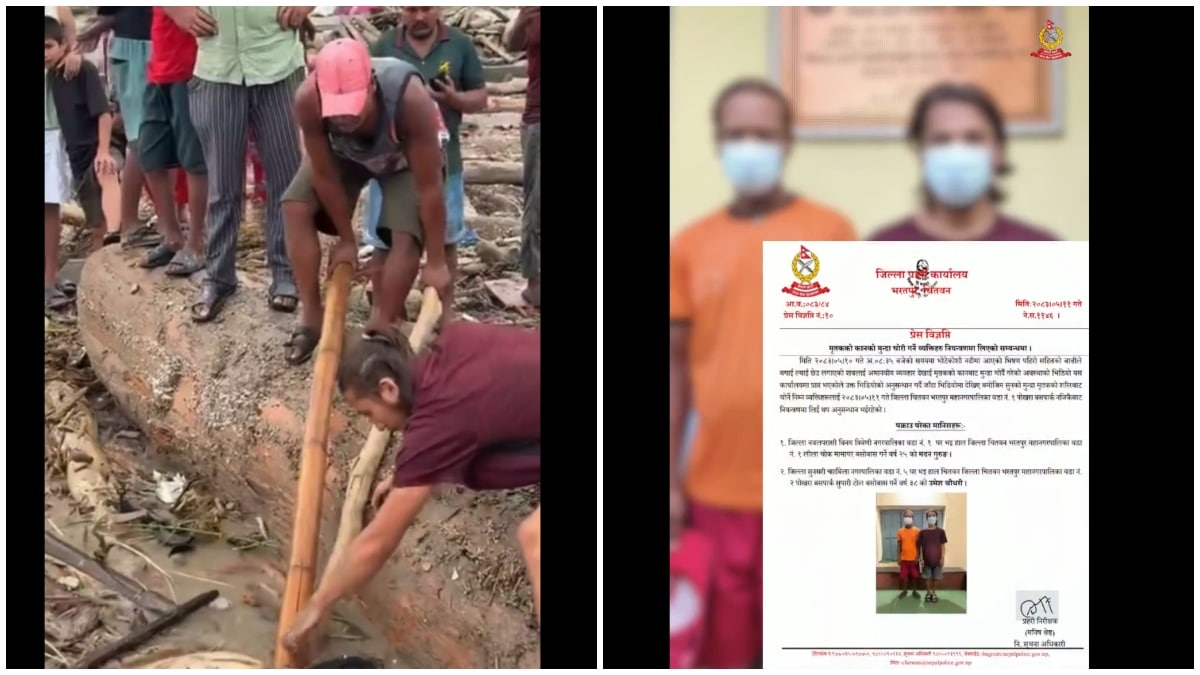
A 41-second video surfaced on social media showing two men pulling a deceased woman's body from the Narayani River using a wooden pole and her hair. Instead of treating the remains with dignity, they ripped the gold earrings from her ears while bystanders stood by, recording the horrifying act on their phones instead of intervening.
The footage spread like wildfire, triggering massive public outrage and forcing law enforcement into immediate action.
How Social Media Pressure Forced a Fast Arrest
The backlash online was instantaneous. Citizens demanded accountability, and the Nepal Police didn't ignore the digital noise. By analyzing the circulating video, authorities quickly identified the individuals involved in the grim theft.
Chitwan Police tracked down and arrested two suspects near the Pokhara Bus Park in Bharatpur. Authorities identified them as 25-year-old Madan Gurung and 38-year-old Umesh Chaudhary.
Police officials confirmed the arrests publicly on social media, reposting segments of the incriminating clip to show that accountability was swift. Chitwan's Chief of Police, SP Rameshwar Paudel, made it clear that such predatory behavior during a national crisis would face zero tolerance. Officers increased monitoring across recovery zones to prevent similar predatory incidents while rescue operations for the remaining missing persons continue.
The Broader Tragedy on the Ground
To understand the shock value of this incident, you have to look at the scale of the disaster unfolding across Nepal and Tibet. Torrential rains and sudden flash floods have destroyed infrastructure, washed away bridges, and trapped hundreds of citizens and tourists. Death tolls have climbed toward 400, while roughly 1,468 people remain unaccounted for.
Rescue teams are fighting through thick mud, debris, and broken roads just to reach isolated areas. In environments like this, emergency responders are stretched thin. That scarcity creates opportunities for criminals who see tragedy as an invitation for exploitation.
The Bystander Effect on Camera
What makes the viral video particularly disturbing isn't just the actions of the two arrested men. It's the crowd.
Several onlookers stood around the body, watching the theft happen. Many held up their phones to record video content for social media rather than stepping in to stop the desecration. This disturbing apathy highlights a modern crisis where capturing digital clout often trumps basic human empathy.
As investigations proceed and the legal system deals with Gurung and Chaudhary, the footage remains a grim reminder of how quickly community breakdown happens when disaster strikes. Authorities continue to urge citizens to report exploitative behavior immediately rather than merely filming it for views.