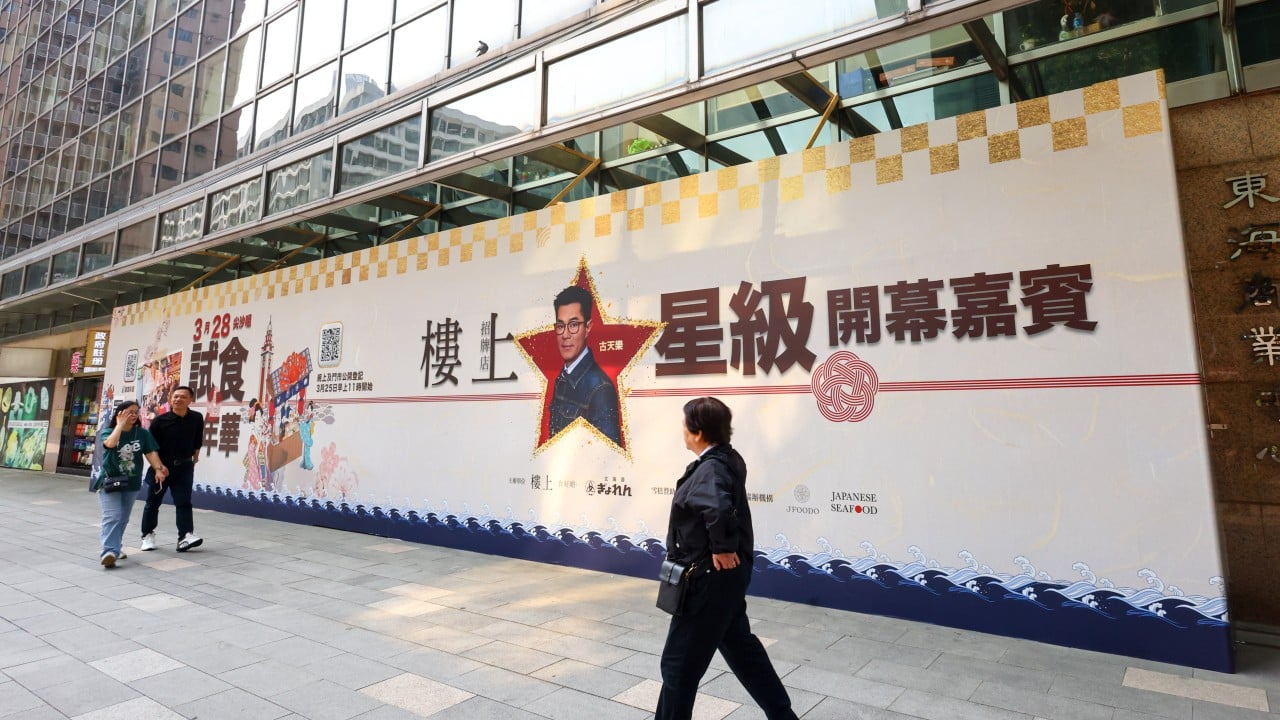
The traditional stratification of Hong Kong’s retail sector—characterized by a rigid hierarchy between street-level accessibility and "upstairs" cost-efficiency—is undergoing a fundamental structural inversion. For decades, the city’s extreme population density and exorbitant land premiums forced a vertical expansion of commerce, where niche boutiques and service providers occupied upper-floor units of aging commercial buildings to escape the predatory pricing of ground-floor storefronts. This equilibrium has broken. A confluence of declining inbound tourism, shifting local consumption patterns, and a significant correction in commercial real estate valuations has triggered a "gravity-driven" migration. Retailers are moving downward, not because of a sudden surge in ground-floor desirability, but because the risk-adjusted cost of street-level visibility has reached a historical intersection with the diminishing returns of vertical isolation.
The Triad of Commercial Re-entry
The decision for an "upstairs" tenant to migrate to street level is governed by three primary variables: the Visibility Premium, the Friction Cost of Access, and the Base Rent Elasticity. When ground-floor rents drop by 30% to 50% from their 2019 peaks, the mathematical justification for remaining hidden in a vertical stack disappears.
- Visibility Premium: This represents the delta between organic foot traffic and the marketing spend required to drive customers to an upper floor. For an upstairs shop, the "rent" is effectively split between the physical lease and the digital acquisition cost (social media, SEO, or referral fees) needed to overcome physical invisibility.
- Friction Cost of Access: This encompasses the psychological and physical barriers—waiting for elevators, navigating narrow stairwells, or finding hidden building entrances—that reduce the conversion rate of casual observers into store visitors. In a high-speed consumer environment like Hong Kong, every additional 10 seconds of "search time" correlates with a measurable drop in footfall.
- Base Rent Elasticity: Landlords of prime street-level space have moved from a position of "take it or leave it" to one of "flexible survival." The narrowing gap between the price per square foot on the 10th floor and the ground floor has eliminated the primary defensive moat of vertical commercial buildings.
The Structural Breakdown of the Rent-to-Revenue Ratio
In a standard retail model, rent occupies a specific percentage of gross revenue, typically ranging from 15% to 25% for high-turnover goods. In the "Upstairs" model, this ratio was often lower—perhaps 8% to 12%—but was offset by higher marketing requirements. The current market shift has altered the denominator of this equation.
While rents have declined, the total addressable market (TAM) for street-level retail has also shifted. The exodus of mainland Chinese tourists and the rise of cross-border shopping in Shenzhen mean that high-street locations can no longer rely on volume alone. Instead, they are being repurposed for high-frequency local services—cafes, pharmacies, and specialty clinics—that previously lived in the "upstairs" ecosystem.
This creates a Negative Feedback Loop for Vertical Landlords. As anchors move to the ground floor, the upper floors lose their collective gravity. A building that once housed twenty complementary boutiques becomes less attractive when five of its primary traffic-drivers move to the street. The remaining fifteen tenants then face an increased marketing burden with decreased building-wide synergy, eventually forcing them to either follow the downward trend or exit the market entirely.
Logical Framework: The Downward Migration Matrix
Retailers evaluating this move typically fall into four quadrants based on their operational requirements and brand equity.
- High-Touch/Low-Frequency (Clinics, Tailors): These businesses often remain upstairs. Their customers are destination-bound; the friction cost of an elevator is negligible compared to the value of the service. Their migration is the slowest, as they require privacy over visibility.
- Low-Touch/High-Frequency (F&B, Convenience): These are the primary movers. Their survival depends on impulse and convenience. For a coffee shop, the move from the 3rd floor to the ground floor can increase transaction volume by 400% while only doubling the rent, resulting in a net profit margin expansion.
- High-Touch/High-Frequency (Hair Salons, Gyms): These businesses face a dilemma. They benefit from visibility but require large footprints. They are currently occupying "fringe" ground-floor spaces—locations that are technically at street level but situated in secondary alleys or less prestigious districts.
- Low-Touch/Low-Frequency (Niche Hobby Shops): These are being priced out of the market entirely. As ground-floor rents drop, the "upstairs" landlords attempt to raise prices to cover their own debt service, squeezing these low-margin tenants into obsolescence or purely digital models.
The Institutional Debt Constraint
A critical mechanism often overlooked in this retail reshuffle is the role of bank valuations and loan-to-value (LTV) ratios. Many ground-floor shops in districts like Causeway Bay or Tsim Sha Tsui are owned by family offices or individual investors who leveraged these assets at peak valuations.
A landlord’s ability to cut rent is not merely a matter of personal choice; it is often constrained by banking covenants. If a landlord reduces the rent below a certain threshold, the capitalized value of the property drops. This can trigger a "margin call" on the mortgage, requiring the landlord to inject fresh capital.
Consequently, we see a rise in "Ghost Leases" or Incentive-Heavy Contracts. Rather than lowering the headline rent (which would hurt the valuation), landlords offer six-month rent-free periods, fit-out subsidies, or turnover-based components. This allows "upstairs" retailers to move into premium ground-floor slots with minimal upfront capital expenditure, effectively shifting the financial risk from the tenant to the landlord’s balance sheet.
Urban Planning and the Death of the "Vertical Mall"
The "Vertical Mall" was a uniquely Hong Kong solution to geographic scarcity. However, the rise of e-commerce has rendered the "discovery" aspect of these buildings obsolete. When consumers can find niche products via an algorithm, they no longer need to wander through a 20-story commercial tower in Mong Kok.
This shift has profound implications for urban density. As ground-floor spaces become occupied by more "functional" tenants (dentists, tutoring centers, and yoga studios), the traditional vibrant neon-lit streetscape of Hong Kong becomes more utilitarian. The street level is becoming a "service hub" rather than a "shopping destination."
The limitation of this migration is physical. There is a finite amount of ground-floor square footage. Once the "A-grade" tenants from the upper floors occupy the available street-level inventory, a floor is set under the market. We are currently approaching this floor in secondary districts like Wan Chai, where vacancy rates are beginning to stabilize, albeit at much lower price points than the 2010s.
The Bifurcation of the Luxury Sector
While mid-market and service retailers move down, luxury brands are behaving differently. They are not expanding their ground-floor footprints; they are consolidating. The "Upstairs" move for luxury is actually an "Inward" move—shifting from street-front exposure to controlled environments within high-end shopping malls (e.g., Landmark or IFC).
This leaves a vacuum on the street. The vacancy left by a luxury watch brand is not being filled by another luxury brand, but by three or four smaller tenants who previously occupied the 5th, 6th, and 7th floors of nearby buildings. This is the Granularization of the High Street. It represents a democratization of access, but a significant decline in the total tax revenue and asset value of the district.
Strategic Allocation of Capital for Retailers
For a business owner currently operating from an upstairs unit, the move to street level must be viewed as a capital allocation decision rather than a simple relocation.
- Analyze the "Walk-in" Conversion Factor: If the conversion rate of street traffic is projected to be less than 2%, the rent premium for the ground floor is likely a wasted expense. The business should remain upstairs and invest the savings in digital dominance.
- Negotiate "Terminal" Leases: Landlords are desperate for occupancy to satisfy banks. Tenants should seek five-year terms with significant "break clauses" and rent caps, locking in the current market bottom.
- Evaluate the Micro-Neighborhood Velocity: Foot traffic is not uniform. The "sunny side" of the street or the side closest to an MTR exit can have 3x the volume of the opposite side. The downward move is only successful if it targets high-velocity nodes.
The period of vertical retail dominance is over. The new equilibrium favors businesses that can leverage high-visibility, low-friction ground-floor locations to provide services that cannot be replicated online. The "upstairs" space will likely pivot toward back-office functions, dark kitchens, or storage, marking a permanent shift in how Hong Kong utilizes its three-dimensional urban footprint.
The immediate tactical move for any high-frequency service provider is to aggressively audit ground-floor vacancies within a 200-meter radius of their current vertical location. The opportunity to arbitrage the disconnect between property valuations and actual commercial utility will not persist once the debt markets stabilize and the current inventory is absorbed by the first wave of migrants.