The narrative being sold to the world is one of "economic opening." It is a comfortable lie. Journalists sit in Caracas cafes, watch a few luxury SUVs drive by, and claim the Venezuelan economy is finally breathing again. They point to the "Bodegón" phenomenon—those high-end shops selling imported Pringles and Nutella—as proof of a capitalist rebirth.
They are dead wrong.
What we are witnessing is not an opening. It is a fire sale. It is the desperate, unregulated cannibalization of a state’s remaining assets to keep a specific political class from drowning. If you think this "thaw" represents a return to a functional market, you are the mark in a very long con.
The Myth of the Dollarized Recovery
The lazy consensus suggests that allowing the U.S. dollar to circulate freely saved the Venezuelan people. In reality, dollarization was a surrender, not a strategy. It was the only way to stop the hyperinflationary spiral from causing a total systemic collapse, but it created a two-tiered society that is more distorted than the one it replaced.
A true economic opening requires legal certainty. It requires property rights. It requires an independent judiciary. Venezuela has none of these. What it has is a "Gray Zone" economy.
In this space, transactions happen because of proximity to power, not because of market efficiency. When you see a new skyscraper going up in Las Mercedes, do not mistake it for investor confidence. That is capital flight in reverse—money that cannot leave the country due to sanctions, being laundered into concrete and glass. It is a massive, localized bubble built on a foundation of shifting sand.
Oil is Not the Savior You Think
The headlines scream about Chevron and the easing of sanctions. The logic goes: oil flows, money returns, and the people thrive. This is a fundamental misunderstanding of how the global energy market works in 2026.
The Venezuelan oil infrastructure is not just "neglected." It is necrotic. Bringing production back to the heights of the 1990s would require an infusion of capital so massive that no sane private entity would provide it without guarantees that the current administration is physically incapable of giving.
The Cost of Entry
- Infrastructure Rot: Pipelines that haven't been pigged in a decade.
- Brain Drain: The literal engineers who knew where the valves were are now driving Ubers in Miami or Bogotá.
- Legal Quagmire: Every barrel produced today is potentially subject to future litigation from creditors who hold billions in defaulted debt.
Investing in Venezuelan oil right now is not "getting in on the ground floor." It is jumping into a dark basement with a broken flashlight.
Why the Private Sector is Still Scared
The "new" private sector in Caracas is largely a collection of frontmen and opportunists. The old guard—the families and firms that built the country—are mostly gone or operating at a fraction of their capacity.
Why? Because the "opening" is reversible.
With the stroke of a pen, the state can "adjust" price controls. They can "inspect" a warehouse and seize the inventory. They can decide that your success is a threat. A market without a rule of law is just a casino where the house can change the rules after you've already placed your bet.
The False Promise of the Middle Class
People ask: "When will the middle class return?"
The answer is: It won't. Not under this model.
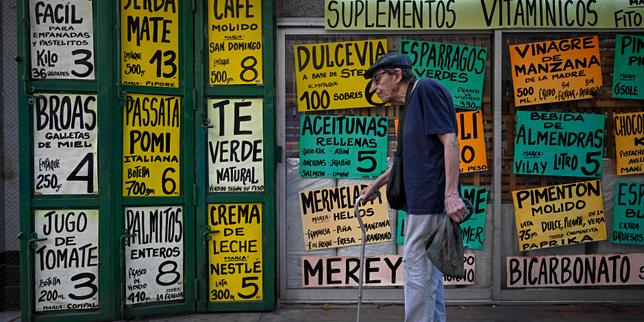
The current economic structure is designed to support an elite 5% and a service-level 10% that caters to them. The rest are dependent on remittances or the "CLAP" boxes of subsidized food. This is not a bug; it is a feature. A desperate population is easier to manage than a financially independent one.
When you hear about "economic retombées" (fallout/benefits), ask yourself who is catching the crumbs. It isn't the teacher making $20 a month. It isn't the doctor who has to sell eggs on the side to pay rent. The "fallout" is staying within a very tight circle of connected individuals who have figured out how to arbitrage the gap between the official rhetoric and the brutal reality of the street.
The Sanctions Trap
There is a popular argument that if only the U.S. would lift all sanctions, the economy would roar back to life. This ignores the decade of catastrophic mismanagement that preceded the bulk of the sanctions.
Lifting sanctions without structural reform would simply provide a windfall for the status quo. It would liquefy the assets of the state and allow them to be moved into offshore accounts faster than you can say "fiduciary duty." Sanctions are a convenient scapegoat for a government that destroyed its own productive apparatus long before a single executive order was signed in Washington.
Stop Looking at GDP, Start Looking at Power
If you want to understand the Venezuelan economy, stop reading the manipulated data from the Central Bank. Look at who owns the ports. Look at who controls the gold mines in the south. Look at who is getting the licenses to import luxury goods.
The economy isn't "growing" in any meaningful sense. It is being carved up. This is feudalism with a 5G signal.
Your Move
If you are an investor looking at Venezuela, you aren't looking at a turnaround story. You are looking at a high-stakes, short-term play in a lawless environment.
- Assume 100% Loss: If you can't afford to lose every cent, stay out.
- Verify the "Partner": If your local partner is too close to the sun, you will eventually get burned.
- Ignore the "Opening": Watch the courts, not the shops. Until a judge rules against the government and keeps their job, there is no market.
The world wants to believe Venezuela is back because it’s a simpler story than the truth. The truth is that the country is being stripped for parts, and the "opening" is just the sound of the door being kicked in.
Stop waiting for the recovery. It’s not coming. This is the new permanent state of the hunt.