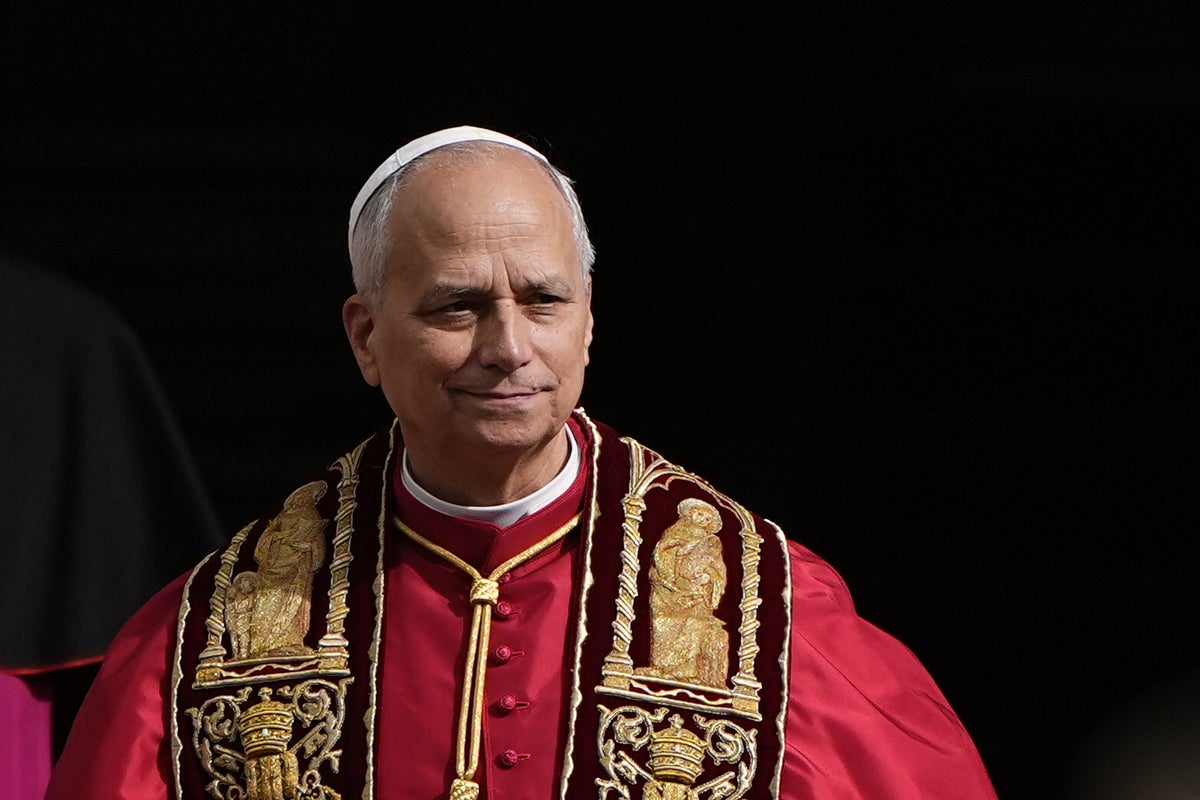
The traditional silence of the Holy See has fractured. During a tense Palm Sunday service in St. Peter’s Square, Pope Leo abandoned the carefully weighted language of his predecessors to issue a direct theological ultimatum to global power brokers. He explicitly stated that God rejects the prayers of leaders who initiate wars, a move that effectively strips away the "just war" veneer often used by aggressors to pacify domestic religious populations. This isn't just a moral plea; it is a calculated dismantling of the spiritual legitimacy that many heads of state rely upon to sustain long-term conflicts.
By declaring these prayers unheard and rejected, the Pope has shifted the Vatican from its historical role as a neutral mediator into an active ideological combatant. For centuries, the Church maintained a degree of strategic ambiguity to keep doors open in Moscow, Washington, and Beijing. That era is over. This shift signals a realization within the Apostolic Palace that the current global architecture of peace is not just failing—it has already collapsed.
The Strategic Death of Just War Theory
For decades, international relations students have studied the "Just War" theory, a framework rooted in the writings of Saint Augustine and Thomas Aquinas. It provided a checklist for when a conflict could be considered morally permissible. Leaders across the globe have spent years twisting these criteria to fit their geopolitical ambitions, using the language of "pre-emptive defense" or "humanitarian intervention" to justify the deployment of cruise missiles.
Pope Leo’s latest declaration effectively burns the checklist. By focusing on the intent and the act of starting a war, the Vatican is removing the loopholes. When a leader prays for victory while their artillery is leveling a city, the Church is now calling that act a spiritual fraud. This creates a massive problem for leaders who lead deeply religious nations. If the supreme moral authority of the Catholic Church labels their war efforts as divinely rejected, the internal social contract begins to fray.
It is a high-stakes gamble. By narrowing the definition of what constitutes a "praiseworthy" leader, the Pope risks alienating entire governments and losing his seat at the negotiating table. However, the Vatican’s internal analysts likely believe that the "seat at the table" has become a vanity project that yields no actual peace. They are choosing moral clarity over diplomatic access.
Money Power and the Silence of the Pews
We cannot ignore the financial mechanics behind this rhetorical shift. The Vatican is not just a church; it is a sovereign state with a complex global financial footprint. In recent years, the Holy See has moved to divest from industries tied to weapons manufacturing and environmental destruction. This latest verbal broadside aligns the Pope's theology with the Church’s balance sheet.
The Military Industrial Gap
While the Pope speaks of rejected prayers, the global defense industry is seeing record-breaking profits. There is a profound disconnect between the spiritual warnings from Rome and the economic realities in manufacturing hubs.
- Defense Spending: Global military expenditure reached an all-time high of $2.4 trillion last year.
- Contractor Influence: Political leaders are often more beholden to the jobs created by defense contracts than the moral guidance of their bishops.
- The Voter Dilemma: Many citizens in the West find themselves caught between their religious convictions and the economic benefits of a robust defense sector.
The Pope is essentially asking his followers to choose. He is betting that the moral weight of his office can counterbalance the lobbying power of the defense giants. It is a David and Goliath scenario, but in this version, David is an 80-year-old man in white robes armed only with a microphone and a centuries-old mandate.
The Eastern Fracture and the Orthodox Conflict
The most immediate impact of this "rejected prayers" doctrine is felt in the ongoing conflict between Russia and Ukraine. The religious dimension of this war is often overlooked by secular analysts, but it is central to the motivation of the soldiers on the ground. The Russian Orthodox Church has frequently blessed the war effort, framing it as a metaphysical struggle against Western decadence.
Pope Leo is throwing a wrench into that narrative. By stating that God ignores the prayers of those who start wars, he is creating a direct theological conflict with Patriarch Kirill of Moscow. This isn't just a disagreement over borders; it is a fight for the soul of the Christian world. If the Roman Pope says the war is a spiritual dead end, it provides cover for dissenters within the Orthodox world who are uncomfortable with the Kremlin’s direction.
This creates a ripple effect throughout Eastern Europe. It emboldens bishops in neighboring countries to take harder lines against their own governments. It forces leaders who have used religious imagery to bolster their nationalist credentials to reconsider their branding.
The Risks of Moral Absolutism
There is a danger in this approach that veteran diplomats are currently whispering about in the hallways of the UN. If you tell a leader that God has already rejected them, what incentive do they have to listen to you? Diplomacy usually requires leaving a "golden bridge" for an adversary to retreat across. By slamming the door shut on the spiritual validity of these leaders, Leo may be inadvertently making them more dangerous.
A leader who believes they have nothing to lose—not even their soul—is a leader who may decide to burn everything down. The Vatican's gamble assumes that these leaders still care about their standing in the eyes of the divine or, more practically, their religious electorate. If that assumption is wrong, the Pope’s words won't lead to peace; they will lead to further isolation and radicalization.
The Internal Vatican Resistance
Not everyone in the Curia is happy with this hardline stance. There is a faction of old-school diplomats who believe the Pope is being too impulsive. They argue that the Church’s greatest strength is its ability to talk to everyone, including the monsters. By drawing a line in the sand, Leo is making it impossible for his envoys to engage in the quiet, "back-channel" diplomacy that saved lives during the Cold War.
These critics point to the "Ostpolitik" of the 1960s and 70s, where the Church negotiated with communist regimes to ensure the survival of local parishes. They fear that Leo’s fiery rhetoric will lead to the persecution of Catholics in authoritarian states where the leader feels personally insulted by the Pope’s message.
The Modern Martyrdom of the Message
We are seeing a transformation of the Papacy into something more akin to a global activist organization. The Pope is no longer content to be the "Vicar of Christ" in a purely ceremonial sense. He is acting as a "Tribune of the People," using his platform to speak for those who have no voice in the halls of power. This is particularly evident in his focus on the victims of war, rather than the political justifications for it.
In his Palm Sunday message, he didn't mention specific geopolitical strategies or cease-fire terms. He spoke about the "blood of the innocent" crying out from the ground. This is the language of the prophets, not the language of the politicians. It is designed to be uncomfortable. It is designed to be unignorable.
The real test will be how this message is received in the pews. If the average churchgoer continues to support bellicose leaders despite the Pope’s warnings, then the moral authority of the Vatican is in its twilight. But if this message sparks a genuine grassroots movement for peace—one that threatens the electoral prospects of those who start wars—then we are witnessing a fundamental shift in how religion influences global politics.
Beyond the Pulpit
The Vatican’s shift toward a more confrontational stance on war is not happening in a vacuum. It is a response to a world that has grown increasingly indifferent to the suffering of others. The Pope knows that his time is limited and that the window for meaningful change is closing.
This isn't just about one speech on a Sunday in Rome. It is about a 2,000-year-old institution realizing that its survival depends on being relevant to the modern world's most pressing crises. If the Church cannot stand against the madness of modern warfare, it risks becoming a museum of forgotten rituals.
Watch the reaction from the world’s capitals over the next few weeks. The silence from some leaders will be as telling as the protests from others. When the Pope tells the most powerful men on earth that their prayers are hitting a ceiling of brass, he isn't just talking about religion. He is challenging the very foundation of their power. The question is whether anyone is still listening to the man in white, or if the roar of the engines of war has finally drowned him out.
Take a hard look at the leaders you support and ask if their actions align with the moral standards the Vatican is now demanding. The era of "thoughts and prayers" as a substitute for peace is officially over in the eyes of the Holy See.