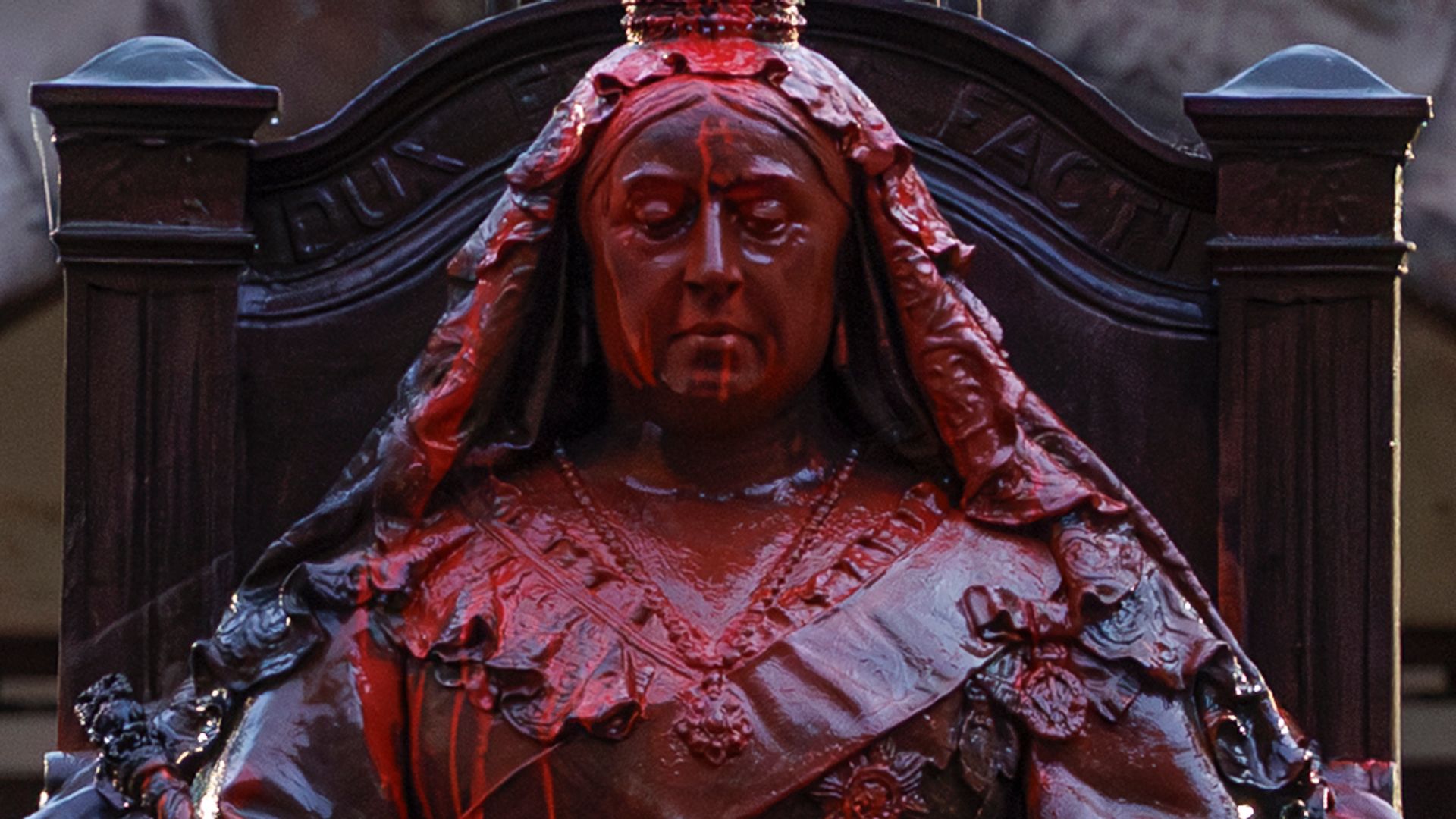
Red paint is not a "security breach." It is a peer review.
When the statue of Queen Victoria on the grounds of the Royal Victoria Hospital in Belfast was splattered with red paint, the media followed a predictable, exhausted script. They called it "senseless vandalism." They quoted politicians who used words like "disgraceful" and "disrespectful." They treated the event as a failure of policing or a breakdown in civic order.
They are all wrong.
The "lazy consensus" views a statue as a static, sacred object that exists outside of time. In reality, a public monument is a living argument. When that argument becomes one-sided, stagnant, or sanitised to the point of irrelevance, the public will inevitably find a way to talk back. The red paint isn't a crime against history; it is the first time in decades that the history of that specific site has actually been engaged with by anyone under the age of eighty.
Stop looking at the cleanup costs and start looking at the narrative debt.
The Myth of the Neutral Monument
The most pervasive lie in the heritage industry is that statues are "educational."
They aren't. They are trophies.
Statues are rarely erected to teach history—they are erected to project power and solidify a specific interpretation of the past. Queen Victoria’s likeness wasn’t placed in Belfast to provide a nuanced lecture on 19th-century administrative policy. It was placed there to signal the reach of the British Empire and the permanence of the Union.
When we pretend these objects are "neutral" historical artifacts, we insult the intelligence of the public. If you want to learn about the Victorian era, you go to a library or a JSTOR archive. You don’t stare at a hunk of bronze in a hospital car park.
The paint is a corrective measure. It forces a collision between the polished, imperial image of the "Famine Queen" and the messy, blood-soaked reality of her reign's impact on Ireland. By demanding the statue remain pristine, critics are demanding that the conversation remain frozen in 1906. That isn't history. That’s taxidermy.
The Efficiency of Disruption
I have seen city councils spend hundreds of thousands of pounds on "interpretive plaques" and "community outreach programs" designed to "recontextualize" problematic monuments. These programs are almost universally failures. They are bureaucratic attempts to appease everyone while saying nothing.
Compare the impact of a £50,000 "Community Reflection Workshop" to a £10 tin of red emulsion.
- The Workshop: Attended by three local activists and a bored civil servant. Produces a PDF that no one reads.
- The Paint: Dominates the news cycle for forty-eight hours. Forces every resident to confront the presence of the statue. Sparks more genuine historical debate in the pub than a decade of museum tours.
The paint is more "educational" than the statue ever was in its clean state. It forces the viewer to ask: Why is she there? Why are people angry? What happened during those years? If the goal of public art is to provoke thought, then the "vandal" has succeeded where the sculptor failed. The sculptor provided a decorative piece of furniture; the protester provided a catalyst for critical thinking.
Security is a Sunk Cost Fallacy
The immediate reaction from hospital management and local authorities is always: "How do we stop this from happening again?"
They talk about CCTV, higher fences, and private security patrols. This is a waste of resources. You cannot protect a controversial symbol from a population that feels excluded by it. It is a mathematical impossibility.
In my years analyzing urban risk and public space, I’ve seen this play out globally. Whether it’s the Edward Colston statue in Bristol or Confederate monuments in the US, the result is the same: increased security only heightens the symbolic value of the target. It turns a statue into a fortress.
If a hospital—a place of healing—has to be patrolled like a military installation because of a bronze woman from the 1800s, the monument has become a liability to the institution's primary mission. The "security failure" isn't the lack of cameras; it’s the insistence on maintaining an aesthetic that creates friction with the local community.
Stop Asking if it’s Right and Ask if it’s Honest
We are obsessed with the morality of the act. "Is it right to deface property?"
This is the wrong question. The right question is: "Is the current state of our public spaces an honest reflection of our society?"
If the answer is no, then the "vandalism" is simply the market correcting itself. Belfast is a city of layers. It is a city of murals, peace walls, and contested spaces. To have a pristine, untouched statue of a British monarch in a prominent public space is, in many ways, a historical lie. It suggests a level of consensus that simply does not exist.
The paint makes the statue honest. It reflects the tension. It reflects the ongoing struggle with identity. A statue of Victoria with red paint on its hands is a more accurate historical representation of her legacy in Ireland than a clean one.
The Institutional Cowardice of "Restoration"
The most boring thing the Royal Victoria Hospital can do is scrub the paint off.
It is an act of institutional cowardice. It is an attempt to reset the clock to zero and pretend the "attack" never happened.
Instead of hiring a cleaning crew, they should leave it. Or better yet, commission an artist to incorporate the intervention into the monument. Turn the "vandalism" into a permanent part of the site’s history.
Why? Because the act of protest is now part of the statue’s story. By erasing it, you are deleting a primary source. You are engaging in your own form of historical revisionism—the kind that prefers a quiet, comfortable lie over a loud, uncomfortable truth.
The Professional Counter-Take
If you are an administrator or a heritage officer, your instinct is to protect the "asset." I am telling you to rethink what the asset is.
The asset isn't the bronze. The asset is the public's engagement with the space.
If you view every act of defiance as a "problem to be solved," you will spend your entire career playing a losing game of whack-a-mole with a spray can. The moment you stop treating these statues as sacred cows and start treating them as active, debatable, and—yes—changeable sites, you deflate the power of the vandal.
You want to stop the paint attacks? Stop making the statues so damn precious.
The Hard Truth Nobody Admits
Most people complaining about the "desecration" of the Queen Victoria statue didn't know it was there a week ago.
They don't care about the art. They don't care about the history. They care about the order. They are uncomfortable with the reminder that Ireland’s past is still a bleeding wound. They want their hospitals to be clinical, their parks to be pretty, and their history to be tucked away in a book where it can't bother them.
The red paint is a reminder that history doesn't stay in books. It lives in the streets. It lives in the hospitals. It lives in the resentment of people who see these statues as symbols of a system that never truly accounted for its sins.
If the sight of red paint on a statue upsets you more than the history that put the paint there in the first place, you aren't a defender of heritage. You’re just a fan of the status quo.
The paint isn't the problem. The paint is the diagnosis.
Quit trying to wash away the symptoms and start dealing with the reality of the environment. The statue isn't being destroyed; it's being updated for the 21st century.
Deal with it.