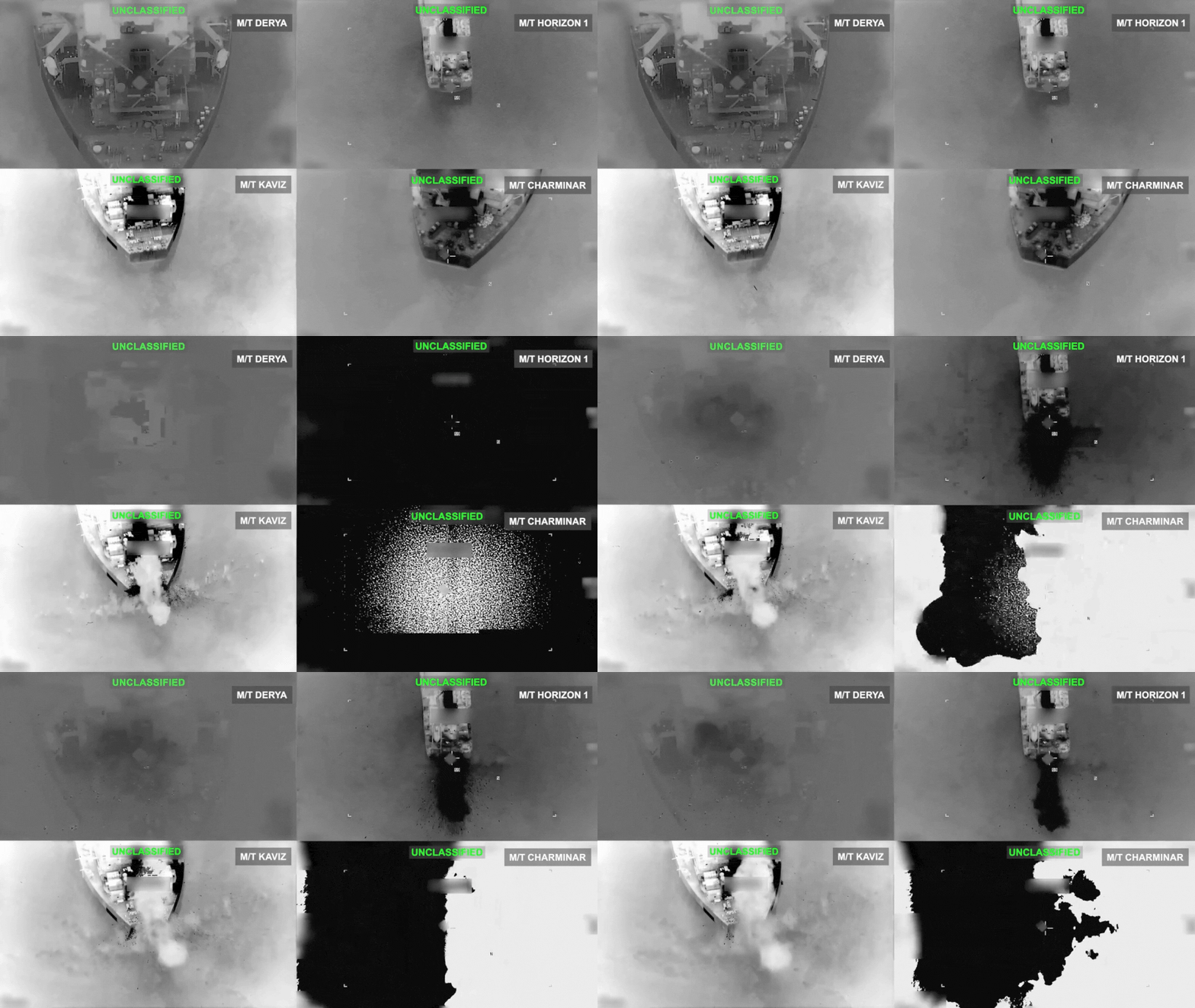
When the military targets a nation's economic lifeline, oil prices react instantly. US Central Command recently launched a wave of anti-shipping operations, destroying multiple Iranian crude oil carriers, including vessels near Kharg Island and the Gulf of Oman. This aggressive escalation followed failed ballistic missile attacks by the Islamic Revolutionary Guard Corps (IRGC) targeting American warships.
If you are wondering why this specific confrontation matters beyond the immediate headlines, it comes down to geography and economic exposure. Kharg Island handles roughly 90 percent of Iran's crude oil exports. Hitting tankers right outside this vital hub is a clear signal that the rules of engagement in the Persian Gulf have shifted. Washington is no longer just playing defense against incoming missiles; it is systematically dismantling the shadow fleet that funds Tehran's regional proxies.
The Strategic Importance of Kharg Island
Geography dictates strategy in the Persian Gulf. Kharg Island sits roughly 15 miles off the Iranian mainland, featuring deepwater terminals capable of accommodating massive supertankers. Most of Iran's shallow coastline cannot support these vessels, making this single island the absolute center of gravity for the country's petroleum-dependent economy.
For months, the US and its allies have maintained a naval blockade on Iranian ports, attempting to choke off the revenue streams feeding militant groups across the Middle East. Yet, shadow tankers kept moving under various flags of convenience. When the IRGC escalated matters by firing ballistic missiles at US Navy assets over a consecutive two-day window, the Pentagon responded with brute economic logic.
As Central Command officials noted, if Tehran targets two American ships, the response will be the removal of multiple vessels from Iran's commercial fleet. American forces directed crews to abandon ship before executing the strikes, minimizing loss of life while maximizing material destruction.
The Immediate Fallout for Global Markets
Energy traders hate uncertainty, and the Middle East is currently drowning in it. Brent crude prices have steadily climbed back toward the $100-a-barrel threshold as traffic through the Strait of Hormuz remains heavily disrupted.
The White House maintains that increased military pressure will ultimately stabilize energy costs and force a long-term resolution. However, domestic political pressure is mounting as voters feel the pinch at the pump during an election year. Every escalation near Kharg Island ripples directly down to retail fuel prices in the United States and Europe.
Iran has not taken these losses quietly. Following the destruction of its tankers, military leadership issued counter-threats against commercial vessels in neighboring Gulf ports hosting American assets, such as Kuwait and Bahrain. This tit-for-tat dynamic creates an exceptionally dangerous environment for neutral shipping lines attempting to navigate regional chokepoints.
What Happens Next in the Gulf
Expect more volatility. Tehran's strategy relies on asymmetric retaliation, utilizing proxy networks, drone deployments, and threats to international shipping to raise the cost of American presence in the region. Meanwhile, the Department of Treasury continues rolling out sweeping sanctions targeting aviation, maritime logistics, and financial facilitators.
You should monitor regional shipping insurance rates and crude futures closely if you want early indicators of where this conflict heads next. When maritime underwriters start refusing coverage for the Persian Gulf, physical supply disruptions usually follow immediately after. This conflict is no longer a localized naval skirmish. It is a full-scale economic war over the future of energy transit in the Middle East.