Diplomacy in the Middle East rarely dies with a quiet handshake. Usually, it blows up at a press podium.
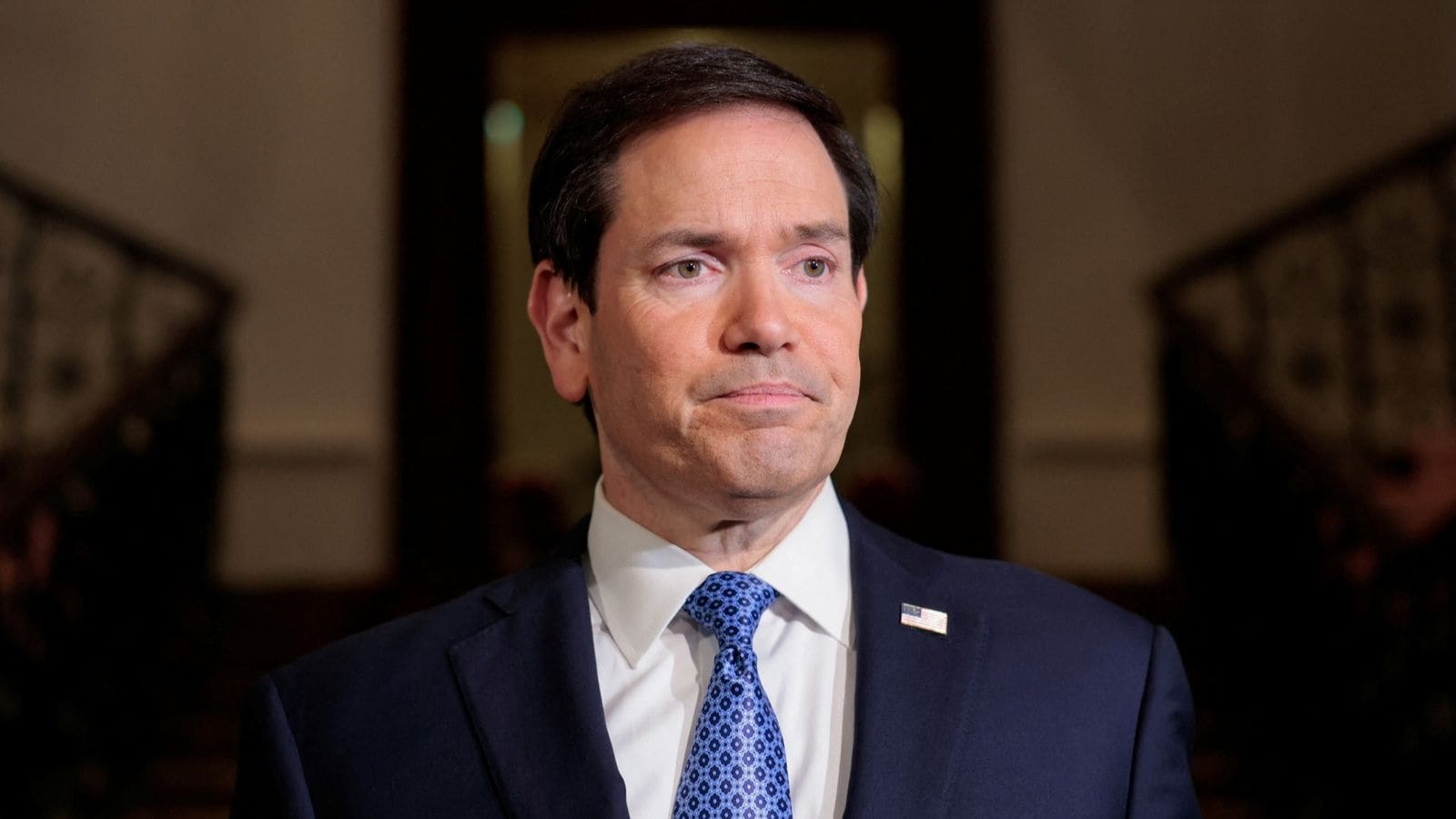
That's exactly what happened when US-Iran talks stalled this week, leaving Washington and Tehran trading sharp barbs instead of draft agreements. Secretary of State Marco Rubio didn't mince words about why the backchannel discussions hit a brick wall, calling Iran's latest opening demands "outrageous and ridiculous." If you've followed the decades-long standoff between the White House and the Islamic Republic, you know the script by heart. Both sides test the waters through European or Gulf intermediaries, realize the core red lines haven't budged an inch, and walk away pointing fingers.
Yet this particular breakdown carries heavier baggage than most. We're looking at a moment where regional flashpoints, nuclear enrichment timelines, and domestic political pressures in both capitals are colliding at full speed. When the top American diplomat publicly torch-lights a negotiation before it even reaches a formal table, he's sending a message far beyond Tehran.
What Actually Broke Down in the Latest US-Iran Talks
Let's strip away the diplomatic jargon. Negotiations between Washington and Tehran always boil down to a simple trade: sanctions relief in exchange for verifiable limits on Iran's nuclear program and regional behavior.
The problem? Neither side agrees on the price tag anymore.
According to diplomatic briefings surrounding Rubio's remarks, Tehran arrived at the preliminary discussions demanding immediate, sweeping sanctions relief—including access to frozen oil revenues and the lifting of secondary banking restrictions—before making any reversible concessions on its advanced centrifuge cascades. From the State Department's perspective, that's a non-starter. You don't hand over tens of billions of dollars in economic breathing room just to get Iran back to the bargaining table.
Rubio's characterization of those terms as "outrageous and ridiculous" wasn't an off-the-cuff slip. Having spent years on the Senate Foreign Relations Committee before taking the helm at Foggy Bottom, Rubio has consistently argued that piecemeal nuclear deals simply subsidize Tehran's regional proxy network. By calling out the demands publicly, the administration signaled it won't repeat the gradualist approach of past diplomatic rounds.
And Tehran knew it. Iranian negotiators operate on a completely different clock. Their economy is battered by inflation and currency devaluation, sure, but the leadership in Tehran views nuclear threshold capability as its ultimate insurance policy. Giving up leverage upfront feels like political suicide to hardliners in Qom and Tehran.
The Ghosts of 2015 Still Haunt Every Room
You can't understand why these talks stalled without looking at the wreckage of the Joint Comprehensive Plan of Action (JCPOA).
When the United States withdrew from the 2015 nuclear accord during the first Trump administration and reimposed "maximum pressure" sanctions, it permanently altered how Tehran calculates risk. Iranian officials repeatedly cite that withdrawal as proof that Washington cannot guarantee long-term compliance across shifting US election cycles. Why dismantle centrifuges today if a future White House can tear up the paperwork four years later?
That distrust cuts both ways, though.
Following the US exit from the JCPOA, Iran systematically breached the deal's caps. According to quarterly verification reports from the International Atomic Energy Agency (IAEA), Tehran expanded its stockpile of uranium enriched up to 60 percent purity—a short technical step away from weapons-grade 90 percent material—and installed advanced IR-6 centrifuges at underground facilities like Fordow.
Here's why that matters right now. In 2015, diplomats talked about a "breakout time" of roughly twelve months—the window Iran would need to produce enough fissile material for a single nuclear weapon. Today, nonproliferation experts at groups like the Arms Control Association estimate that breakout window has shrunk to mere days or weeks.
When the technical facts on the ground shift that dramatically, old diplomatic frameworks stop working. Washington isn't trying to put a genie back in a bottle anymore; it's trying to deal with a nuclear program that has already mastered the engineering hurdles it used to only threaten.
Why Rubio's Rhetoric Signals a Harder Washington Line
Pay close attention to the messenger, not just the message.
Marco Rubio isn't a career Foreign Service technocrat who prefers ambiguous communiqués. His political career was built on hawkish foreign policy stances regarding Iran, China, and Latin America. When he steps up to a microphone and labels Iranian proposals "outrageous," he's aligning State Department messaging directly with the White House's broader deterrence strategy.
I've watched plenty of administrations play "good cop, bad cop" between the White House and the State Department. Sometimes diplomats soften the edges while the Pentagon rattles sabers. Not here. Rubio's bluntness removes any daylight between American diplomatic posture and broader national security pressure.
Specifically, Washington's current posture rests on three firm pillars:
- No upfront cash or sanctions waivers. Any economic relief must follow verified, irreversible dismantlement of enrichment infrastructure, not mere freezes.
- Broader scope beyond centrifuges. The US refuses to pretend Iran's ballistic missile production and arms transfers to regional militias exist in a separate universe from its nuclear ambitions.
- Snapback readiness. Washington is prepared to coordinate with European allies—the E3 of Britain, France, and Germany—to trigger formal United Nations sanctions snapback mechanisms if Tehran refuses serious engagement.
Critics argue this maximalist stance guarantees deadlock. Honestly, they might be right in the short term. If you tell Tehran it must surrender its nuclear leverage, curb its missile program, and abandon regional allies before seeing a dime of sanctions relief, Iranian negotiators will simply pack their bags.
Supporters of Rubio's approach counter that the alternative—paying for temporary pauses while Iran edges closer to a bomb—is far worse. They point out that previous rounds of indirect talks in Vienna and Muscat dragged on for months without producing a single binding signature, giving Tehran valuable time to spin more centrifuges.
The Regional Chessboard Nobody Can Ignore
Diplomacy never happens in a vacuum, and right now the Middle East is anything but quiet.
Every conversation between Washington and Tehran takes place against the backdrop of ongoing proxy conflicts, maritime security threats in the Red Sea and Persian Gulf, and persistent friction along Israel's northern border. For the US, separating nuclear negotiations from regional security feels artificial when Iranian-backed groups continue targeting commercial shipping and regional partners.
Tehran sees the exact same chessboard from the opposite angle. From Iran's perspective, its regional network of allied militias—often referred to as the "Axis of Resistance"—is its primary conventional deterrent against superior American and Israeli military firepower. Asking Tehran to dismantle both its nuclear threshold capability and its regional alliances at the same time is, in the eyes of Iranian strategists, asking the regime to disarm completely.
That's the core impasse. Both sides view the other's minimum requirement as an existential threat.
Meanwhile, Gulf states like Saudi Arabia and the United Arab Emirates are watching nervously from the sidelines. Having worked hard over the past few years to stabilize their own diplomatic ties with Tehran and focus on domestic economic diversification, Gulf capitals dread the prospect of a total collapse in US-Iran diplomacy. An uncontained escalation puts their oil infrastructure, shipping lanes, and tourism hubs directly in the crosshairs.
What Most Commentators Get Wrong About Diplomatic Stalls
Whenever headlines scream that US-Iran talks have collapsed, pundits immediately predict imminent war. Take a breath. That's rarely how this works.
Public breakdowns are a standard feature of Iranian-American negotiation tactics, not an anomaly. Both capitals use harsh public rhetoric to manage domestic audiences and test the other side's resolve.
In Tehran, officials need to prove to hardline parliamentarians and the Islamic Revolutionary Guard Corps (IRGC) that they aren't begging Washington for favors. Rejecting American terms loudly plays well at home, even when the economy is hurting. In Washington, Rubio needs to demonstrate to Congress and regional allies that the administration won't be strung along by stalling tactics or weak compromises.
What actually happens behind closed doors is usually quieter. Even when formal talks stall, backchannels through Oman, Qatar, or Swiss diplomats rarely go completely dark. Nobody in Washington wants an uncontrolled military conflict that spikes global oil prices, and nobody in Tehran wants a direct confrontation that threatens regime survival.
So instead of an immediate explosion, a diplomatic stall usually triggers a period of calibrated pressure:
- The Treasury Department rolls out fresh tranches of sanctions targeting Iranian petrochemical networks and shadow tanker fleets.
- Tehran responds by restricting IAEA camera access at nuclear sites or increasing enrichment output slightly to raise the stakes.
- Regional mediators quietly shuttle messages back and forth, probing whether either side is willing to adjust its opening bid.
It's a high-wire act, and the margin for miscalculation gets thinner every month. One stray missile strike or misunderstood naval encounter in the Strait of Hormuz can turn a diplomatic freeze into a hot crisis overnight.
How to Track What Happens Next Without Getting Distracted
If you want to cut through the cable news noise and see whether US-Iran diplomacy is genuinely dead or merely resetting, stop listening to daily press conference soundbites. Watch the concrete indicators instead.
First, keep an eye on the IAEA Board of Governors meetings in Vienna. When the US and European powers push for formal censure resolutions against Iran over unverified nuclear material, it signals that diplomacy has shifted from negotiation to isolation. Conversely, if Washington holds back on a censure vote, backchannel talks are likely still breathing.
Second, watch Treasury Department sanctions enforcement on Iranian oil exports, particularly shipments heading to independent refineries in Asia. Rhetoric is cheap; enforcement against tanker networks and port operators is where real economic pressure lives. If enforcement tightens sharply following Rubio's comments, Washington is backing up its words with financial teeth.
Third, pay attention to Omani and Qatari diplomatic travel. Whenever senior officials from Muscat or Doha suddenly show up in both Washington and Tehran within the same 48-hour window, a new compromise formula is being floated behind the scenes.
Until those indicators shift, expect more sharp language from the State Department and stubborn posturing from Tehran. Rubio drew a clear line in the sand by rejecting Iran's opening demands outright, and now the burden falls on Tehran to decide whether its battered economy can afford another year of diplomatic deadlock.