The headlines are dripping with unearned optimism. Mainstream editorial boards are breathing a collective sigh of relief, hailing the newly announced "understanding" between Washington and Tehran as the dawn of a stable Middle East. They are telling you that diplomacy won, that regional friction will dissolve, and that global energy supply chains are finally safe.
They are completely wrong.
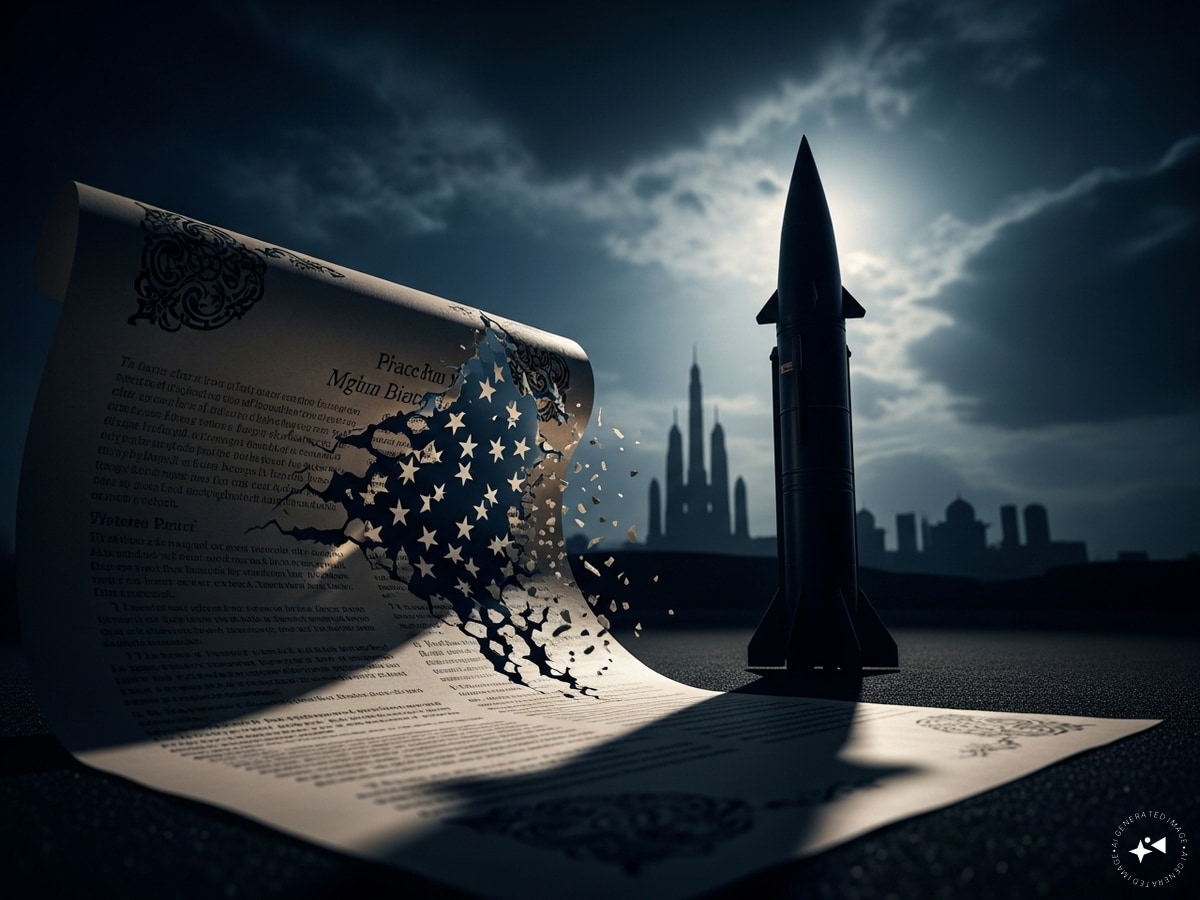
This agreement is not a resolution. It is a decompression chamber for a structural conflict that cannot be resolved by ink on parchment. By treating a fundamental, decades-long geopolitical rivalry as a mere misunderstanding that can be managed through concessions, the current administration hasn't avoided a war. They have systematically guaranteed a far more volatile, uncontainable conflict down the road.
When regional superpowers sign treaties out of exhaustion rather than alignment, they don't create peace. They create an engineered vacuum. And if you understand how power actually operates in the Persian Gulf, you know that vacuums are always filled by something worse.
The Mirage of De-escalation
The core flaw of the competitor’s analysis lies in the lazy assumption that state actors view peace through the same lens as Western diplomats. To a bureaucrat in Washington, a treaty is a finish line. To a strategist in Tehran, a treaty is a tactical pause to reconstitute economic leverage and asymmetric capabilities.
Let's dissect the mechanics of what this "understanding" actually does:
- Asymmetric Subsidy: The relaxation of enforcement on energy exports will immediately inject billions of dollars into a regime whose entire regional posture is predicated on proxy warfare.
- The Proxy Paradox: The treaty purports to mandate a drawdown of militant funding in Yemen, Iraq, and Lebanon. In reality, it formalizes a standard of plausible deniability. No treaty can monitor the illicit, cash-based networks that sustain these non-state actors.
- Nuclear Normalization: By shifting focus to a vague regional understanding, the international community effectively signals that Iran’s breakout capacity—its proximity to weapons-grade material—is a permanent reality we are willing to tolerate in exchange for short-term quiet.
I spent years analyzing risk profiles for maritime logistics firms operating out of the Strait of Hormuz. I’ve watched energy markets panic over a single limpet mine attack, and I’ve sat in rooms where executives blew millions of dollars hedging against regional escalations based on flawed state-department briefings. The consensus from those who actually have skin in the game is uniform: paper guarantees do not secure shipping lanes. Hard deterrents do.
Dismantling the Premise of the "Peace" Question
If you look at the questions driving public interest right now, you see a systemic misreading of geopolitical realities. The internet is asking the wrong things because it has been fed a diet of naive institutional analysis.
Will this agreement permanently lower global oil prices?
This is the most common question, and the premise is completely broken. People assume that allowing Iranian crude to legally re-enter Western-aligned markets will create a permanent supply cushion. It won’t.
Global energy markets are not dictated by raw supply alone; they are driven by the premium of political risk. By enriching a state actor that commands the world's most critical maritime chokepoint, you increase the long-term risk of catastrophic disruption. OPEC+ retains the structural leverage to cut production elsewhere to stabilize prices, rendering any unilateral Iranian surge mathematically irrelevant to long-term retail pricing. The market will price in the instability of this deal within ninety days.
Can diplomacy truly reshape ideological regimes?
The short answer is no, and believing otherwise ignores the foundational concept of institutional survival. Ideological states do not maintain regional proxy networks out of a lack of options; they maintain them because external leverage is vital to their domestic legitimacy. Expecting a treaty to neutralize these networks is like expecting a corporate merger to erase a competitor's core product line. It misinterprets why the product exists in the first place.
The Cost of the Counter-Intuitive Approach
To be entirely fair, the alternative to this treaty is incredibly grim. Critics of my stance will argue that the only alternative to an imperfect understanding is an immediate, catastrophic regional war. They are partially right.
Maintaining a posture of maximum economic and military deterrence has severe downsides:
- It strains Western alliances that are desperate for short-term energy stabilization.
- It inflicts massive economic hardship on civilian populations inside targeted nations without guaranteeing a change in governance.
- It risks miscalculation, where a minor naval skirmish could cascade into a full-scale shooting war.
But admitting those downsides doesn't make the alternative valid. Choosing a slow-burning, systemic collapse over a contained, short-term crisis is the ultimate form of geopolitical cowardice. The current treaty buys temporary political capital for Western leaders at the direct expense of structural stability ten years from now.
The Real Strategy for Global Capital
Stop looking at the diplomatic photo-ops. If you want to know where the region is actually heading, look at the capital allocations of the major regional players who are not at the signing table.
Look at Riyadh. Look at Jerusalem.
The nations that actually have to live next door to this treaty are not celebrating. They are accelerating their domestic defense production, diversifying their security architectures, and preparing for a landscape where the Western security umbrella is explicitly compromised.
For corporate strategists and global investors, the directive is clear: do not buy the peace narrative. Do not reallocate capital into Eastern Mediterranean or Gulf infrastructure based on the assumption that regional risk has dropped. Keep your supply lines flexible, maintain your hedges on maritime freight insurance, and treat this period of artificial quiet exactly for what it is—the intermission before the real conflict begins.
The ink on the treaty isn't even dry yet, and the countdown to its violation has already begun. Prepare accordingly.