The Middle East is on the brink of an absolute freefall. Washington just wrapped up its seventh consecutive night of direct military strikes inside Iran, and Tehran is responding with a terrifyingly clear message that no border in the region is safe anymore. If you think this is just another round of standard shadow-war posturing, you're missing the bigger picture. We have officially blown past the old rules of engagement.
US Central Command confirmed the latest wave of attacks on Friday, explicitly stating the operations are meant to continuously degrade Iranian military infrastructure. But this isn't happening in a vacuum. Iran didn't just take the hits. They fired back across multiple national borders, hitting targets in Kuwait, Qatar, Oman, and Syria. The region isn't just boiling. It's actively melting down.
The immediate takeaway for anyone watching this crisis is that the escalation loop has taken on a life of its own. When a superpower launches a week-long relentless bombing campaign against a heavily armed regional power, the response isn't going to be diplomatic chatter. It's going to be raw, destructive retaliation.
The Reality Behind Seven Nights of American Air Strikes
White House officials and CENTCOM commanders keep using the same phrase. They say they want to degrade capabilities. What that looks like on the ground is a massive, sustained air campaign targeting coastal military installations, command hubs, and missile storage sites.
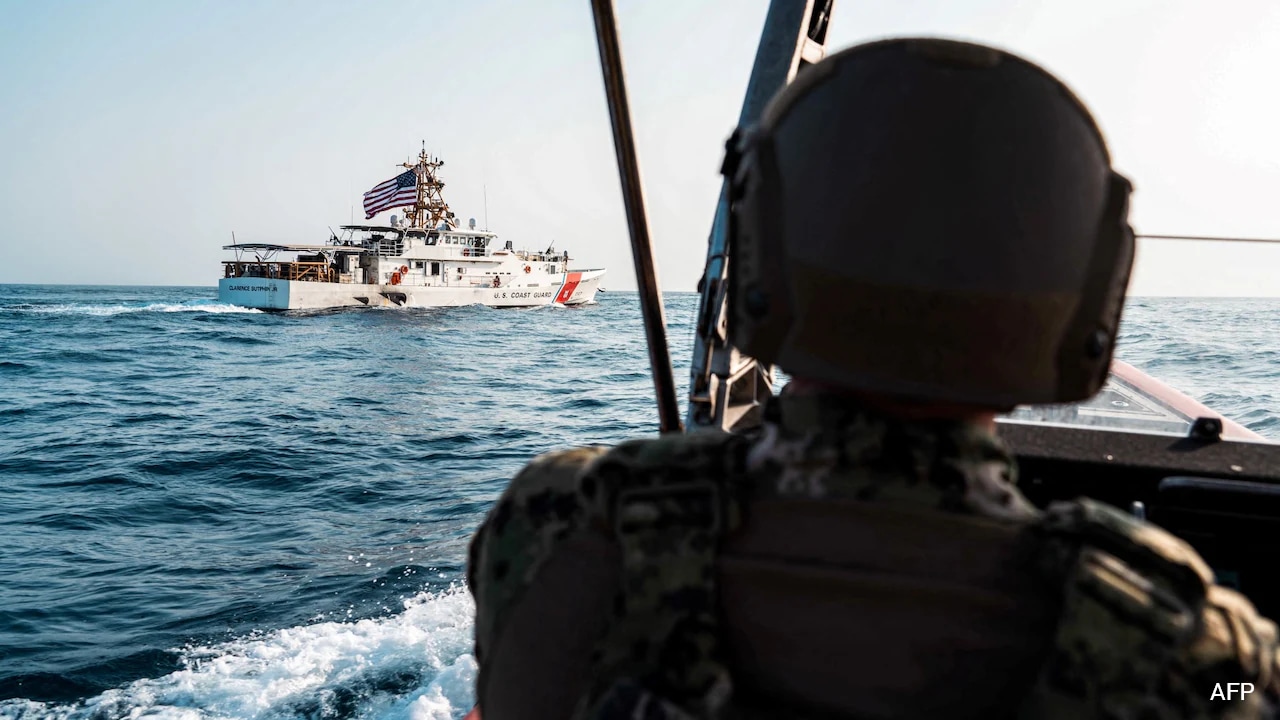
The Pentagon claims these operations are measured and necessary. They want to systematically strip away Iran's ability to project power across the Persian Gulf and the Strait of Hormuz. For seven straight nights, precision-guided munitions have slammed into targets around Iran's southern coast.
But the damage reports coming out of Tehran paint a much more chaotic picture. Iranian officials aren't just reporting military losses. They're pointing to ruined civilian infrastructure. According to state media reports, the latest strikes have heavily damaged at least one major airport, a vital railway station, and two critical transportation bridges.
The economic fallout inside Iran hit almost instantly. The country's energy ministry had to issue emergency notices urging citizens to shut down air conditioners and ration power during peak heat hours. The national electricity grid is buckling under the weight of destroyed infrastructure, leaving millions of civilians caught in the crossfire of a blistering summer and a rain of high-tech explosives.
Tehran Answers with the No Border Safe Doctrine
If Washington expected Iran to retreat and recalculate after a week under the bombs, they miscalculated badly. The response from the highest levels of the Iranian military apparatus has been aggressively defiant.
Major General Mohsen Rezaei, a senior military advisor to Iran's supreme leader, laid down a hard deadline on Friday. He openly warned that if American forces don't halt their bombing campaign within forty-eight to seventy-two hours, Tehran will initiate full-scale offensive operations. This isn't the vague rhetorical posturing we've seen in past decades. It's an explicit timeline for an all-out regional war.
To back that up, Majid Mousavi, the commander of the Islamic Revolutionary Guard Corps aerospace forces, clarified exactly what that means. He stated that targeted strikes launched from deep within Iranian territory will continue relentlessly until the US completely ends its naval operations and coastal bombardments.
They aren't just talking. They've already started executing the strategy.
The Regional Spillover Hits Kuwait Qatar and Beyond
The true danger of the "no border safe" warning is that Iran is already treating the entire geographic map as a single, unified theater of war. They are actively striking US assets located inside sovereign neighboring nations.
Look at what happened on Friday night. Iranian drones and ballistic missiles spread across the Gulf airspace, triggering air raid sirens in multiple capitals.
- Kuwait: Iranian drones struck several military camps and bases. The Kuwaiti military confirmed multiple troops were wounded. A crucial power and water desalination plant sustained direct damage, forcing the local government to issue emergency utility rationing orders to its citizens.
- Qatar: The Revolutionary Guards targeted key US assets, focusing on advanced radar installations and military aircraft parked at local airbases. Qatari defense forces intercepted a missile over the coast, but the shockwave shook residential neighborhoods in Doha, waking up terrified expatriates and citizens.
- Oman: Two American radar monitoring sites were targeted along the coast.
- Syria: The isolated US military outpost at Al-Tanf faced another heavy barrage of drone strikes designed to overwhelm localized air defense systems.
This regional expansion completely changes the stakes. Neighboring Gulf states that tried to maintain neutrality or simply host American bases are finding out that geographic distance provides zero protection.
Why Local Economies and Job Markets Are Cracking
The crisis isn't just a military disaster. It's rapidly morphing into an economic catastrophe that reaches far beyond the borders of Iran and its immediate neighbors.
Take a look at Dubai. For years, it served as the hyper-connected financial safe haven of the Middle East. Right now, it's dealing with a sudden, severe employment and economic crisis. The escalating war has forced shipping companies to reroute, sent insurance premiums through the roof, and brought regional tourism to a grinding halt. Millions of expatriate workers from India, Southeast Asia, and Europe who moved to the Gulf for economic stability are suddenly watching their jobs vanish as corporate offices scale back or flee entirely.
At sea, the situation is even grimmer. The United States has re-instituted a hard naval blockade of primary Iranian ports. In retaliation, the shipping lanes through the Strait of Hormuz have become a deadly gauntlet. The UK Maritime Trade Operations agency confirmed that a commercial oil tanker was struck by an unidentified projectile off the coast of Oman. Energy markets are twitching. Global logistics networks are scrambling to find alternative routes. Every single night the bombing continues, the price of global stability ticks upward.
What Happens When Diplomacy Shuts Down
UN Secretary-General Antonio Guterres did what UN chiefs always do. He expressed deep concern. He called the attacks on civilian infrastructure completely unacceptable. But let's be entirely honest here. Those statements carry zero weight on the battlefield right now.
The diplomatic tracks are dead. Negotiations that were limping along over Iran's nuclear ambitions have been completely vaporized by seven nights of heavy ordnance. There are no back-channel talks happening when radar stations are blowing up in Qatar and water plants are burning in Kuwait.
Washington has taken a hardline stance, betting that superior firepower can force a structural collapse of Iran's military resolve. Iran is betting that by making life miserable and dangerous for every American ally in the region, they can break Washington's political will. It's a brutal game of chicken where both drivers are flooring the accelerator.
Realities on the Ground for the Coming Days
We are past the point of wondering if things will get ugly. They are already ugly. If you are watching this situation unfold, you need to look past the official press releases and track the actual movements on the ground.
Keep your eyes on the Strait of Hormuz. If Iran fully seals that choke point with anti-ship missiles and naval mines, global energy markets will experience a shock that makes previous supply disruptions look like minor blips.
Watch the air defense telemetry in Qatar and Kuwait. If neighboring nations can't reliably intercept incoming Iranian drones, the pressure on those governments to kick American forces out of their bases will become overwhelming.
Pay attention to the internal civilian stability within Iran. A population dealing with blistering heatwaves without air conditioning and facing crippled transportation infrastructure can either rally around the flag or crack under pressure.
The next forty-eight hours will decide whether this stays a intense, localized conflict or transforms into a generational regional war that drags the global economy down with it. Get ready. The escalation loop isn't stopping anytime soon.