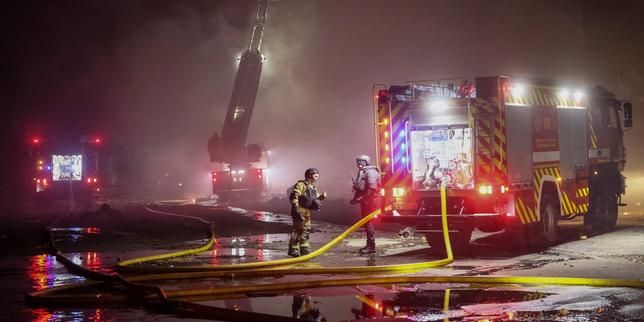
Millions of euros in European Union rail grants don't just vanish into thin air without someone noticing eventually. When Spanish rail authorities found themselves staring down a European fraud investigation following the Urda rail incident, it didn't shock anyone who actually tracks public infrastructure spending in Southern Europe. Honestly, the only surprise is how long it took Brussels to demand the receipts.
Let's be clear about what happened here. The European Public Prosecutor's Office (EPPO) and the European Anti-Fraud Office (OLAF) exist specifically for moments when domestic oversight fails to police EU-backed construction contracts. In the case of the Urda rail line in Toledo—a stretch of track connecting Madrid toward the south—a severe rail incident peeled back the curtain on maintenance records, signaling upgrades, and contractor payouts that simply didn't add up on paper.
You can't separate safety failures from financial mismanagement. They're two sides of the exact same coin.
Why Brussels Stepped Into Spain's Rail Sector
Spain boasts one of the longest high-speed rail networks in the world, funded heavily by European cohesion funds and NextGenerationEU recovery grants. For years, Madrid pointed to its gleaming AVE trains as proof that EU taxpayer money was being spent efficiently. Behind the scenes, though, regional and conventional lines like the route running through Urda in Castile-La Mancha suffered from chronic underinvestment and murky subcontracting chains.
When an accident or operational disaster hits a line that supposedly received millions in EU modernization funds, alarms go off in Luxembourg, where the EPPO is headquartered. Prosecutors don't care about political ribbon-cutting ceremonies. They care about whether the signaling equipment listed on an invoice was actually installed on the tracks, and whether the state-owned infrastructure manager—Adif—properly audited the private contractors doing the work.
If you've ever reviewed public tender documents in Spain, you know the drill. A massive engineering conglomerate wins a bid at a suspiciously low price, subcontracts the actual physical labor to three smaller firms, and then files dozens of cost overruns—known locally as modificados—that inflate the final bill by 30% or 40%. When safety systems fail after those upgrades, investigators start asking whether corners were cut to protect profit margins while EU auditors were fed fabricated compliance certificates.
How EU Rail Fraud Investigations Actually Work
Most people assume an EU fraud probe means foreign bureaucrats storming into Madrid ministries with badges and handcuffs. That's not how it works at all.
Under the EPPO framework, European Delegated Prosecutors operating directly inside Spain lead the criminal inquiry alongside national judicial police units like the Guardia Civil's UCO (Central Operative Unit). They have full authority to seize servers, freeze bank accounts, and compel testimony from executives at both state agencies and private construction giants.
Here's what prosecutors look for first in rail infrastructure cases:
- Phantom or substandard materials. Invoices claiming top-tier European Rail Traffic Management System (ERTMS) components were installed, when inspectors on the ground find older, patched-together legacy hardware.
- Bid rigging and cartel behavior. Spain's own competition watchdog, the CNMC, has repeatedly fined major construction firms for splitting up rail maintenance contracts among themselves to keep prices artificially high.
- Falsified safety certifications. Signing off on track readiness before mandatory stress tests or signaling calibrations are completed just to hit an EU funding deadline.
Notice a pattern? Every single one of those financial shortcuts creates an immediate physical hazard for train drivers and passengers.
The Structural Blind Spot in Spanish Rail Oversight
To understand why Spain's rail authorities keep landing in hot water, you have to look at how the system is built. Adif manages the tracks, while Renfe operates the trains, and both answer to the Ministry of Transport. When something goes wrong on a stretch of track like Urda, the initial technical investigation is handled by the Railway Accident Investigation Commission (CIAF).
For years, the European Union Agency for Railways (ERA) criticized Spain because CIAF lacked true independence from the very ministry that oversees Adif and Renfe. Think about that setup for a second. A government body investigating a disaster on tracks maintained by another branch of the same government, using funds approved by the same political leadership.
It's a textbook conflict of interest.
Even after legislative tweaks aimed at satisfying Brussels, the culture of institutional self-protection runs deep. Whistleblowers inside rail maintenance crews have complained for years about stretched inspection schedules and pressure to keep traffic moving despite known signaling glitches. Without an outside force like the EPPO carrying the threat of criminal prosecution for misuse of EU funds, those internal warnings rarely survive past middle management.
What Makes the Urda Case Different From Past Scandals
Spain has dealt with rail tragedies before—most notably the devastating 2013 Angrois crash near Santiago de Compostela, which killed 80 people and exposed glaring gaps in trackside signaling technology. Back then, the legal battle dragged on for over a decade, bogged down in disputes over whether blame rested solely on the train driver or on the state engineers who signed off on a dangerous curve without automated braking controls.
The Urda investigation hits a completely different nerve because it directly targets the financial integrity of EU-funded infrastructure.
Brussels has zero patience for member states misusing NextGenerationEU recovery money. Because those funds were backed by joint European debt, northern European governments—the so-called "frugal" states—watch every single euro flowing into Spain and Italy like hawks. If Spanish rail authorities cannot prove that every cent allocated to regional track safety went toward genuine, verified upgrades, Madrid faces two brutal consequences:
- Clawback demands. The European Commission can force the Spanish treasury to pay back misspent grants directly out of national tax revenue.
- Frozen disbursements. Future tranches of transport funding get put on ice until Madrid overhauls its procurement auditing systems.
Neither option is politically survivable for a government relying on infrastructure spending to prop up regional economies.
Don't Confuse High-Speed Glamour With Network Safety
If you're a traveler or an observer looking at Spanish rail, it's easy to get fooled by the shiny surface. Taking a high-speed train from Madrid to Seville or Barcelona feels like stepping into the future. The stations are spotless, the trains hit 300 kilometers per hour effortlessly, and delays are rare.
Step off the main high-speed corridors onto conventional regional tracks, though, and you're looking at a completely different reality.
Lines passing through rural provinces like Toledo, Extremadura, and parts of Andalusia have spent decades fighting for basic maintenance scraps. Speed restrictions—known as limitaciones temporales de velocidad—pop up constantly because the track bed is worn out or signaling cables have degraded. When EU money finally arrives to modernize these neglected arteries, it's supposed to close the safety gap between rural commuters and big-city business travelers.
Diverting or mismanaging those funds doesn't just violate accounting rules in Brussels. It leaves everyday commuters riding on infrastructure that was supposed to be fixed years ago.
How to Track the Investigation and Protect Yourself as a Commuter or Investor
Whether you're watching European infrastructure bonds, following Spanish politics, or simply riding regional trains across Spain, you don't have to rely on vague press releases from the Ministry of Transport to see where this goes next.
Start by monitoring official case updates directly through the European Public Prosecutor's Office newsroom, which publishes formal notices whenever indictments are filed or raids are conducted in member states. Unlike domestic political spin, EPPO filings strip away partisan noise and lay out the exact financial statutes under investigation.
If you're analyzing construction firms exposed to Spanish public tenders, check the sanction registries maintained by Spain's National Commission on Markets and Competition (CNMC). Companies caught rigging rail contracts often face temporary bans from bidding on EU-funded projects—a massive red flag for anyone holding their stock or debt.
And if you're a rail passenger in Spain dealing with chronic delays, sudden speed drops, or safety concerns on regional routes, log formal complaints through the State Railway Safety Agency (AESF) rather than stopping at Renfe's customer service desk. Customer service complaints get buried in refund queues; formal safety filings create a permanent regulatory paper trail that investigators can pull when auditing track performance.