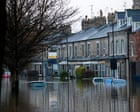
Concrete doesn't soak up rain. It’s a simple fact that’s currently biting the UK government in the backside. Recent data from the British Geological Survey and various environmental monitoring bodies shows a staggering reality that most homeowners aren't ready to face. Eight out of ten homes at high risk of flooding in England are located in urban areas. This isn't just about riverside cottages or coastal huts anymore. It’s about the paved-over driveways, the sprawling car parks, and the dense housing estates of our major cities.
If you live in a city, you probably feel safe because you can't see a river from your window. That's a mistake. Surface water flooding happens when the drainage system simply gives up. When the clouds open and the water has nowhere to go but into your hallway, the distance to the nearest Thames tributary doesn't matter. The infrastructure in England’s cities was built for a climate that doesn't exist anymore. We’re working with Victorian pipes and 20th-century planning in a world of 21st-century storms.
The urban jungle is a flood trap
Cities are essentially giant heat and water sinks. The technical term is "pluvial flooding," but you can just call it a mess. Because we’ve covered every square inch of dirt with tarmac and paving slabs, the ground has lost its ability to act like a sponge. In rural areas, the soil drinks the rain. In London, Birmingham, or Manchester, the rain hits the ground and immediately starts looking for the lowest point. Usually, that’s someone’s basement or ground-floor flat.
The study highlighting the 80% figure isn't just a warning for the future. It’s a reflection of what’s happening right now. We see it every summer when "flash floods" turn high streets into canals. These aren't freak accidents. They're the predictable result of high-density living combined with poor water management. Urban areas are uniquely vulnerable because the water can't spread out. It gets funneled into narrow streets and trapped by buildings.
You also have to look at the "sealed surface" problem. When you pave over your front garden to park a car, you’re contributing to the problem. Multiply that by millions of homes, and you’ve effectively killed the local ecosystem’s ability to handle a heavy downpour. It’s death by a thousand driveway extensions.
Why the current flood maps are failing you
Most people check the Environment Agency maps before buying a house. They look for the blue shaded areas that indicate river or sea risk. But surface water risk is harder to map and often overlooked. If you’re only looking at "fluvial" (river) risk, you’re missing the biggest threat to urban property.
I’ve seen plenty of buyers breathe a sigh of relief because they’re two miles from the nearest stream, only to find out their street is a natural basin for every storm drain in the neighborhood. The insurance industry knows this. They’re getting better at using granular data to hike premiums in areas that don't even have a name for their local brook.
The disconnect between planning and reality is where the danger lies. We’re still building thousands of new homes in "high risk" zones because the demand for urban housing is so high. Local authorities are caught between a rock and a wet place. They need the council tax and the housing numbers, so they approve developments with "mitigation strategies" that often look great on paper but fail during a real-world deluge.
The financial hit nobody wants to talk about
A flood isn't just a temporary inconvenience. It’s a long-term financial wrecking ball. Once a property is flagged for high flood risk, its value doesn't just dip—it can become unmortgageable for certain lenders. You’re stuck with a "stranded asset."
- Insurance premiums can skyrocket or come with excesses so high they’re effectively useless.
- Property devaluation is a real risk, as savvy buyers now use flood history as a primary negotiation tool.
- Repair costs for even a minor flood often exceed £30,000, involving stripping out floors and treating for mold.
Flood Re, the joint initiative between the government and insurers, helps keep premiums affordable for many. But it’s not a permanent fix. It’s a sticking plaster designed to buy time while we supposedly fix the infrastructure. The problem? The infrastructure isn't getting fixed fast enough. We’re spending billions on defenses, but most of that money goes to large-scale river projects, not the unglamorous work of digging up city streets to double the size of the sewers.
Simple changes that actually work
Stop waiting for the council to save your street. They won't. If you live in an urban high-risk zone, you need to take control of your own boundary line. It sounds boring, but "sustainable drainage" (SuDS) is the only way we’re going to get out of this.
Instead of a solid concrete driveway, use permeable pavers. These allow water to soak through into the ground. If you have a garden, don't pave it over. Plant trees. A single mature oak can soak up hundreds of gallons of water a year. Even a small rain garden—a depressed area planted with water-loving greenery—can stop your patio from turning into a pond.
Check your air bricks. These are the little holes in your brickwork that let your house breathe. They’re also the perfect entryway for floodwater. You can buy "flood-sensing" air bricks that automatically shut when they detect water. It’s a few hundred pounds that could save you tens of thousands.
The planning system is broken
Let’s be honest about the politics. The UK has a desperate housing shortage. This leads to "infilling," where every scrap of green space in a city gets built on. Every time we lose a small urban park or a grassy verge to a block of flats, we lose another piece of our natural drainage network.
The National Planning Policy Framework says new developments shouldn't increase flood risk elsewhere. In practice, that’s a hard rule to enforce. Developers often use "attenuation tanks"—big underground boxes that hold water and release it slowly. They work, until they don't. If they aren't maintained, they silt up and become useless. And guess who’s usually responsible for maintenance? Often, it’s a management company that might not exist in ten years.
We need a radical shift in how we view urban land. We need to stop treating water as an enemy to be piped away as fast as possible and start treating it as a part of the landscape that needs space to sit.
What you need to do before buying in a city
If you’re looking at a property in an English city right now, don't just take the surveyor’s word for it. Do your own digging. Search for local news reports about street flooding in the last five years. Look at the typography of the area. Is the house at the bottom of a hill? Is the street name something like "Marsh Lane" or "Brookside"? Those names aren't accidental.
Check the Long Term Flood Risk service provided by the government. Specifically look for the "surface water" map, not just the "rivers and sea" map. If the area is shaded dark blue, you’re looking at a high-risk zone. Think twice. Or, at the very least, factor the cost of flood-proofing into your offer.
The reality is that 80% of our flood-risk homes being in cities isn't a fluke. It's the result of how we've chosen to live. We’ve traded soil for shops and gardens for garages. Now, the bill is coming due. You can either prepare your home now or wait for the water to force your hand.
Start by clearing your own gutters and checking your local drains. If they're blocked with leaves and trash, report it to the council immediately. Don't wait for a storm warning to find out your street's drainage is compromised. Buy some sandless flood bags—the ones that swell up when they hit water—and keep them in the shed. It’s a small price to pay for a bit of peace of mind in an increasingly soggy country.