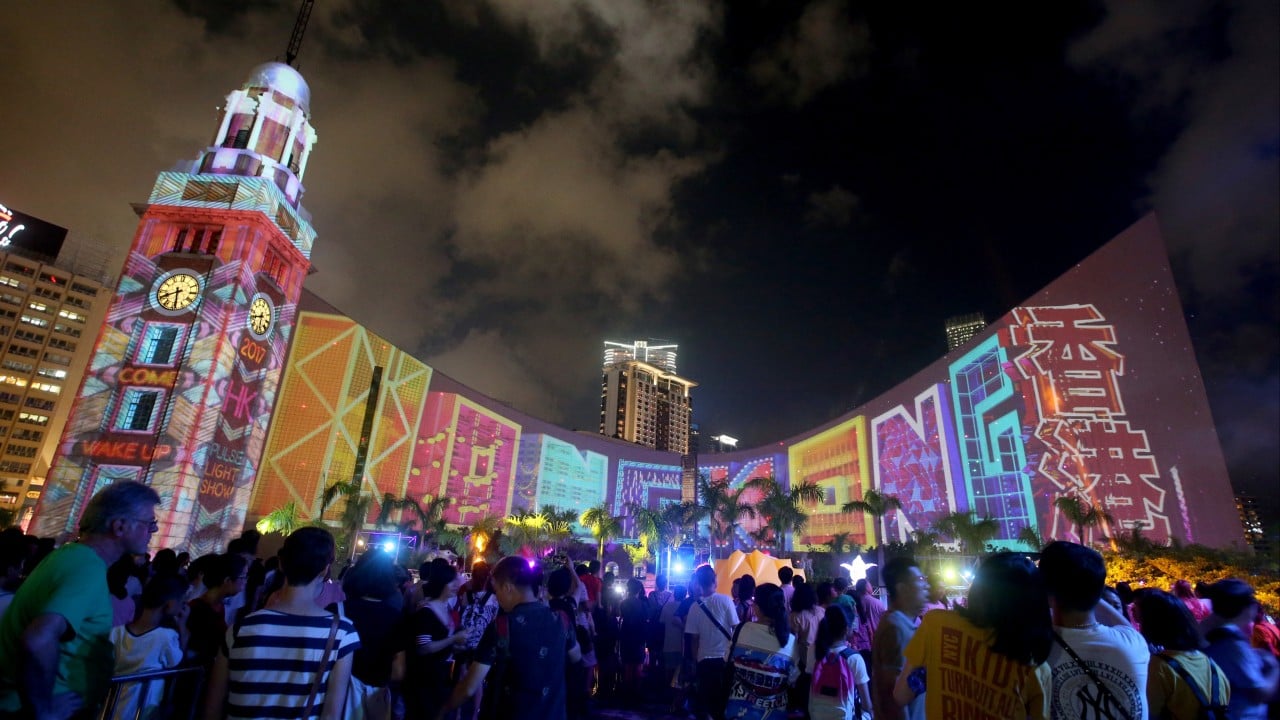
Municipal tourism boards routinely judge the success of public light installations by raw footfall, yet high spectator headcount frequently masks negative unit economics for the host economy. When a city commissions a large-scale projection mapping event or architectural lighting festival, the immediate metric celebrated in press releases is crowd size. However, transient crowds that gather in public plazas for forty-five minutes, take photographs, and return home via commuter rail generate negligible marginal revenue for local hospitality, retail, and commercial real estate operators. To turn civic illumination from a subsidized public spectacle into a self-sustaining economic engine, destination managers must shift their capital allocation from passive crowd aggregation to structured business-to-business (B2B) capture and high-yield overnight conversion.
The Structural Flaw of the Spectator-Only Model
The standard municipal light festival operates as a pure public good, characterized by non-excludability and high fixed capital expenditure. Cities deploy significant treasury funds toward hardware procurement, artist commissions, grid reinforcement, and crowd-control policing, operating under the assumption that foot traffic naturally converts into commercial spending. In urban economics, this assumption breaks down due to temporal compression and spatial leakage.
Temporal compression occurs because light shows require darkness, restricting the operational window to a narrow band between dusk and midnight. Unlike daytime cultural festivals that allow visitors to browse retail corridors, dine across multiple meal periods, and visit museums, nocturnal light spectacles compress demand into a single, rigid timeframe. Food and beverage operators near the installation zone experience a brief, unmanageable surge that exceeds seating capacity, followed by an immediate drop-off, while adjacent retail stores remain closed.
Spatial leakage compounds this problem. When an event is designed purely for free public viewing, the majority of attendees are local residents or regional day-trippers. Because these visitors do not require overnight accommodation, the host city loses access to its highest-margin tourism tax base: hotel occupancy levies. Without overnight stays, the economic multiplier remains trapped at the lowest tier of street-level consumption, leaving the municipality to absorb the operational deficit.
Deconstructing the Revenue Architecture of Nighttime Illumination
To evaluate whether a light festival generates genuine economic return or merely redistributes existing local spending, analysts must separate revenue streams into three distinct tiers. Most underperforming tourism initiatives rely almost entirely on the first tier while ignoring the structural requirements of the second and third.
- Direct Consumer Capture (Low Margin, High Friction): This includes ticketed entry to enclosed installations, temporary food stalls, and event merchandise. While gating an installation introduces excludability and offsets production costs, it simultaneously restricts mass footfall and creates queuing bottlenecks that degrade the visitor experience.
- Hospitality and Retail Spillover (Variable Margin, High Leakage): This represents indirect spending at surrounding restaurants, bars, hotels, and shops. Spillover only occurs when the festival layout intentionally routes pedestrian flow through commercial corridors rather than dead-ending at a single civic monument, and when local merchants adjust their operating hours to match the nocturnal schedule.
- B2B Commercialization and Corporate Sponsorship (High Margin, Scalable): This tier encompasses corporate hospitality suites, industry conferences co-located with the festival, intellectual property licensing, and hardware-software vendor showcases. In mature lighting districts, business-to-business transactions subsidize the free public spectacle.
The failure of most tourism sectors lies in treating the light show as the end product rather than as a loss-leader anchor for higher-value commercial ecosystems.
The B2B Anchor Strategy in Destination Management
Shifting a light festival toward business attraction requires redesigning the event architecture around corporate buyers, industry conventions, and private-sector hospitality rather than casual sightseers. This transition relies on three operational mechanisms.
Co-Locating Trade Conferences and MICE Tourism
Meetings, Incentives, Conferences, and Exhibitions (MICE) represent the highest-yield segment in the travel industry. Business travelers spend significantly more per diem than leisure day-trippers, book hotel rooms mid-week when occupancy rates traditionally trough, and expense their consumption through corporate accounts.
Tourism boards must synchronize the calendar of major lighting installations with regional industry summits—specifically targeting sectors such as urban planning, architectural design, creative technology, renewable energy, and retail merchandising. By positioning the city itself as a live showroom for smart-city lighting infrastructure and projection technology, the municipality gives trade associations a compelling operational reason to select the destination over competing convention cities. The light show ceases to be an isolated entertainment expense and becomes the physical centerpiece of a multi-day professional symposium.
Monetizing Corporate Hospitality and Private Views
Free public access does not preclude tiered commercial access. Event organizers can segment the spatial footprint of a light festival by establishing elevated, climate-controlled viewing lounges, private river cruises, or exclusive rooftop receptions overlooking the primary installations.
These spaces are sold directly to corporate sponsors, financial institutions, and local enterprises for client entertainment and executive networking. Because nighttime light installations naturally create an atmospheric backdrop, corporations are willing to pay premium hospitality fees to host private events within the festival perimeter. This mechanism extracts high-margin capital from the private sector to cross-subsidize the free public programming, insulating the municipal budget from ticketing volatility.
Establishing an Exportable Intellectual Property Pipeline
Cities that repeatedly import turnkey light installations from international production houses suffer permanent capital outflow. A business-oriented tourism strategy treats the festival as a research and development incubator for domestic creative studios, electrical engineers, and software developers.
By structuring commissioning grants to require local technical partnerships, a destination builds indigenous intellectual property. Once a projection mapping work or interactive kinetic sculpture is debugged and validated during the local festival, the originating studio can license or tour that asset to international theme parks, commercial real estate developers, and foreign festivals. The tourism board thereby stimulates export-oriented service revenue, transforming a seasonal municipal expenditure into year-round taxable corporate income.
Engineering Pedestrian Flow for Commercial Capture
Even when a festival successfully attracts high-spending corporate visitors and overnight tourists, poor spatial planning can neutralize the economic benefit. Crowd dynamics during nighttime events follow predictable behavioral patterns: spectators gravitate toward the brightest focal point, remain stationary until the loop finishes, and immediately seek the shortest path back to transit hubs.
To counteract this behavior, urban planners must apply distributed node topology rather than single-site concentration. Placing one massive projection on a central landmark creates severe crowd density that deters commercial browsing; pedestrians focus entirely on navigation and personal safety. Instead, organizers should deploy a sequence of smaller, interconnected installations spaced 400 to 600 meters apart along secondary commercial streets.
This spacing forces spectators to walk past active storefronts, cafes, and galleries to reach the next visual anchor. To ensure this foot traffic converts into transactions, the destination management organization must establish formal operational alignment with local business improvement districts (BIDs) months in advance:
- Synchronized Operating Hours: Retail and hospitality businesses along the transit spine must commit to remaining open until at least 22:30 during festival dates, supported by municipal extensions for outdoor seating and late-night licensing.
- Dynamic Wayfinding and Digital Integration: Event mobile applications and physical signage must integrate real-time restaurant table availability, curated nighttime dining trails, and merchant-specific promotions triggered by proximity to specific light nodes.
- Pre- and Post-Show Programming: Scheduling live acoustic performances, gallery openings, or culinary tastings inside commercial venues immediately before dusk and after the light loop concludes stretches the visitor dwell time from one hour to four hours.
Reforming Evaluation Metrics for Tourism Boards
Continuing to fund light festivals based on unverified crowd estimates creates a perverse incentive structure where organizers prioritize viral visual gimmicks over sustained economic utility. Tourism authorities must replace vanity metrics with audited financial indicators that measure actual wealth creation and commercial vitality.
| Legacy Metric (Flawed) | Replacement Metric (Economic) | Operational Mechanism Measured |
|---|---|---|
| Total Estimated Footfall | Incremental Hotel Room Nights (RevPAR) | True overnight visitor conversion vs. local day-tripping |
| Social Media Impressions | Point-of-Sale (POS) Merchant Uplift | Net retail and dining revenue growth within the festival zone |
| Number of Installations | B2B Delegate Attendance & Sponsorship Yield | Private-sector capital injection and convention synergy |
| Event Production Cost | Return on Public Investment (ROPI) | Direct tax receipts generated relative to municipal subsidy |
Tracking Point-of-Sale (POS) merchant uplift using anonymized credit card transaction data—comparing the festival perimeter against a control neighborhood outside the zone—isolates true incremental spending from baseline citywide consumption. Similarly, measuring Revenue Per Available Room (RevPAR) across mid-week festival dates reveals whether the event is successfully driving corporate and overnight leisure demand during off-peak periods.
Operational Limitations and Structural Risks
Transitioning a civic light festival into a B2B and commercial tourism driver introduces specific operational vulnerabilities that planners must mitigate.
First, over-commercialization degrades artistic integrity. If corporate branding, sponsored pavilions, and VIP enclosures dominate the public realm, local residents and high-value cultural tourists will reject the event as an outdoor trade show. Sponsor integration must remain strictly separated from the artistic installations themselves, confined to designated hospitality zones and digital directories.
Second, energy grid constraints and environmental scrutiny present growing regulatory hurdles. High-lumen projection arrays and large-scale LED networks draw substantial power, exposing municipalities to criticism regarding carbon footprints and light pollution. Organizers must mandate low-power laser projection technology, enforce strict post-midnight curfews to protect urban ecology, and audit power consumption against verified renewable energy credits.
Third, weather sensitivity remains an uninsurable operational risk for outdoor nocturnal events. Heavy precipitation or extreme cold immediately collapses pedestrian dwell time, ruining retail spillover projections. Destinations in volatile climates must incorporate covered architectural arcades, indoor atrium installations, and subterranean transit concourses into the festival map to guarantee baseline foot traffic regardless of meteorological conditions.
The Strategic Play for Destination Authorities
Tourism boards and municipal economic development agencies must immediately halt the approval of standalone, spectator-only light shows. For the upcoming budget cycle, restructure all festival commissioning guidelines around a mandatory 60/40 commercial alignment rule: at least 40 percent of the total production budget must be tied to co-located B2B trade programming, corporate hospitality infrastructure, and exportable local intellectual property development, while physical site selection must be restricted exclusively to commercial corridors where merchant associations have signed binding agreements to extend operating hours and share anonymized POS performance data.