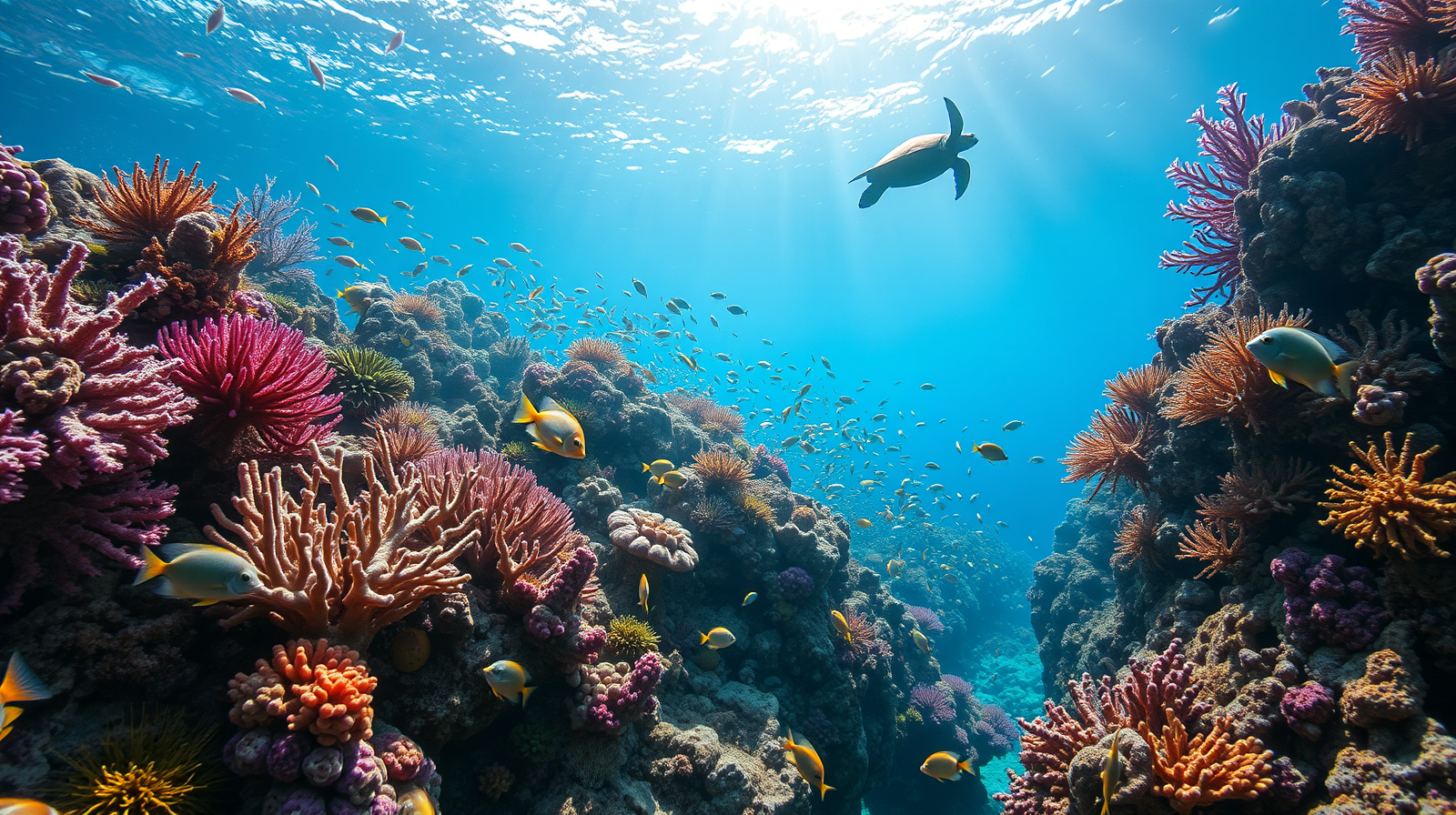
Marine biologists had already written off the deep reef system off the Australian coast back in the 1960s. Bleaching, shifting ocean temperatures, and heavy sediment runoff looked like they'd wiped the whole place out. Scientists moved on. Maps were updated to show barren seafloor, and decades of conservation funding went elsewhere.
Then someone deployed an autonomous underwater vehicle into the dark, cold waters below 100 meters.
What the cameras sent back changed everything. A vibrant, thriving coral ecosystem was sitting right there, completely intact. It hadn't died at all. It had just been hiding in the mesophotic zone—a twilight stretch of ocean too deep for traditional scuba divers and too risky for manned submersibles.
Why Marine Biologists Keep Writing Off Deep Reefs Too Soon
We have better maps of the surface of the Moon than we do of our own ocean floor. That sounds like a cliché, but the math actually backs it up.
For decades, oceanography relied on satellite altimetry and surface-level sonar. Satellite sensors can't see through deep water, and traditional sonar often misses intricate structures under steep rocky drop-offs. If a surface ship ran a quick scan over a damaged reef in 1968 and picked up no acoustic bounce from live structures, that was it. The reef was declared dead.
Scuba gear from that era didn't help either. Standard recreational diving caps out around 30 meters. Technical diving can push you deeper, but you only get a few minutes of bottom time before decompression sickness becomes a lethal threat. So, any coral sitting below 40 meters was basically invisible to human eyes.
We assumed that if shallow corals died from rising surface temperatures, the deep ones went right along with them. That assumption turned out to be dead wrong. Deep reefs sit beneath thermoclines—layers of water where temperature drops rapidly. These colder deep currents shield the corals from the marine heatwaves that devastate shallow reefs nearby.
The Drone Tech Making Ghost Reefs Visible Again
Modern autonomous underwater vehicles don't care about nitrogen narcosis or freezing temperatures. They pack battery arrays that keep them underwater for 24 hours straight, gliding meters above the seabed while snapping thousands of high-definition imagery frames.
Companies like Ocean Infinity and research groups at institutions like the Schmidt Ocean Institute are using these uncrewed platforms to scan zones we thought were empty deserts. They use photogrammetry—taking overlapping photos and stitching them together with computer vision—to build hyper-detailed 3D models of hidden reefs.
These aren’t just glorified remote-controlled boats. The software running on modern underwater drones uses edge AI to detect biological structures in real time. If a drone passes over what looks like a flat mud plain and suddenly detects the complex geometry of a coral colony, it can automatically adjust its path, drop lower, and start mapping the boundary of the reef.
They're also finding species we thought went extinct decades ago. Mesophotic reefs between 30 and 150 meters deep act as natural seed banks. When surface reefs get wiped out by severe weather or heat, larvae from these deep refuge reefs drift upward on currents and help reseed the damaged areas.
The Problem With Believing Deep Reefs Will Save Us
It’s tempting to look at these discoveries and breathe a sigh of relief. If deep corals are surviving, maybe the ocean crisis isn't as bad as we thought, right?
Honestly, that’s a dangerous way to look at it.
Deep reefs are resilient to thermal stress, but they're incredibly vulnerable to other human threats. Deep-sea trawling nets crush hundreds of years of slow coral growth in a single sweep. Silt from coastal development drifts down into these deep zones and smothers the organisms because there aren't strong shallow currents to wash the dirt away.
Also, mesophotic corals grow at a fraction of the speed of shallow corals. Light is scarce down there. They rely on mixotrophy—filtering plankton out of the water column while getting a tiny bit of energy from specialized photosynthetic algae adapted to blue light. If you destroy a deep reef, it won't bounce back in a decade. It will take centuries.
Finding a reef we wrote off in 1960 doesn't mean the ocean is healing itself. It just means our old tools were too primitive to see what was actually down there.
What Needs to Happen Right Now
Finding these lost reefs is only step one. Protecting them before industrial activity ruins them is where the real work begins.
If you're following ocean conservation or marine robotics, here is where the immediate focus needs to land:
- Update marine protected area boundaries using high-resolution bathymetric data rather than old surface maps from the 20th century.
- Ban bottom-trawling operations in areas where mesophotic surveys haven't been completed yet.
- Fund open-access datasets so marine research institutes can train machine learning models to identify coral structures faster across raw video feeds.
- Push for international policy frameworks that regulate seabed mining near discovered mesophotic refuges.
The technology to map the ocean floor exists now. Leaving these deep ecosystems off the map just leaves them unprotected.



:max_bytes(150000):strip_icc():focal(749x0:751x2)/Arnold-Schwarzenegger-Joseph-Baena-032926-a90f8d3315fc44a6aebc6d7bb44bda01.jpg)