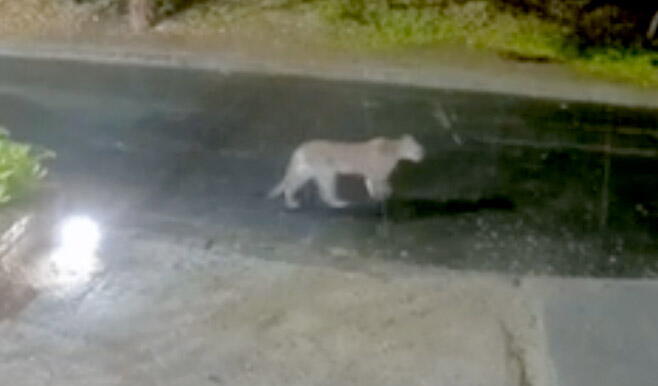
Seeing one mountain lion on a residential Ring camera in Southern California makes the local evening news. Seeing multiple mountain lions walking together through Woodland Hills without tracking collars on is a completely different story.
Most locals assume every cougar roaming the Santa Monica Mountains has a GPS collar strapped around its neck courtesy of the National Park Service. That's just not true. In fact, when a group of uncollared pumas shows up in a suburban San Fernando Valley neighborhood, it signals two distinct biological realities: a mother raising sub-adult kittens, and a wild population actively reproducing outside the immediate reach of ongoing research teams.
If you live anywhere near the foothills of Woodland Hills, Tarzana, or Calabasas, you need to understand what these sightings actually represent. Panicking won't help your pets, and ignoring the reality of urban-wildland borders won't keep predators out of your yard.
Why Multiple Mountain Lions Travel Together in Suburban Neighborhoods
Adult mountain lions are notoriously solitary animals. They carve out massive territories—often spanning 100 square miles or more for adult males—and they defend those borders aggressively against rivals. You almost never see two adult cougars sharing a driveway unless they're actively mating, and even then, the truce lasts only a few days.
So when security footage catches two or three lions moving calmly down a Woodland Hills street, you aren't looking at a pack of rogue adults. You're looking at a family unit.
Female mountain lions raise their kittens alone for roughly 12 to 18 months. During the final months before dispersal, those "kittens" are nearly as large as their mother. To the untrained eye scrolling through Nextdoor at 2:00 AM, three full-sized apex predators are stalking the block. In reality, it's a single adult female teaching her older offspring how to navigate the edges of their territory and hunt mule deer.
And Woodland Hills is prime real estate for that exact lesson. The neighborhood sits directly against the northern edge of the Santa Monica Mountains National Recreation Area. Lush, irrigated suburban yards attract black-tailed deer, raccoons, and coyotes. Where the prey goes, the predators follow. It's basic ecology, even if it looks jarring on high-definition porch video.
What the Missing GPS Collars Actually Tell Us
People love the famous collared cats of Los Angeles. P-22 became an international celebrity before his death in 2022, and researchers with the National Park Service (NPS) have tracked over 100 individual pumas in the Santa Monica Mountains since 2002. Because those collared cats get so much press, residents often think wildlife biologists have tagged every single lion in the basin.
They haven't. Catching and collaring a mountain lion requires intensive fieldwork, specialized baited cage traps, and tranquilizers. Biologists simply cannot capture every animal born in the rugged canyons of Topanga or Malibu Creek.
When uncollared lions appear in Woodland Hills, it highlights a few critical facts about the local ecosystem:
- Active local reproduction. Sub-adult offspring born in the wild don't get collars until researchers specifically trap them during targeted capture seasons. Seeing multiple uncollared cats means litters are surviving to near-adulthood despite the brutal challenges of the urban interface.
- Unmonitored movement corridors. While the Wallis Annenberg Wildlife Crossing over the 101 Freeway in Agoura Hills grabs headlines for connecting the Santa Monica Mountains to the Simi Hills, lions constantly test smaller, unmonitored routes. Flood control channels, brushy ridges, and quiet hillside streets in Woodland Hills serve as natural funnels.
- Population turnover. As older, collared cats die from rodenticide poisoning, vehicle strikes, or territorial fights with other lions, younger uncollared animals step into the vacant space.
According to data published by the California Department of Fish and Wildlife (CDFW), Southern California's isolated puma populations face severe genetic bottlenecks because freeways like the 101 and the 405 trap them on habitat islands. Uncollared sub-adults moving through Woodland Hills are often young males and females trying to find vacant territory of their own—a dangerous process known as dispersal.
The Real Risks to Woodland Hills Residents and Pets
Let's be completely honest about the danger level here. Mountain lion attacks on humans are extraordinarily rare. Across the entire state of California, there have been fewer than two dozen verified attacks on people in the last century, and only a tiny fraction of those were fatal. A mountain lion walking down a Woodland Hills street at 3:00 AM isn't hunting people. It's using the pavement as an easy, quiet path between brushy canyons.
Your pets, however, are a completely different story.
To a 110-pound cougar, an unattended Golden Retriever or an outdoor house cat isn't a family member. It's an easy calorie source that doesn't fight back like a full-grown buck. Most conflicts in foothill communities happen because residents treat their backyards like fenced-in suburban bubbles rather than extensions of the chaparral.
A standard six-foot wooden privacy fence means nothing to a mountain lion. They can clear a 12-foot vertical jump from a standstill without breaking a sweat. If you leave small dogs out after dusk, or if you let cats roam the neighborhood overnight, you are taking a massive gamble every single week.
How to Make Your Property Less Attractive to Cougars
You can't stop a mountain lion from passing through your neighborhood, nor should you try. You can, however, make sure your specific yard isn't a buffet.
- Eliminate deer attractants. Deer love ornamental landscaping, fallen fruit from backyard citrus or avocado trees, and lush lawns. Pick up fallen fruit immediately. If deer aren't bedding down in your shrubs, mountain lions have zero reason to linger on your property.
- Install motion-activated lighting. Cougars prefer stealth and darkness. Sudden bursts of bright LED light near side yards, gates, and back patios disrupt their comfort level and push them back toward open space.
- Bring pets inside from dusk until dawn. This is the single most effective step you can take. Mountain lions are crepuscular and nocturnal hunters. Keep dogs indoors at night, and accompany them outside on a leash for late-night bathroom breaks—even in a fenced yard.
- Secure livestock and hobby animals. If you keep chickens, goats, or rabbits in Woodland Hills, standard chicken wire won't stop a determined predator. Animals need fully enclosed, roofed structures made with heavy-gauge welded wire and sturdy wooden framing.
- Stop using anticoagulant rat poison. This doesn't stop lions from visiting, but it stops you from killing them slowly. Secondary rodenticide poisoning weakens mountain lions' immune systems, causes severe mange, and frequently kills them. Use snap traps or electronic traps instead.
What to Do If You Encounter a Mountain Lion Face-to-Face
Most Woodland Hills sightings happen via security cameras hours after the animal is already miles away. Still, early-morning runners, dog walkers, and hikers in places like Upper Las Virgenes Canyon Open Space Preserve or Serrania Park occasionally cross paths with a lion in person.
If you see one, your instincts will scream at you to run. Do not run. Running triggers a predator's chase response, just like pulling a string across the floor triggers a house cat.
Instead, follow the exact protocols recommended by wildlife biologists and the National Park Service:
- Face the animal directly and maintain steady eye contact. Never turn your back.
- Make yourself look as large as possible. Open your jacket wide, raise your arms above your head, and stand tall. If you have small children or a small dog with you, pick them up immediately without bending over and turning away from the cat.
- Make loud, firm noises. Shout, clap your hands, or bang items together. You want the lion to recognize you as a dominant, dangerous human, not a vulnerable prey animal.
- Back away slowly. Give the mountain lion a clear escape route. Never corner a wild predator against a wall, fence, or dense thicket.
- Fight back aggressively if the animal actually makes contact. Use rocks, sticks, trekking poles, backpacks, or your bare hands, aiming for the face and eyes. People have successfully fought off mountain lions using basic hiking gear and sheer aggression.
Reporting Sightings Without Creating Neighborhood Panic
Social media groups love a good mountain lion video, and honestly, sharing footage helps neighbors know when to bring their dogs inside. The problem is that one lion walking down three consecutive streets often gets reported as "three separate sightings," inflating panic across the West Valley.
If you capture clear footage of uncollared mountain lions in Woodland Hills, report it directly to the California Department of Fish and Wildlife Wildlife Incident Reporting (WIR) system. Biologists actually use community reports—especially clear photos showing the lack of ear tags or collars—to map urban movement corridors and identify unstudied family groups.
Skip the sensationalized posts claiming the animals are "stalking" the neighborhood. Acknowledge what they really are: native wildlife navigating the shrinking edges of their historic home, trying to survive in one of the most densely populated regions in North America. Bring your pets inside tonight, check your backyard motion lights, and report any clear sightings straight to state biologists so they can track where these uncollared cats head next.


