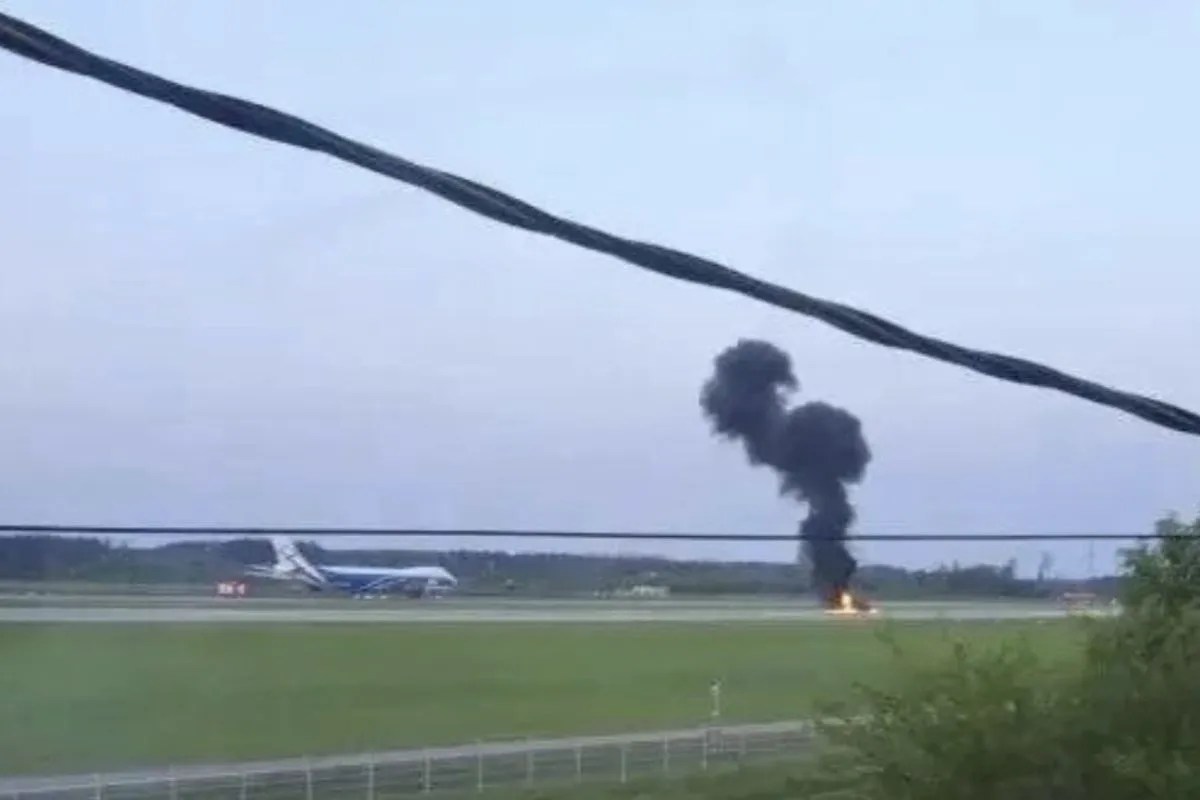
Ukraine just rewrote the rules of engagement in the skies over eastern Europe. Overnight, a massive swarm of more than 500 Ukrainian drones penetrated deep into Russian territory, hitting targets across 14 regions and making it all the way to the capital region. Russian officials say their air defenses managed to intercept 556 uncrewed aerial vehicles (UAVs) in a frantic, hours-long defensive operation, but the sheer volume of the attack tells a terrifying new story about how this conflict is shifting.
Four people are confirmed dead from the strikes, including three in the Moscow region and one in the border zone of Belgorod. Shockingly, the Indian Embassy in Moscow confirmed that an Indian citizen working in Russia was among those killed, with three other Indian nationals hospitalized due to injuries. This wasn't just a minor border skirmish. It was a coordinated, high-stakes barrage designed to overwhelm Russia's frontline defense systems and bring the realities of the front line straight to the doorsteps of everyday Russians.
Breaking Through the Steel Ring Around Moscow
For over a year, the Russian capital managed to keep its distance from the physical devastation felt across Ukrainian cities. That illusion shattered early Sunday morning. Starting around 3:00 AM, the air defense grids surrounding Moscow were forced into a continuous, desperate firing sequence.
Air defense teams reportedly shot down 81 drones heading directly for the capital city. Think about that number for a second. It is one thing to intercept a handful of stray surveillance craft. It is a completely different logistical nightmare to manage nearly a hundred incoming suicide drones simultaneously converging on a single metropolitan airspace.
- Debris rained down across the city, injuring 12 people.
- A drone struck a private residential home in Khimki, northwest of Moscow, killing a woman inside.
- Two men lost their lives in the village of Pogorelki, just ten kilometers north of the city limits.
- Debris even fell onto the grounds of Sheremetyevo, Russia's largest and busiest international airport, though flight operations miraculously managed to keep running.
The target list wasn't random. Moscow Mayor Sergei Sobyanin noted that a heavy cluster of drones targeted a massive oil and gas refinery right on the edge of the city. While local officials claim the core production technology didn't take a direct, devastating hit, several construction workers at the site were among the wounded.
The Logistics of a 500 Kilometer Swarm
Ukrainian President Volodymyr Zelensky was blunt about the operation, calling the strikes entirely justified. He noted that these home-grown Ukrainian drones traveled well over 500 kilometers from Ukrainian launch sites to reach their targets.
This isn't cheap, off-the-shelf consumer tech. Flying a continuous mission over that distance requires highly sophisticated guidance systems, resilient electronic warfare countermeasures, and efficient gas or hybrid propulsion systems. Russia has heavily fortified its skies with short-range Pantsir systems, mid-range Buks, and long-range S-400 batteries. Yet, Ukraine is finding clear gaps in that multi-layered radar net.
By launching hundreds of cheap, one-way attack drones simultaneously, Ukraine essentially forces Russia into a math problem they can't easily win. Air defense missiles cost hundreds of thousands—sometimes millions—of dollars each. When you throw 500 targets into the air at once, you exhaust the physical ammunition capacity of the localized missile batteries, leaving high-value assets exposed to the drones that manage to slip through the chaos.
Blind Spots in Current Electronic Warfare
This massive raid comes directly on the heels of a devastating Russian missile strike on Kyiv that claimed 24 civilian lives just days earlier. Zelensky explicitly promised consequences for that attack. This weekend, he delivered on that promise with unprecedented scale.
Military analysts point out that this specific operation highlights a growing vulnerability inside Russia's domestic infrastructure. Ukraine has methodically targeted oil refineries, fuel depots, and logistical hubs deeper and deeper inside Russian borders over the last several months. The strategy is obvious: choke out the economic engine that funds Russia's frontline military operations.
| Region Targeted | Known Damages and Impacts |
|---|---|
| Moscow Region | 3 dead, 12 injured, residential homes destroyed, debris at Sheremetyevo Airport |
| Belgorod | 1 civilian truck driver killed via direct drone strike |
| Moscow Oil Refinery | Multiple injuries to on-site workers, minor damage near the facility entrance |
| Black & Azov Seas | Dozens of naval surveillance and strike drones intercepted by coastal defense |
While Russian state media agency Tass reported that more than 1,000 drones were either shot down or successfully jammed via electronic warfare over a 24-hour window, the fact remains that the economic heart of Russia is no longer safe from long-range precision strikes.
What This Means for Global Supply Chains and Energy Security
If you think this is just a regional issue, you're missing the bigger picture. When long-range drone swarms start targeting critical infrastructure like major oil refineries near Moscow, global energy markets notice. Even minor disruptions to Russian domestic refining capacity force Moscow to alter its fuel export balances, directly impacting global oil prices.
Furthermore, the involvement of foreign nationals—like the tragic death of the Indian worker and injuries to three others—adds a messy layer of international diplomacy to an already explosive situation. Governments that have tried to maintain a neutral stance or continue business as usual with Moscow are now finding their own citizens caught directly in the crossfire of long-range retaliatory strikes.
How to Track Rising Security Risks in the Region
If you have corporate assets, supply chain routes, or personnel operating anywhere near western Russia or the border regions, you need to change your risk assessment protocols immediately. Do not rely on outdated security perimeters.
First, monitor local Telegram channels from regional governors like Andrey Vorobyov (Moscow region) or Vyacheslav Gladkov (Belgorod). They often post rapid, unvarnished updates about active air raid alerts long before state media issues an official press release. Second, track international flight routing data through tools like Flightradar24. When major hubs like Sheremetyevo, Domodedovo, or Vnukovo experience sudden, unexplained holding patterns or temporary airspace closures, it's almost always a sign of a major incoming drone raid. Finally, watch the global energy indexes closely; whenever a refinery hit is confirmed, expect immediate volatility in regional fuel pricing.